I know the drill. You’re weighing cost against compliance, hoping to find a loophole in a supply catalog. Let’s skip the preamble.
Purchasing a life-safety device based solely on a price-point search is a spectacularly bad idea. It’s a technical, ethical, and financial gamble where the stakes are measured in liability and lives. This isn’t about buying a desk lamp.
This is about the hardware that must operate flawlessly when someone is scared, disoriented, or shoving against it in a dark, smoke-filled hallway.
The market offering these devices at rock-bottom prices is an ecosystem of opportunistic resellers, not safety partners. They excel at keyword optimization and glossy product photos. They are less proficient in engineering, durability testing, and post-installation support. The difference isn’t just cost. It’s competence.
And it will bite you.
Decoding the “Budget” Label in Exit Hardware
First, a brutal truth. In our world, “budget” rarely means “value-engineered.” It often means “corner-cut.”
A reputable manufacturer’s price builds in material science, repetitive cycle testing (think 500,000 actuations), corrosion resistance, and third-party certification from bodies like UL (Underwriters Laboratories) or BHMA (Builders Hardware Manufacturers Association). This certification isn’t a sticker. It’s a forensic paper trail of validation that an Authority Having Jurisdiction (AHJ) will demand to see.
The sub-$50 alternative? The cost savings come from somewhere. Always.
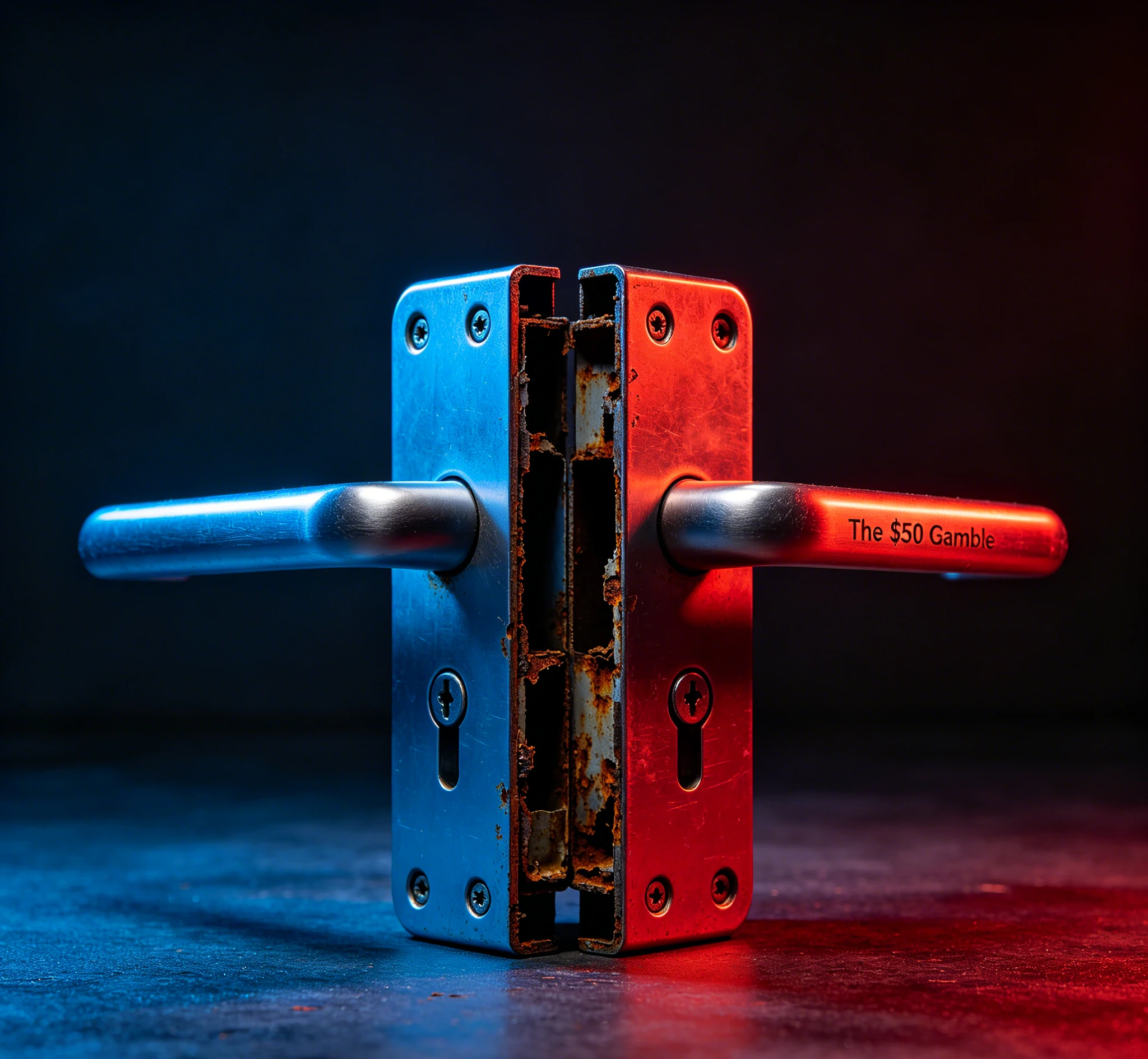
Softer metals. Inferior plating. Lighter-gauge steel. Springs that fatigue after a few thousand cycles. Latches that misalign with seasonal door movement. Packaging that boasts “Commercial Duty” or “Meets Standards” in deliberately vague language.
“Meets Standards” is not the same as “Certified to ASTM E*** or UL 10C.” The former is a marketing claim. The latter is a verified, auditable fact. That distinction is the line between a pass and a fail during an inspection.
One fails quietly in a report. The other fails loudly in an emergency.
The Supplier Landscape: Partners vs. Pitfalls
Where you buy is as critical as what you buy. My rule? Trust is built on transparency, not transaction volume.
The Reliable Partner (The “Expensive” One):
These are established distributors or direct reps from known brands. You’re not just buying a product. You’re buying an ecosystem. It includes technical data sheets, specification submittals for your architect, cross-reference guides, and a warranty backed by a company that will exist in five years. Their product has a meaningful model number, not just “Style A.” Their value proposition is risk mitigation.
The Online Marketplace Gamble:
The platform is agnostic. It’s a digital bazaar. The seller is often a faceless entity with a name like “HardwarePros4U.” Their entire relationship with the product ends at the warehouse shipping door. Need a trim plate because the door prep was wrong? Need guidance on fire-rated versus non-rated applications? Good luck. Their value proposition is price. Full stop.
A quick heuristic: Request the product’s UL classification report or BHMA certificate. A credible supplier will provide this in minutes. A reseller will vanish, obfuscate, or send you a meaningless CE mark document. The silence is your answer.
A Pragmatic (But Still Gritty) Sourcing Checklist
You’ve read this far. Maybe the budget is non-negotiable. If you must proceed, do it with both eyes open. Here’s how to filter the digital noise.
- 1. Interrogate the Product Page, Not Just Read It.
Forget the marketing copy. Scroll. Find the “Specifications” or “Technical Details” tab. What’s the actual listed material? “Zinc Alloy” or “Steel” is meaningless. You want “Type 316 Stainless Steel” or “Heavy-Duty Aluminum Alloy.” No details? Major red flag. - 2. The “Weight & Feel” Metric.
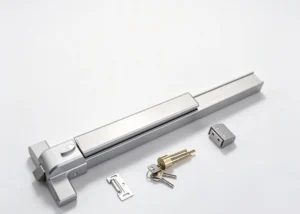
Find the shipping weight. A quality rim device for a standard door should weigh several pounds—it’s a solid chunk of engineered metal. If it lists 1.2 lbs, it’s hollow, thin, and flimsy. Physics doesn’t lie. - 3. Review Archaeology.
Don’t look at the star rating. Read the 1- and 2-star reviews. Search for keywords: “broke,” “stuck,” “flimsy,” “sharp edges,” “missing parts.” Look for photo reviews showing failed mechanisms or poor finish. This is unfiltered field data. - 4. The Return/Support Litmus Test.
What’s the return policy? Is it a 30-day “no questions asked” from a major retailer, or a “buyer pays return shipping to a warehouse in another country” from a third-party seller? How are installation questions handled? This is your escape hatch when the product arrives and feels… wrong. - 5. The Installation Reality Check.
Does it come with a proper template? Are the screws and mounting hardware robust, or are they cheap zinc-plated junk that will strip instantly? Is the latch mechanism adjustable? Cheap hardware often assumes a perfectly prepped door. Reality is never that accommodating.
The Real Cost Equation You’re Not Calculating
This is where the spreadsheet logic falls apart. The Total Cost of Ownership (TCO) for a non-compliant, unreliable exit device is brutal.
The Direct Costs:
- Failed Inspection: Your AHJ rejects it. Now you pay for a second device and a second installation labor visit.
- Premature Failure: It breaks in 18 months. You’re buying again, plus labor.
- Damage to Door: A poorly designed or installed device can warp the door or ruin the prep, leading to hundreds in repair costs.
The Indirect & Catastrophic Costs:
- Business Interruption: A failed inspection can halt your Certificate of Occupancy, delaying a grand opening or tenant improvement.
- Liability Exposure: An injury or worse due to device failure opens you to litigation. Your insurer will ask for proof of code compliance. That “budget” purchase just voided your coverage.
- Reputational Damage: “Their emergency exit was jammed” is a headline that never goes away.
Suddenly, the $250 for a certified, properly installed device from a known brand looks like shrewd risk management, not an expense.
The Grumpy Conclusion
Procurement isn’t about buying things. It’s about sourcing solutions that perform under contract terms and real-world conditions. Life-safety hardware exists for the worst 60 seconds of a building’s lifespan. Compromising on it to save a few line-item dollars is a failure of professional duty.
The sub-$50 market is a minefield of marginally functional hardware and outright junk. It’s designed for the uninformed, sold by the unaccountable, and fails at the most inopportune time.
Your move isn’t to find the cheapest option. It’s to define the minimum acceptable standard—starting with proper certification—and source to that standard as efficiently as possible.
Your signature is on the PO. Your judgment is on the door. Make sure both hold up under pressure.
Final Point of Action: Before you commit any funds, take the product data to your local Authority Having Jurisdiction (AHJ)—the building official or fire marshal. Ask, “Will this pass here?” It’s the only opinion that ultimately matters, and it’s free. It is recommended to consult the local AHJ, such as the fire marshal or fire code official.