
Look, You Want to “Fix” the Panic Bar. Fine. Let’s Talk Procurement Realities.
Listen up. I’ve been sourcing, specifying, and occasionally cursing at doors and hardware for longer than most of your suppliers have been in business. The phone rings. It’s a facility manager or some ops VP with a “simple” request: “The panic bar on the loading dock door is a problem. People use it to slip out. Can we just… disable it during shifts?”
I can hear the spreadsheet logic from here. Lost productivity. Unauthorized exits. A neat, cheap fix.
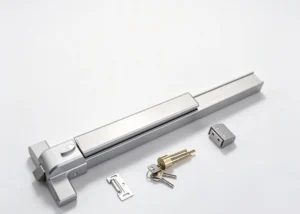
Here’s my professional, procurement-weary response: You cannot, and will not, treat a life safety device like a line item to be value-engineered. That exit device (call it a panic bar, rim device, whatever—just don’t call it optional) is not a cost center. It’s a legally-mandated, code-required, human-life-preserving asset. Tampering with it isn’t cost-saving; it’s liability acquisition. You’re not saving money; you’re prepaying a lawsuit.
But. Because there’s always a “but” in procurement… there are methods to manage egress for operational security without committing a fire code felony. The crucial distinction, lost on most non-grumpy professionals, is between “disabling” (illegal, stupid, my headache) and “controlling” (complex, expensive, but sometimes permissible). One gets you a fine. The other gets you a capital expenditure request, ongoing maintenance contracts, and my eternal skepticism.
Why Your “Cost-Effective Solution” Will Cost You Everything
Let’s perform a pre-mortem on the usual suspect ideas. If your plan involves any of these, cancel the PO immediately.
- The Physical Barrier (Chair, Pallet, Cyclone Fence): Congratulations. You’ve just created a bottleneck that, in an emergency, will become a mass casualty focal point. Your cost-benefit analysis did not factor in wrongful death lawsuits. Fail.
- Removing or Mechanically Jamming the Hardware: You’ve now destroyed a capital asset worth hundreds, if not thousands, of dollars for a temporary, illegal fix. The asset tag alone weeps. The replacement cost comes from your budget.
- Adding an Unapproved Lock (Keyed Deadbolt, Padlock & Hasp): This is procurement malpractice. You’ve sourced and installed a product that restricts egress. In most commercial occupancies, this is explicitly forbidden by code. You’ve bought a liability generator.
The core procurement spec, written not by us but by model codes (IBC, NFPA 101), is unambiguous: Means of egress shall be maintained operable and unobstructed. Full stop. The panic bar is the fulfillment of that spec. Your desire for operational efficiency is a business goal. Their right to exit safely is a legal requirement. One outweighs the other. Dramatically.
The “Compliant” Options (And Their Total Cost of Ownership)
So, is the warehouse exodus a permanent cost of doing business? Not necessarily. There are code-compliant systems. Notice I said systems—plural, complex, and expensive. They turn a simple door into a managed asset with ongoing OpEx.
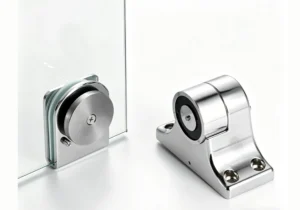
1. The Electromagnetic Lock (Maglock) with Push-to-Exit.
This is the Cadillac solution, with a Cadillac budget and a Cadillac maintenance schedule.
- The Hardware Bill: Maglock assembly, listed exit hardware interface, push-to-exit (PTE) button, power supply, battery backup, wiring.
- The Labor Bill: Electrician. Door hardware specialist. Fire alarm system integrator (for tie-in).
- The Compliance Spec: Must release on fire alarm activation (non-negotiable). Must have a simple, obvious PTE button within 1-2 feet of the door. Must have a mechanical or backup power fail-safe.
- The Lifetime Cost: Quarterly testing. Annual certification. Battery replacements. Software updates if tied to building management systems. This isn’t a purchase; it’s a subscription to compliance.
This setup tells the AHJ, “We acknowledge the need for security but have invested in a fail-safe, immediate egress path.” It’s defensible. It’s also a budget line item that requires justification every fiscal year.
2. Delayed Egress Panic Hardware.
This is behavioral economics on a door. You replace the standard panic bar with a listed delayed egress device. Here’s the operational impact: Employee pushes bar. A deafening, local alarm sounds. Door releases after a code-mandated delay (typically 15 seconds).
The theory: The nuisance alarm deters casual misuse, alerting supervisors. The short delay is deemed acceptable for life safety while providing a security deterrent.
Procurement Caveats: Not approved for all occupancy types (check your spec sheet and your AHJ). Requires specific signage per code. Must tie into fire alarm for immediate release. You’re not just buying a lock; you’re buying an audible/visual alarm unit, its maintenance, and the staff training to explain why the door is yelling at them.
3. Access Control on the Exterior, Free Egress on the Interior.
Often the most elegant, least legally-fraught solution. You leave the panic bar asset untouched, in perfect, compliant working order. You instead control the inflow.
Install a keypad, card reader, or keyed cylinder on the outside. Authorized personnel enter. Anyone exits freely at any time. This solves 80% of “people sneaking out” problems because the barrier to re-entry is high. The panic bar remains a code-compliant, zero-maintenance asset. The security is a separate, manageable system. This is clean procurement: segregated systems, clear accountability.
The Real-World Procurement Nightmare: It’s Never Just the Unit Price
You’ve RFQ’d a solution? You’ve compared lead times and unit costs? You’re about 10% of the way there.
- The AHJ is Your Ultimate Supplier/Vendor Relationship. Authority Having Jurisdiction. They are the final auditor of your purchase. Their approval is your CoA (Certificate of Approval). No AHJ sign-off = a fully capitalized, non-compliant, worthless asset sitting on your books. You must pre-qualify any solution with them before issuing the PO. I’ve seen $15k maglock systems sit unused because a fire marshal decided PTE buttons weren’t “obvious enough” in that municipality.
- Insurance Carrier as Stakeholder. Your property insurer must bless this. Modifying egress changes your risk profile. Their approval is part of the sourcing checklist. Skip this step, and you risk invalidating coverage.
- Liability Transfer Failure. Think installing a listed system transfers liability to the manufacturer? Think again. You, as the specifier and buyer, assume responsibility for its proper application, installation, and maintenance. Your paper trail is your only shield.
- OpEx Creep. Training. Signage. Monthly operational tests. Annual full-performance tests. Who bears this cost? The facility team you just annoyed with this project. Factor in labor hours for the life of the asset.
The Grumpy Procurement Manager’s Checklist
- Baseline Spec: Panic bars shall operate freely at all times. This is the default, zero-cost, compliant state.
- Root Cause Analysis: If it’s a “problem,” the RFP should be for a personnel management solution, not a hardware one. Address behavior before you spec a single component.
- Solution Hierarchy: 1. Control ingress (exterior access control). 2. If insufficient, explore high-cost electronic control (Maglock/PTE or Delayed Egress) with full AHJ pre-approval.
- Never, Ever Value-Engineer Compliance: No off-spec parts. No “works-like” substitutions. This is one category where you buy the listed, exactly specified product, from a reputable distributor, installed by certified technicians.
- Documentation is Deliverable: The final “product” is not just the installed hardware. It’s the file containing: AHJ approval letter, stamped installation drawings, equipment cut sheets, manufacturer certifications, commissioning report, and a binding maintenance agreement. If you don’t have this file, you didn’t procure a solution; you procured a problem.
Ultimately, the “legal way to disable a panic bar” is a paradox. You’re not disabling it. You’re launching a complex, cross-departmental capital project to dance around its immutable function. You’re adding cost, complexity, and long-term liability in pursuit of a marginal operational gain.
Is the ROI there? Almost never. Hire a door monitor. Enforce HR policies. Manage your labor force. The door is the most reliable, lowest-maintenance, and legally sound asset in the building. Maybe direct your procurement genius toward the humans using it, not the hardware that’s just doing its job.
AHJ WARNING (NON-NEGOTIABLE PROCUREMENT CLAUSE):
The information above constitutes general industry awareness based on model codes. It is not a specification and is not legal or compliance advice. Codes are locally amended and enforced. Your local Authority Having Jurisdiction (AHJ) is the sole source of truth for compliant specifications in your area. You must obtain written AHJ approval for any egress control solution prior to purchase and installation. Failure to do so can result in purchase order cancellations, asset impairment, fines, and unlimited liability. Consider this your supplier-agnostic warning. Your due diligence is required.