The Anti-Microbial Hardware Scam of 2026: A Procurement Manager’s Rant
Let’s cut through the sterile, corporate nonsense. You’re being sold a feeling, not a feature. I’ve signed the POs, I’ve read the spec sheets, and I’m here to tell you the grimy, unvarnished truth.
What Are You Actually Buying? The Microscopic Truth
The core proposition is laughably simple. When you pay a 30% premium for “anti-microbial” on your 2026 RFP, you’re getting one of two tired old technologies with a fresh coat of marketing paint:
- Embedded Silver Ions: Yes, silver disrupts microbial cells. In a lab. On a pristine plastic wafer. It’s a material property, not a magic force field.
- Copper Alloys: Oligodynamic? Sure. Common in your average office peripheral? Don’t be ridiculous. The cost and the inevitable patina make it a non-starter for mass-market junk.
That’s the fact. A modest, conditional, inhibitory effect on some microbes, on the treated surface only. Now, watch the marketing department perform alchemy.
The Marketing Hype Machine: From Molehill to Mountain
This is where I need to adjust my glasses and sigh audibly. The 2026 playbook has evolved from mere exaggeration to a full-blown wellness dystopia.
The “99.9% Effective” Lie (of Omission)
They test a virgin polymer against one, singular bacterium (Staph aureus, usually) in a controlled chamber. This has the same relevance to your crumb-infested, coffee-splashed keyboard as a wind tunnel has to a hurricane. The “0.1%” they gloss over? That’s reality. It’s the biofilm, the viruses, the layers of organic sludge that render their lab data a quaint fiction.
The “Healthier Workspace” Illusion
This implies a substitute for cleaning. It is not. All the dead microbes, their waste, viruses, pollen, and yesterday’s lunch debris are still physically there. You’ve just added trace metals to the compost heap. A “healthier workspace” is achieved with a cloth and some isopropyl alcohol, not a polymer additive.
The Implied “Immunity” Shield (Borderline Fraudulent)
They can’t claim it, so they visualize it. Happy employees, no sneezes. Let’s be brutally clear: Common illnesses spread through respiratory droplets and hand-to-mucous-membrane contact. Your fancy mouse does absolutely nothing to stop you from picking up a virus from a door handle and touching your face. It’s a security blanket that fosters complacency.
2026’s Masterstroke: The “Eco-Wellness” Deception
The latest angle. “Reduce chemical cleaners!” they trumpet. Never mind that the most eco-friendly clean is a damp microfiber cloth. They’ve convinced you that embedding bioactive metals into landfill-bound plastic is “green” because you might spray less bleach. The sheer, staggering gall of it.
The Unspoken, Ugly Realities of Daily Use
Let’s move from the brochure to the battered, coffee-stained reality of the open-plan office.
The Coating is a Veneer: It’s microns thick. The first scratch from a staple, the first shiny spot on a keycap from a frantic deadline mash, and you’ve breached the wall. You now have a microbial nature reserve thriving in the scratch canyon, right next to the “protected” plains.
The Viral Blind Spot: The post-2020 world fears viruses. These coatings are tested for bacteria and fungi. Efficacy against the common cold or norovirus? Often negligible. But the marketing copy is masterfully vague, isn’t it?
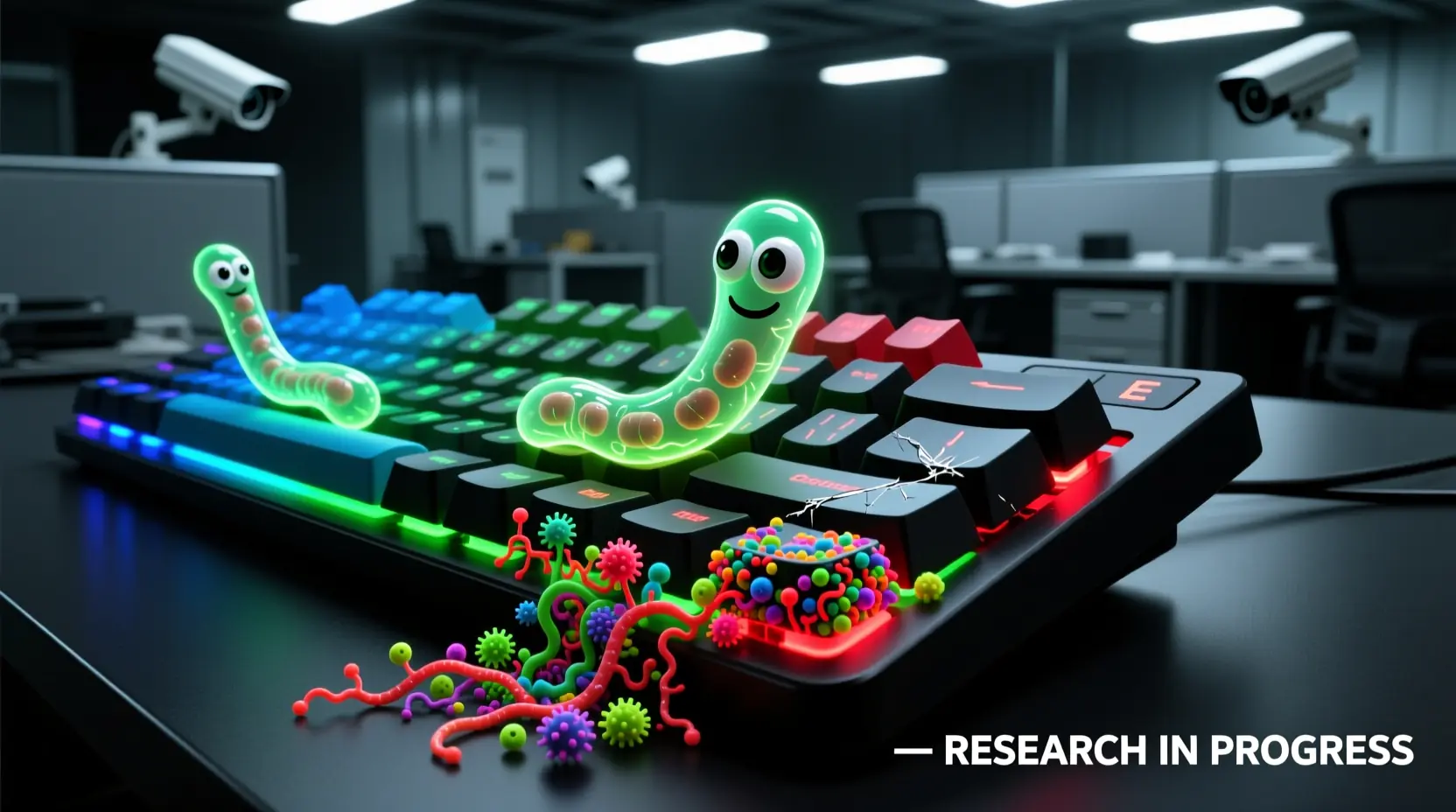
Biofilm: The Fortress No One Mentions: Bacteria don’t live as lone soldiers. They build biofilm cities—slimy, armored metropolises. Your silver ions might attack the outer suburbs, but the downtown core is protected in its gelatinous tower. The only way to raze a biofilm is mechanical: scrubbing. The very thing this product quietly suggests is optional.
The Unstudied Longevity: Where is the 5-year wear study? The UV degradation data? The sweat-and-skin-oil interaction report? You won’t find it. The efficacy degrades. The plastic yellows. The “feature” becomes a footnote on a product heading for the e-waste stream.
A Procurement Manager’s Prescription (Not Medical Advice)
Stop optimizing for fear. Start optimizing for sense.
- Procure for Performance, Not Paranoia: Base your RFPs on switch type, sensor accuracy, driver support, durability, and total cost of ownership. Let “anti-microbial” be a bizarre, weighted-at-1% line item, if at all.
- Mandate Maintenance, Not Magic: Issue a departmental memo. Better yet, budget for it. A quarterly clean with compressed air and a cloth dampened with 70% isopropyl alcohol is more effective than a lifetime of passive, decaying ion exchange. This is basic asset stewardship.
- Promote the Ultimate Tech: Soap. Water. Twenty seconds. This ancient, peer-reviewed technology works on every surface in the building, costs pennies, and doesn’t require a special SKU or a datasheet full of asterisks.
The final, grumpy analysis? Anti-microbial hardware in 2026 is a fear tax. It’s a brilliant market segmentation tool that exploits justified anxiety with scientifically-scented fairy dust. It allows vendors to command a premium for a commodity by promising a sterile nirvana that their product is fundamentally incapable of delivering.
You are not procuring a healthier environment. You are procuring a plastic with a minor, conditional, and largely superficial material property. The real pathogens—and the real solutions—lie elsewhere.
The chaos is intentional. The snark is earned. The truth is grimy.
AHJ WARNING: Let’s be perfectly clear: This is procurement and industry commentary, not medical advice. I analyze vendor claims and component datasheets, not pathogens. Nothing here should be construed as health guidance. All product claims are my interpretation based on public specs and a career of vendor meetings. For actual health concerns, consult a real professional. Your safety is your responsibility. Now go approve that cleaning supplies invoice.