Ever notice how procurement gets the sexy stuff?
Fire doors? Glorious. They come with stamps, labels, a whole pedigree. You spec them, you buy them, you inspect them on a sacred schedule. It’s structured. It’s clear.
But the other 80% of the doors in a building?
They’re the forgotten infantry. The interior office doors, the storage room slabs, the copy room entrances. Non-fire-rated. So we treat them like they’re inert. Like decoration. We buy them as a line item, install them, and forget they exist until the handle falls off.
That’s a catastrophic blind spot.
Let me drop a grumpy truth on you: a door that isn’t designed to stop a fire can still start a lawsuit. Or a work stoppage. Or a very bad day for someone who just wanted to get to the break room.
This isn’t about fire containment. This is about functional, daily, bone-headed-obvious safety that everyone ignores until it bites them. We’re talking about fingers sheared in gaps. Heads meeting untempered glass. Emergency egress paths bottlenecked by a cheap, badly hung door.
The mindset shift is this: Stop thinking about *doors*. Start thinking about *controlled portals in a path of travel*. The second you frame it that way, the checklist writes itself.
The hardware, for instance.
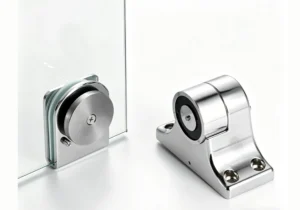
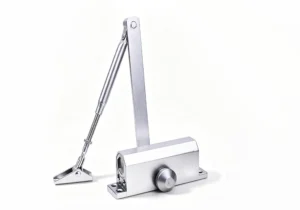
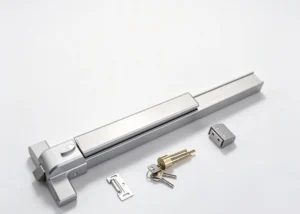
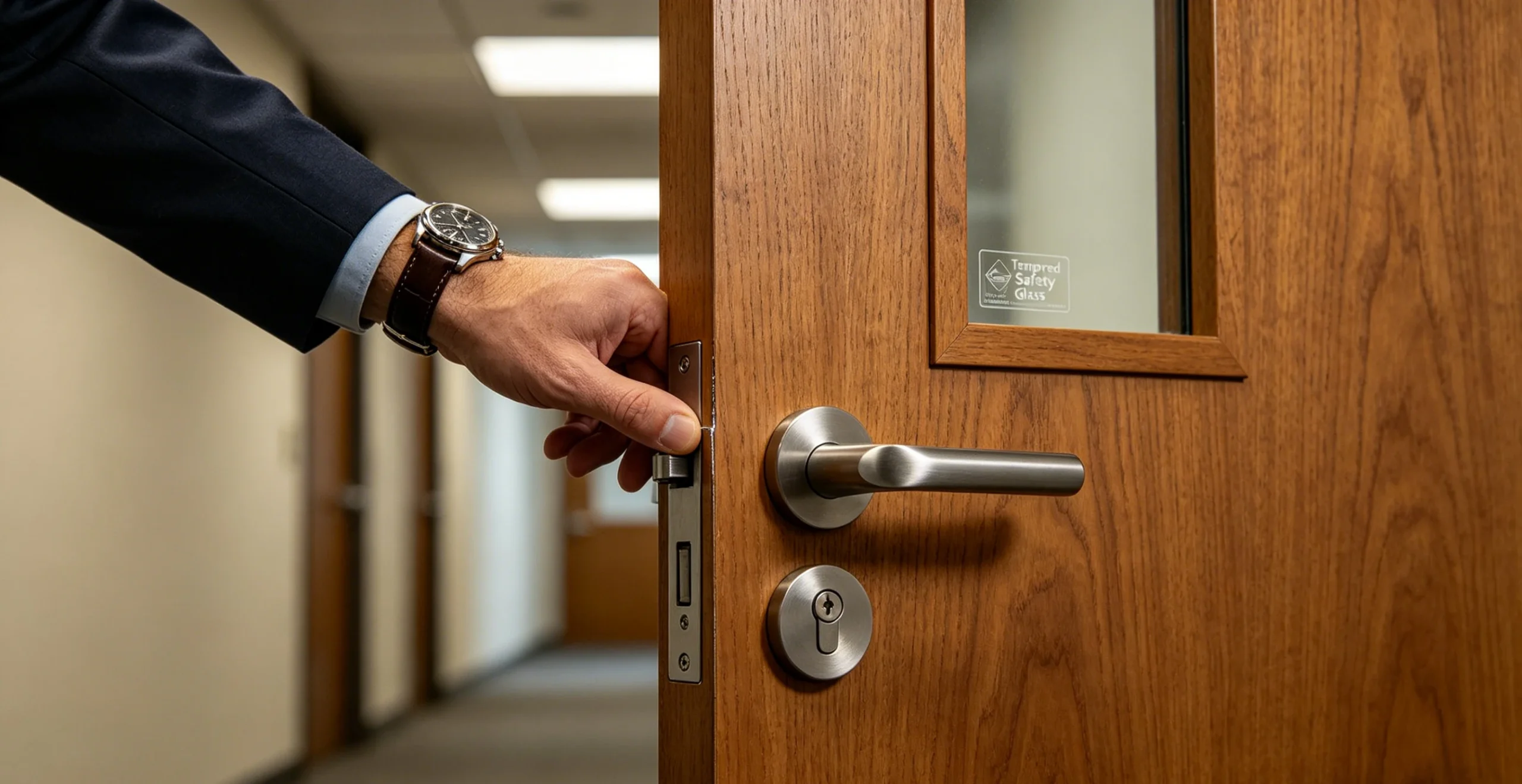
It’s not trim. It’s the interface. A loose lever is an annoyance on Tuesday. It’s a fumbling panic on Wednesday when the lights go out and someone needs out *now*. We’ve all seen it—the shiny, budget lever from the big-box catalog that feels like a limp handshake. It wobbles. The return-to-center action is sluggish. That’s not a minor defect; it’s a failure in the user experience of safety.
And the hinges. Let’s talk hinge pins.
If the secure space is *inside* the room, the hinge pins damn well better be inside, too. Mounting them on the public corridor side is amateur hour. It’s an open invitation for any moderately mischievous person with a hammer and a punch to deconstruct your security. I audited a mid-tier corporate office once where the “cost-saving” contractor had done exactly that on forty-three interior doors. Forty-three security vulnerabilities, bought and paid for. The Facilities Manager nearly had an aneurysm. The rework bill was… substantial.
Now, glass. This is my hill to die on.
You see a door with a vision lite. Looks fine. But is it safety glass? There’s only one way to know: the permanent mark, typically etched in the corner. Tempered or laminated. If it’s not there, you have a problem. A big, sharp, lawsuit-shaped problem. I don’t care if it’s “just” a closet door in a low-traffic area. Code doesn’t care about your traffic estimates. An employee leans into it, a cart bumps it—it shatters into daggers.
That’s not a safety check. That’s a liability time bomb you walked right past.
Let’s dig into the installation environment. The trip-and-fall calculus.
A door dragging on new carpet isn’t just a nuisance. It’s a predictable incident report. The clearance at the bottom isn’t an aesthetic choice; it’s a functional mandate. And the swing path. Does it arc out into a busy hallway? Does it block an exit sign when open? These aren’t fire code issues. They’re basic human factors engineering. You’re managing flow, both routine and emergency.
Which brings us to egress. The “Oh-Crap” factor.
A non-fire-rated door is often a critical link in the escape chain. So its swing direction, its width, the landing on the other side—all governed by code. The IBC is very chatty on this. I once saw a gorgeous, custom-made oak door on a tech company’s main-floor conference room. Looked a million bucks. It was 29 inches clear width. The egress path required 32. That beautiful door was a code violation. The fire marshal red-tagged it. They had to tear it out and start over. A six-figure “oops” because someone thought specs were just for fire doors.
So how do you, as the one holding the purse strings, bake this in?
It starts at sourcing. Choosing a supplier for non-rated doors is a test of their foundational knowledge. The cheap online outfit will sell you a slab. A real supplier will ask questions. What’s the core? Particleboard, hollow composite, solid stave? What’s the expected traffic? They’ll talk about ANSI grades—Grade 1 for brutal commercial use, Grade 2 for light commercial. They’ll ensure the preps are correct for the hardware you’ve specified. They understand that a door is a system, not a commodity.
You’re not buying a product. You’re buying *suitability*.
The inspection side is trickier. You don’t need a certified fire door inspector for this, necessarily. But you do need someone with a code-aware eye. Your maintenance guy might be fantastic at fixing things, but does he know what to look for *proactively*? When you hire a contractor, ask them point-blank: “Walk me through your final checklist for hanging an interior office door.” If they only mention it being plumb and the latch catching, they’ve failed. You want to hear about hinge orientation, glass verification, clearance checks, and operational pressure.
Why go through all this hassle? The ROI on basic compliance.
It’s simple math, but no one does it until it’s too late. The cost delta between a Grade 2 hollow-core door and a proper Grade 1 solid-core door might be a couple hundred bucks. The cost of replacing that hollow-core door after it’s been kicked in because the latch failed? Double that, plus labor, plus downtime. The cost of a single slip-and-fall claim because a door scraped a wet floor? Add a zero. The cost of an ADA lawsuit because the opening force was 15 pounds over limit? Add several zeros.
Reliable sourcing and diligent checks are your insurance premium. They’re boring. They’re unsexy. They prevent spectacular, budget-obliterating failures.
—
You’ll have questions. Let’s preempt them.
**How often do I need to look at these things?**
There’s no mandated annual inspection. Be pragmatic. Tie it to your facility’s cyclical maintenance. After a office reshuffle. When you’re doing lock rekeys. Give them a glance during fire drill evacuations—you’ll see how they perform under simulated stress.
**Is there a label I should look for?**
No fire rating label, obviously. But look for the manufacturer’s stamp. The ANSI/WDMA grade. And for heaven’s sake, that permanent mark on any glass. If it’s missing, assume it’s not safety glass until proven otherwise.
**The door works, but it’s a beast to open. Issue?**
Major issue. Opening force is codified (usually max 5 lbs to initiate, 30 lbs to fully open). It’s an ADA mandate, but more than that, it’s a universal egress requirement. An elderly visitor, a junior employee carrying a box, someone in a hurry—they all need to operate it without a struggle. A stiff door isn’t just unfriendly; it’s non-compliant.
**Where’s the master list of rules?**
It’s a mosaic. IBC Chapter 10 for egress. ADA Chapter 4 for operability. Glazing requirements are in IBC Chapter 24. Hardware standards are in BHMA documents. Don’t try to memorize it. Internalize the principles: Safe operation, secure mounting, safe materials, clear egress.
The core idea is to shed the binary thinking. Fire door? Yes/No. That’s lazy.
Every door is a piece of the safety ecosystem. The non-rated ones are the quiet, majority stakeholders. Ignore them at your peril. Your job is to ensure the entire portfolio—the heroic fire doors and the humble interior doors—is purpose-built, correctly installed, and diligently maintained. Not because the code always mandates it, but because it’s the bare minimum of due diligence. It’s what separates a professional procurement operation from an order-placing department.
Now go do a walk. Look at the doors you normally ignore. Jiggle the handle. Check the hinge pins. Look for the glass mark. You’ll see it all differently.
And for the definitive, project-specific ruling? It is recommended to consult the local Authority Having Jurisdiction (AHJ), such as the fire marshal or fire code official. Their word is final. Make them your ally, not your auditor.