
Listen up. I’ve been in procurement and facilities for decades. I’ve seen the purchase orders for the “hardware refresh” that ends in chaos. The budget-conscious “repurpose” project. The operations manager who just *needs it gone* because it’s ugly. And now, here you are, staring at a cost-saving initiative and a maintenance ticket, thinking you’re gonna just *remove a panic device*.
Fine. Let’s do this. I’m not your CFO. I can’t stop you. But if you’re going to authorize something profoundly naive, you might as well have a grumpy voice in your head telling you why each step is a potential fine, lawsuit, or descent into the ninth circle of compliance hell.
It’s Not a “Panic Bar.” It’s a Liability.
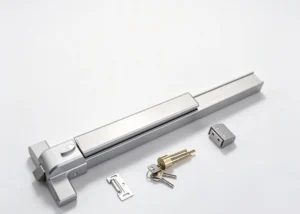
First, terminology matters. It’s a crash bar. An exit device. A *rim device*. It is not office décor. It is a life safety device governed by more codes and standards than your entire supply chain: the International Building Code (IBC), NFPA 101, OSHA, and a labyrinth of local amendments. This isn’t a suggestion; it’s the legally-mandated interface between a human and an escape route during a crisis.
The Terrible Justifications for Removal
Let’s audit the reasons, because they’re always a financial fantasy.
- “It’s broken and maintenance is expensive.” So? The capital expenditure to repair or replace a code-mandated device is not optional. It’s a cost of doing business, like fire extinguishers. Deferring this is budgeting for liability.
- “We’re renovating the space.” This is the only semi-legitimate reason. But you don’t just remove it. You must have a permit-approved plan to install a new, code-compliant means of egress before the old one is disabled. The door cannot be non-compliant for a single business day.
- “It clashes with our new aesthetic / is in the way.” Your brand identity is irrelevant next to the clause in your insurance policy about maintaining required egress. A designer’s whim does not override the fire marshal’s stamp.
- “We’re sealing this exit; it’s not needed.” Ah, the classic space-utilization play. To do this legally, you must engage an architect or engineer to prove to the Authority Having Jurisdiction (AHJ) that your revised occupant load and floor plan still meet all egress requirements without this door. This is a formal, drawn, submitted, reviewed, and approved process. You don’t just decide.
The “How-To” For Procurement Managers Who Will Ignore Advice
You’ve approved the work order. Your maintenance tech or a dubious low-bid contractor is on site. Here’s what they’ll actually face, and why your budget is about to explode.
Step 1: Identify the Asset (Now a Liability)
What exactly did your facility team buy 15 years ago? Is it a rim device (the common bar on the door’s interior)? A mortise device (heavier, mechanism inside the door)? Or a surface-mounted vertical rod system (the complex, expensive nightmare)? The removal complexity and repair costs vary by an order of magnitude. Hope your asset records are good. (They aren’t.)
Step 2: The Operational Shutdown
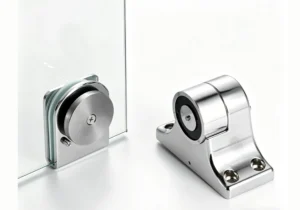
Is the door alarmed? Is it on a monitored security system? Does it have a magnetic lock tied to the fire alarm? Disabling this hardware without proper decommissioning can trigger silent alarms, supervisory signals, and a very expensive visit from the security company and fire department. This is where “savings” become incident response costs.
Step 3: The Physical Deconstruction (Where Value is Destroyed)
The technician will remove end caps, disconnect latch rods, unbolt mounting plates. They will be left with a door bearing a large, rectangular wound on its edge and a scatter pattern of screw holes on its face. The device, once a functioning asset, is now a pile of scrap metal and small, easily-lost components.
Step 4: The Aftermath (The Real Cost Center)
You now have a non-functional door. You cannot leave it. The required retrofit is where budgets die. You need:
- A door repair plate to cover the damage.
- A new, code-compliant lockset (likely a lever-style for accessibility).
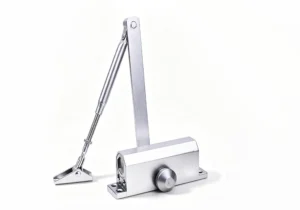
- Adjustment of the door closer, which was balanced for the original hardware.
- Potential relocation of the “EXIT” sign if the door is no longer an exit.
- Re-certification of the fire rating if the door’s integrity was compromised.
The Procurement Reality Check
Removing a required panic device isn’t a cost-saving measure; it’s a risk acquisition strategy. You are trading a known, depreciated capital asset for an unquantified future liability: fines, invalidated property insurance, civil suits, and in a worst-case scenario, criminal negligence charges.
The correct procurement process for this “project” is:
- Consult the AHJ. The Authority Having Jurisdiction (Fire Marshal, Building Inspector) is your ultimate supplier of compliance. Their requirements are the non-negotiable specifications.
- Engage a Qualified Consultant. Hire a door hardware consultant (DHI-certified) or a life safety professional. Their fee is cheaper than a violation.
- Procure Properly. Source the replacement hardware and installation through a reputable distributor and certified installer. This is not a commodity buy; it’s a specialized, code-driven purchase.
- Document Everything. Permits, inspections, certificates of occupancy, and manufacturer specifications become part of your permanent facility compliance file.
Anything less is supply chain management for your own downfall. You procured the problem. Now, procure the professional solution. Or, you can explain your cost-saving initiative to a judge.
AHJ WARNING: This entire article is a fictional scenario for illustration. The only valid guidance comes from your local Authority Having Jurisdiction (AHJ). Their interpretation of the code is law. Attempting to modify life safety egress hardware without their explicit, written approval is not DIY—it is corporate malfeasance. Your procurement authority ends where the fire code begins.