
Let’s talk about building envelopes. Not the pretty, architect-rendered ones, but the real, sweating, leaking, drafty beasts we actually have to live with. The energy codes keep tightening, demanding we build thermos bottles. And then we have to punch holes in them for doors. Not just any doors. Exit doors. The ones designed to fly open with a panicked shove. It’s like designing a submarine and then insisting on screen doors.
This is the daily, grinding conflict every procurement manager and specifier faces. It’s not a technical challenge; it’s a philosophical fistfight between two non-negotiable truths: Thou shalt not waste energy and Thou shalt not trap people in a burning building. Spoiler: one of these commandments carries more weight, and it’s not the one that saves you 3% on your utility bill.
The Sealer: Weather-Stripping’s Lonely Crusade
Weather-stripping is the introverted engineer of the building envelope. Its entire worldview is based on consistency, pressure, and the elimination of gaps. It believes in a perfect, continuous seal. It comes in robes of rubber, brushes of nylon, and bulbs of foam. Its mission is noble: to defeat the triumvirate of wind, water, and thermal transfer.
For a standard office door, it’s a champ. The door closer provides the muscle, the latch provides the pull, and the gasket compresses into a beautiful, airtight embrace. It’s a closed system. A satisfying, predictable equation.
Then you walk down the corridor to the main exit.
The Releaser: Panic Hardware Doesn’t Care About Your BTU Calculations
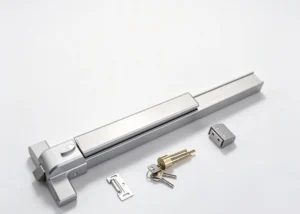
Panic hardware is weather-stripping’s anarchist cousin. Its design philosophy is primal, born from disaster: ONE. PUSH. OUT. No thought. No fine motor skills. No ‘turn and pull’. Just mass and panic meeting a horizontal bar.
This glorious, life-saving simplicity is kryptonite to the seal. Why? Because a proper seal requires a latched door. A latched door is a deliberately secured door. Panic hardware, by its DNA, is anti-latch. It uses mechanisms like dogging devices (to hold the latch retracted for daily use) or coordinator bolts on pairs of doors. These are compromises. They are the ‘maybe’ in the airtight equation.
The Battlefield: Where Good Intentions Go to Die
This is where theory meets the boot of reality. You’ve specified a beautiful, plump compression gasket that needs 30 pounds of force to seal. You’ve also specified a code-compliant door closer adjustable for a 5-year-old’s strength. The result? The door never fully closes. The gasket acts as a door stop. The panic bar is pre-loaded. A stiff draft turns your main exit into a saloon door. You’ve failed at sealing and created a security/annoyance hazard. Bravo.
Or, the dogging device is engaged for daytime traffic flow. The door is now just resting against the weather-strip. No latch pulling it tight. The building’s stack effect (that warm air rising thing) creates a slight negative pressure. The door sucks inward, breaking the seal. Your blower door test just failed, and $10,000 of fancy insulation is now irrelevant because of a 1/8-inch gap no one notices.
The Siren Song of “Solutions” (A.K.A. Expensive Gimmicks)
The industry, sensing our despair, sells us hope in a box. It’s usually overpriced and underwhelming.
- Automatic Door Bottoms: A mechanical seal that drops when the door closes. Effective? Sometimes. A maintenance nightmare waiting to happen? Always. Dirt, ice, misalignment. When it fails, it often fails down, and you get to watch people trip over it.
- “Airtight” Rated Exit Devices: Yes, they exist. They have clever gasket channels and special strikes. They also cost as much as a used car and require installation by a watchmaker who moonlights as a carpenter. If the threshold is 2 degrees out of level, forget it.
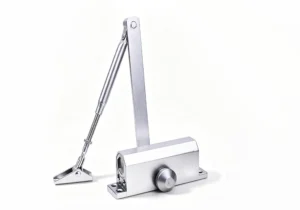
- Over-Slamming Door Closers: The ones with a ‘sealing function’ that gives a final, mighty slam. Wonderful. So now your building sounds like a series of small explosions every time someone leaves. Also, enjoy replacing the closer every 18 months.
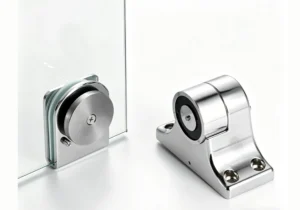
- Magical Zero-Energy Doors: The ones that seal with magnets or mystic forces. I love these catalog fantasies. In the real world, someone puts a ‘Please Use Other Door’ sticker over the sensor, and the magic is gone.
The Grumpy Specifier’s Field Manual (A.K.A. Lower Your Expectations)
After you’ve been burned a few times, you develop a cynicism-based methodology. Here it is:
- Installation is 90% of the Game. A standard panic device and a robust compression gasket, installed with laser-level precision by someone who cares, will outperform a ‘miracle’ system slapped in by idiots. Pay for the craftsman, not the catalog widget.
- The Door Closer is the Quarterback. That humble hydraulic arm isn’t just for slowing the door. Its latching speed and final closing force are what actually compress the seal. Don’t let the electrical or hardware sub toss in whatever’s cheap. Specify the closer. By name. With settings.
- Embrace the Threshold. The biggest leak is at the bottom. A well-designed, high-quality aluminum threshold with an integrated weather-stop is often more reliable long-term than a finicky automatic drop seal. It has no moving parts to break.
- Specify for Neglect. Assume no one will ever maintain it. Choose simple, durable, over-engineered components. Avoid tiny springs, complex levers, and proprietary plastic bits that will shatter in the cold.
- Accept Managed Leakage. This is the core truth. An exit door assembly will never be as airtight as a wall. Your goal is to minimize leakage with components that don’t interfere with the primary, life-safety function. It’s damage control, not victory.
At the end of the day, weather-stripping and panic hardware aren’t at war. They’re in a forced, tense partnership. One’s priority is conservation; the other’s is escape. As the specifier caught in the middle, your job is to negotiate the truce. Choose robust parts. Demand perfect installation. And remember, the energy savings are a bonus. The ability to get out alive is the requirement.
Now, go check your main exit doors. I guarantee at least one isn’t sealing.
AHJ WARNING: Everything written above is colored by experience, cynicism, and a strong cup of coffee. It is not code. The final, binding, do-not-argue authority is your local Authority Having Jurisdiction (AHJ)—the Fire Marshal or Building Official. Panic hardware is governed by life safety codes (NFPA 101, IBC). Any seal, gasket, or clever gadget that adds even a fraction of resistance to the operation of that crash bar can be—and should be—rejected. You can have the most energy-efficient exit on the planet, but if it doesn’t open with one effortless push under panic conditions, it’s worthless and illegal. Submit your hardware schedules for review. Get approvals in writing. The AHJ isn’t a hurdle; they’re the only thing standing between your ‘clever solution’ and a potential tragedy. Don’t be the one who learns that the hard way.