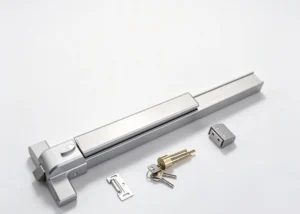
Let’s cut the corporate mindfulness nonsense. You’re staring at a line item for panic bar parts, the spreadsheet is bleeding red, and a shiny aftermarket component promises a 40% cost saving. Your inner bean counter is doing cartwheels. Stop them. You’re not buying office chairs. You’re speculating on a device someone will physically assault to save their life when the lights go out and the air turns to soup. This isn’t frugality; it’s a high-stakes game of warranty roulette, and the revolver is pointed at your professional reputation, your budget, and your liability insurance.
The Warranty Charade & How You Just Became the Main Act
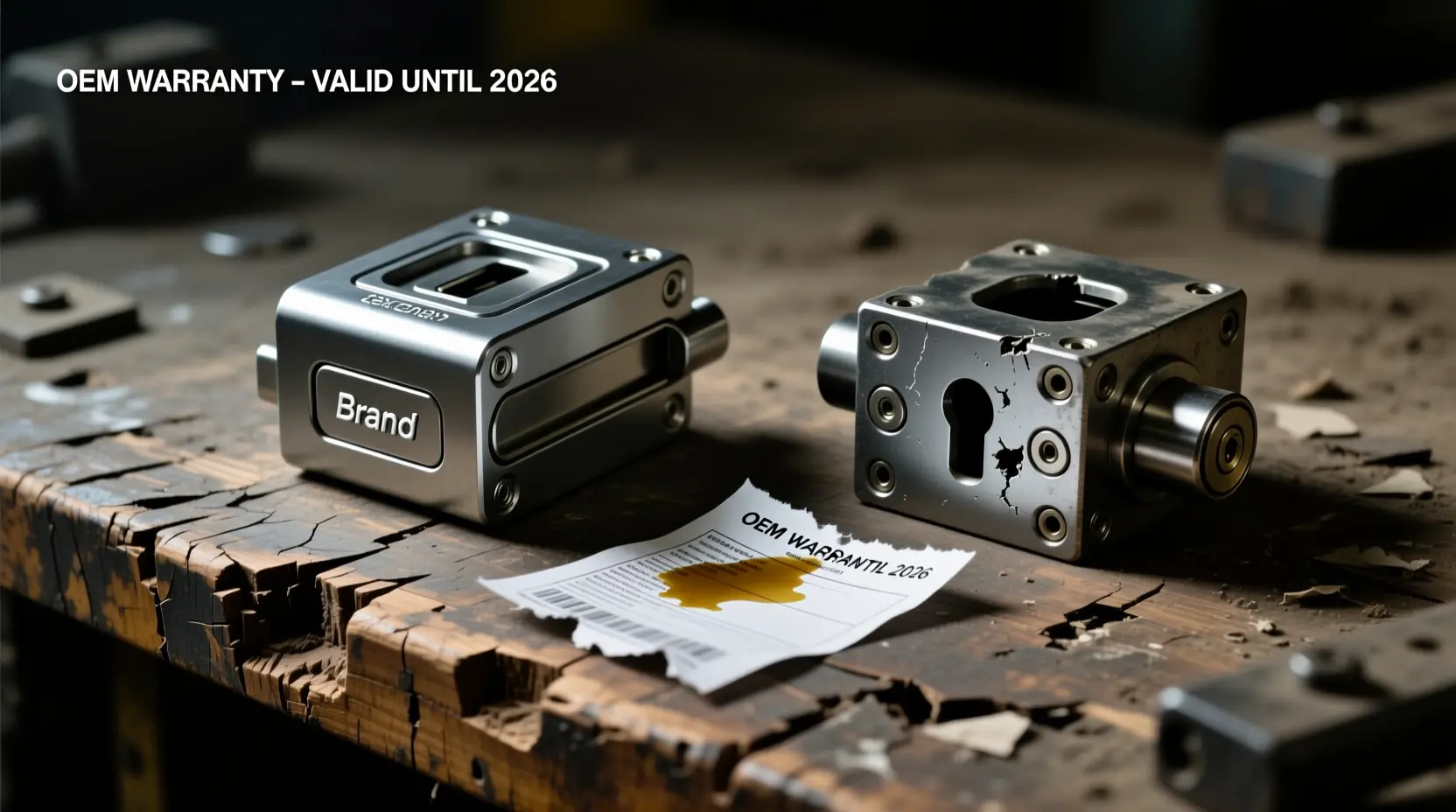
That warranty from Von Duprin, Allegion, or ASSA ABLOY? It’s not a promise. It’s a meticulously crafted legal escape clause. In font size 8, buried in legalese, it states the obvious: “This warranty is void if the product is used with components not supplied or approved by the OEM.” The millisecond your facility team or that corner-cutting contractor installs a non-OEM latch retractor or pushpad, you’ve torn up that contract and volunteered to be the warranty provider yourself.
Think of it like this: you can’t pour generic sludge into a Formula 1 car and then cry to Ferrari when the engine detonates. They’ll show you the door. It’s no different here. The OEM’s obligation evaporates. Not just for that cheap part, but for the entire device assembly. That $75 you “saved” on a dogging plate now puts a $800 full-device replacement on your future budget when the inevitable domino effect begins. Because it never fails in isolation.
The Aftermarket Mirage: “Compatible” is the Procurement World’s “Fake News”
The aftermarket industry survives on one brilliantly deceptive term: Compatible. It’s a weasel word. It means “the holes might line up.” It does not mean:
- The spring steel has the same tensile strength and cycle rating.
- The aluminum casting has the same grain structure and fatigue resistance.
- The zinc plating is the same thickness for corrosion prevention.
- The part will perform identically on cycle 87,452 as it did on cycle one.
You get a part that looks right. It feels slightly gritty, a bit less authoritative. Six months later, the “stainless” finish is rusting because it was 400-series, not 300. A year later, the spring fails because it was manufactured to a price point, not a performance specification. Then the real fun begins.
The Liability Lightning Rod. When—not if—there is an incident, the legal discovery process will be an archaeological dig into your purchasing history. They will find the PO for the non-OEM part. An expert witness, paid handsomely by the plaintiff’s attorney, will stand before a jury and explain, in devastating simplicity, how your cost-saving decision deviated from the tested, listed, and certified assembly. The OEM will be exonerated. You, the procurement “decision-maker,” will be the face of negligence.
The Semi-Reasonable Exceptions (Where I Briefly Temper the Rage)
Fine. I’m not utterly unreasonable. There are pockets of grey in this black-and-white nightmare.
- The Obsolete Relic: A panic bar on a 1950s building. The OEM discontinued support during the Clinton administration. Here, a high-quality aftermarket part from a specialist is often the only alternative to a five-figure door-and-frame replacement. Action: Document relentlessly. Get a signed risk acknowledgment from the building owner. Treat it as a temporary fix, not a solution.
- Cosmetic Non-Critical Items: Scuff plates, finish caps, maybe a cover where the only failure is aesthetic. The mechanical risk is lower. The warranty void still applies, but the stakes are less “catastrophic injury” and more “looks shabby.”
- The Conscious, Warranty-Agnostic Gamble: The device is 20 years old. The warranty is a distant memory. The capital budget is zero. You’re making an informed, if regrettable, gamble. Just know the dice are loaded, and you own every potential outcome.
But for anything under an active warranty, or for any load-bearing, motion-critical component—latch bolts, springs, trigger mechanisms—choosing aftermarket isn’t procurement. It’s professional malpractice.
The Installer’s Betrayal: Your Signature, Their Savings
Here’s the bitter pill for facilities managers and service contractors. The procurement manager saves the budget, gets a pat on the back, and moves on. You, the professional who installed the inferior part, are now married to it. You get the 2 AM emergency call. Your team makes the overtime repair. Your company’s name is on the service report linked to the failure. The bean counter’s spreadsheet from Q2 doesn’t get cited in the post-incident report; your workmanship does. Never let your professional reputation become the collateral damage for someone else’s cost-saving KPI.
The Ultimate, Unavoidable Gatekeeper: The Almighty AHJ
All this chatter about warranties and liability is a philosophical debate compared to the concrete reality of the Authority Having Jurisdiction (AHJ). The Fire Marshal. The Building Inspector. This person is the final, grumpiest, most powerful arbiter of your choices.
Your clever aftermarket hack job means nothing if the device is no longer considered “as listed” or “in compliance.” During an inspection, if they spot a non-OEM part in a life safety assembly, they can—and will—red-tag it. The certificate of occupancy can be threatened. You will face a frantic, disgraceful, and astronomically expensive scramble to rip it out and install the correct, approved hardware. They have zero interest in your budget constraints. Their mandate is the code. The code demands tested, compliant performance. Your shortcut is a direct affront to that mandate.
AHJ WARNING: Nothing in this article, no cost-saving argument, no desperate justification, overrides the need for AHJ approval. Before you install any non-OEM part in a fire exit device, you must consult with your local AHJ. Their word is law. Ignore it at your profound professional and financial peril. They possess a level of bureaucratic grumpiness that makes my tone seem like a stand-up comedy routine.