Right. So the visionaries have descended. The ones with the pristine white hard hats and the renders where everyone is clean, smiling, and apparently never needs to use a door. They’ve sold the dream: a mega-venue, a multi-use palace of profit. Concerts! Sports! Conventions! And then they hand you the hardware specifications. A cold, familiar dread sets in. It’s residential-grade junk masquerading as commercial. It’s the stuff for a boutique hotel, not for a portal that must survive 300 hyped-up, beer-fueled humans trying to use it as a battering ram every half hour.
Forget the glittering facade. The true soul of a stadium—the part that prevents it from becoming a chaotic, broken-down, lawsuit-generating machine—is its heavy-duty hardware. We’re not talking ‘commercial.’ We’re talking brutal, industrial, laugh-in-the-face-of-naivety hardware. The kind designed for a 50,000-cycle weekend without breaking a sweat. Let’s embrace the intentional chaos of reality.
The Delusional Fantasy vs. The People-Processing Machine
First, obliterate the misconception. A stadium is not a building. It is a machine for processing people. A wet, clumsy, often inebriated, and perpetually impatient herd. They are vectors for grease, sugar, kinetic energy, and pure, unadulterated neglect. They kick push doors. They hang on exit bars like Olympic gymnasts. They body-slam their way to a halftime beer.
Your standard office door hardware is built for a gentle, predictable life—maybe 100 cycles on a busy day. A main concourse door during a major event? 500 to 1,000 cycles in a few hours. A double-header weekend? You’re flirting with 2,000-3,000 cycles on a single hinge. Multiply that across hundreds of doors. The ‘50,000-cycle’ rating isn’t marketing hyperbole; it’s a bare-minimum survival threshold. Throw your standard catalog in the bin. What you need lives in a section marked ‘Industrial,’ ‘Prison Grade,’ or ‘Stop Asking Questions.’
The Non-Negotiables: A Grumpy Breakdown
1. Hinges: The Unseen Foundation of All Rage
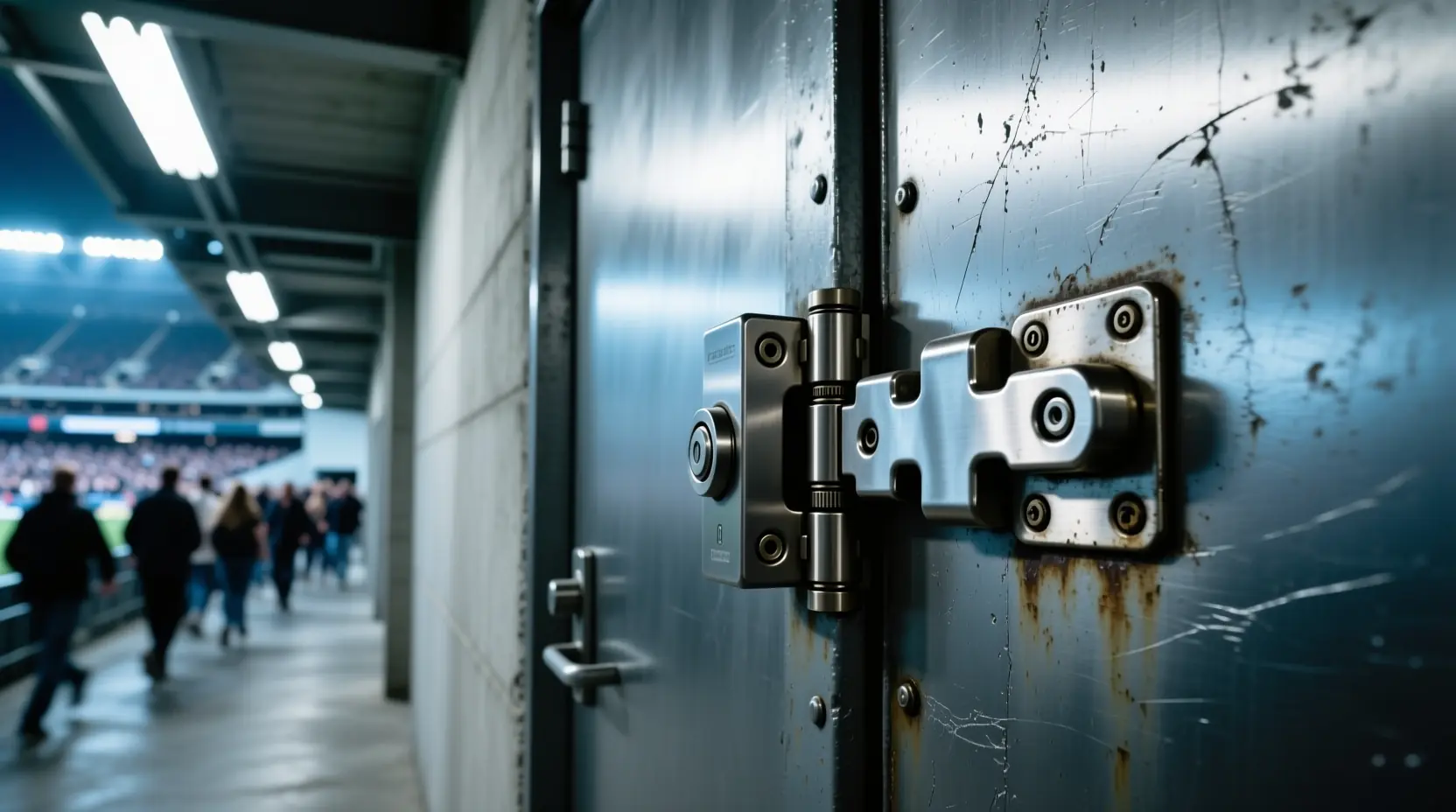
Butt hinges? A charming anachronism, like fax machines. You need full-height continuous (piano) hinges. Why? Physics, which the shiny-shoe brigade often ignores. A standard hinge concentrates stress on three tiny knuckles. A continuous hinge spreads the load across the entire height of the door, eliminating sag and protecting the latch. They must be ball-bearing equipped—plain bearings will seize into a gritty monument to your failure by season’s end. Material? Stainless steel. Or heavily plated steel that can survive weekly power-washing with chemical agents that would melt lesser metals. Brass is for yacht railings. Here, it’s a confession of incompetence.
2. Door Closers: The Unsung, Unthanked Muscle
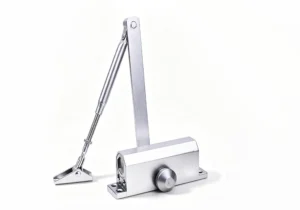
This is where value engineering goes to die, spectacularly. The standard closer is a toy. You need heavy-duty overhead concealed closers or parallel-arm surface-mounted closers, rated for extreme frequency. Here’s the golden rule: size up. Twice. The chart says a Size 4 for that solid-core metal door? Install a Size 6. The chart assumes a civilized close. Stadium doors experience hurricane-force prop-open events (think delivery pallets or crowd surge) followed by a violent release. The closer needs hydraulic reserves to manage that kinetic energy, repeatedly, without blowing its seals or developing a nervous twitch. Back-check functionality is non-optional—it’s the only thing stopping the door from smashing through the wall and taking a fan’s dignity with it.
3. Latches & Exit Devices: The Points of Catastrophic (and Legal) Failure
The lock on your front door is a delicate mechanism. A stadium door latch must be a forged, heavy-duty mortise lock with a 1-inch throw bolt. Cylindrical locksets are a liability waiting to be ripped from the door.
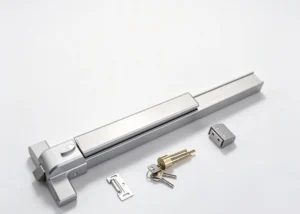
But the true star of the horror show is the exit device. You are not procuring a ‘device.’ You are procuring a welded, heavy-duty rim panic bar or vertical rod system that radiates ‘bank vault’. The pushpad must be a single, thick gauge of metal. Internal springs must be stainless. Every activation is a stress test. A cheap bar under crowd pressure will bend, bind, and fail. When it fails during egress, the repair bill is the least of your problems; you’re buying front-page news and a fleet of lawyers. For fire-rated openings, the hardware must not only be labeled for the assembly but listed for high-frequency use. This is a critical, often-overlooked spec.
4. Stops & Protection: The Glorious, Essential Overkill
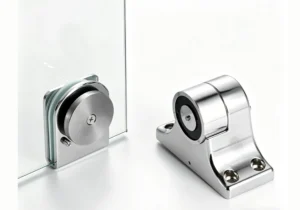
The wall behind the door is a target. A standard rubber stopper will have its screws evicted from the drywall in a fortnight. You need heavy-duty floor stops or wall stops with a massive baseplate, anchored into structural backing. Kick plates are not decorative. They are 16-gauge stainless steel, full-height armor. Handrail protection on adjacent walls isn’t an aesthetic suggestion; it’s a necessary defense against a million elbow-nacho interactions.
5. The Special Circles of Hell: Bathrooms & Vendor Gates
Bathroom hardware exists in a unique ecosystem of moisture, chemicals, and… organic matter. Stainless. Everything. Hinges, latches, toilet partition hardware. No powder coats, no platinqs that can scratch. Industrial disinfectants are brutal; hardware must be more brutal. Stall door latches must be simple, overbuilt, and easily cleaned with a pressure washer.
Vendor gates and concession counters are high-frequency abuse magnets. This is the domain of industrial-grade slide bolts, heavy-duty hasps, and hardened steel padlocks. Not the flimsy stuff from the big-box store. Think marine or security-grade. They are opened and slammed shut with the subtlety of a wrecking ball, a thousand times a game.
The Ugly, Messy Truth of Implementation
Here’s the secret the glossy brochures omit: Installation is 70% of the battle. You can buy the finest German-engineered hinge known to man, and if it’s installed out of plumb with drywall screws into a hollow frame, it will fail. Miserably. Door frames must be reinforced steel. Hollow metal frames require internal reinforcing plates at every critical point—hinge, lock, closer. Use every screw hole, with the specified long, structural screw into actual backing. This is not ‘finishing work’; it is structural integration.
Maintenance is not an annual afterthought. It is a ritualistic, per-event regimen. A dedicated crew, before and after every major gathering, must walk with a snag list: lubricating with dry-film lubricant (never wet oil or WD-40, you savages), checking bolt tightness, testing exit devices, inspecting for wear. It’s dull, dirty, and utterly indispensable. It’s the difference between a smooth operation and a midnight emergency call during a sold-out show.
The ‘Value Engineering’ Ambush and How to Survive It
They will come for you. After the sticker shock, a well-meaning or desperate soul will suggest ‘comparable’ products. They will show you a spec sheet with similar-looking numbers for 30% less. This is the trap. In hardware, ‘comparable’ often means ‘the same shape, with internals made of cheese and hopes.’ Cheap castings, weak springs, inferior steel. Saving $150 per door today buys you $15,000 in emergency service calls, angry facility managers, and safety hazards by next season. Your response must be a weary, grumpy, unshakeable: “No. This is the skeleton. We do not value-engineer the skeleton.” Embrace the chaos of the budget meeting. Let them grumble. Your future, less-stressed self will thank you.
AHJ WARNING: Let’s be perfectly, snarlingly clear. Every single rant, recommendation, and pearl of grumpy wisdom above is utterly worthless academic wankery until it is blessed by your local Authority Having Jurisdiction (AHJ). The Building Official. The Fire Marshal. The person whose signature is worth more than your entire contract. Their codebook is your bible. Your magnificent, over-engineered exit device is a very expensive paperweight if it’s not listed for that exact fire door assembly. Your perfect continuous hinge could void a fire rating. They have zero concern for your cycle-count problems if your hardware compromises life safety. You get their approval in writing, with stamps, before you cut a single purchase order. Failure to do this results in you personally supervising the tear-out of six figures worth of ‘perfect’ hardware, while the AHJ watches, arms crossed, looking even grumpier than you do. You have been warned. Now go buy some hardware that can actually do the job.