The Grumpy Procurement Manager’s Guide to Rim Cylinders & Panic Bars: Why Shortcuts Cost You More
Let’s get this straight. You have a broken rim cylinder on a door with a panic bar. The thought of disassembling that over-engineered masterpiece of rods, springs, and latent fury makes your eye twitch. I get it. You’re searching for the blog post, the forum tip, the magical incantation that lets you swap that cylinder without taking the whole contraption off the door.
As a procurement veteran who’s managed facilities budgets and listened to the war stories from every locksmith on my vendor list, I’m here to give you the unfiltered, economically brutal truth. Can it be done? Technically, sometimes. Is it a good idea for your operations, budget, and sanity? Almost never. Let’s unpack why this “shortcut” is a procurement nightmare dressed up as a timesaver.
The Critical First Step: Identify Your Device (Or, What Are You Even Paying For?)
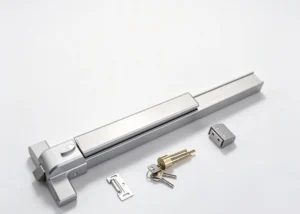
This is where your asset management system earns its keep. You can’t know the procedure if you don’t know the product. The entire feasibility hinges on one question: Does the rim cylinder thread into a small retaining clip inside the panic bar, or does it thread directly into the device’s main housing?
If it’s a clip style (common in older Von Duprin 99, some Sargent), you might have a fighting chance. If it threads into the housing itself (standard on modern Allegion 98/99, most Yale), abandon all hope. The cylinder is a structural element. Removing it blindly compromises the assembly. Trying to save two hours here could turn into a $1,500 device replacement order. Not my idea of cost-saving.
Practical Diagnostic: Find the set screw on the panic bar edge (often under a cover). Loosen it. Try to unscrew the cylinder with a key. If it emerges, it’s clip-based. If it spins freely but doesn’t come out, it’s housing-based. Put down the tools and walk away from the shortcut. Your future self, reviewing the P&L, will thank you.
The “It Might Work” Procedure: A Procurement Case Study in Wasted Resources
Assume you have the clip type. The theory is elegant: Unscrew old cylinder, insert new, thread into clip, tighten set screw. 15 minutes. Zero downtime. The reality is a cascade of unbudgeted costs and operational delays.
The Breakdown of a Bad Decision:
- The Set Screw is a Budgetary Lie. That screw hasn’t moved since the Reagan administration. It’s fused by paint, corrosion, and time. Your technician’s allen key will round it off. Now you’re not just paying for a cylinder swap, you’re paying for labor to drill/extract a screw and a rush order for a new, specific, often proprietary set screw. Add 45 minutes and a special parts fee.
- The Cylinder is an Asset, Not a Disposable. Even freed, the cylinder is often seized. The required torque risks snapping the key inside, transforming a simple replacement into a complex extraction. This doubles the labor time and potentially damages the panic bar internals. More cost.
- The Clip: The Single Point of Catastrophic Failure. This is the financial vortex. That little clip is held by friction alone. When the cylinder fully unthreads, the clip can drop or rotate inside the housing. If it drops, it’s lost in the mechanism. If it rotates, it’s misaligned. Your technician is now performing blind, one-handed surgery through a quarter-sized hole.
- The Labor Hour Sink. What you budgeted as a quick fix becomes a time-and-materials black hole. The technician is fishing for clips, dropping new tailpieces, and attempting blind alignment. This is billable hour paradise for them, a line-item nightmare for you. A 1-hour minimum call stretches to 3.
- The Risk of Cross-Threading: The Capital Expense Trigger. Blind threading is a gamble. Cross-thread the new cylinder into the clip, and you’ve ruined both. Now you need a new cylinder AND a new clip, which is impossible to install without removing the panic bar anyway. You’ve paid for the shortcut labor and the proper repair labor. Brilliant.
The Economically Sensible Alternative: Just Take the Blasted Thing Off
Contrast the chaotic “shortcut” with the proper procedure. This is why you hire professionals and pay for their expertise, not just their parts.
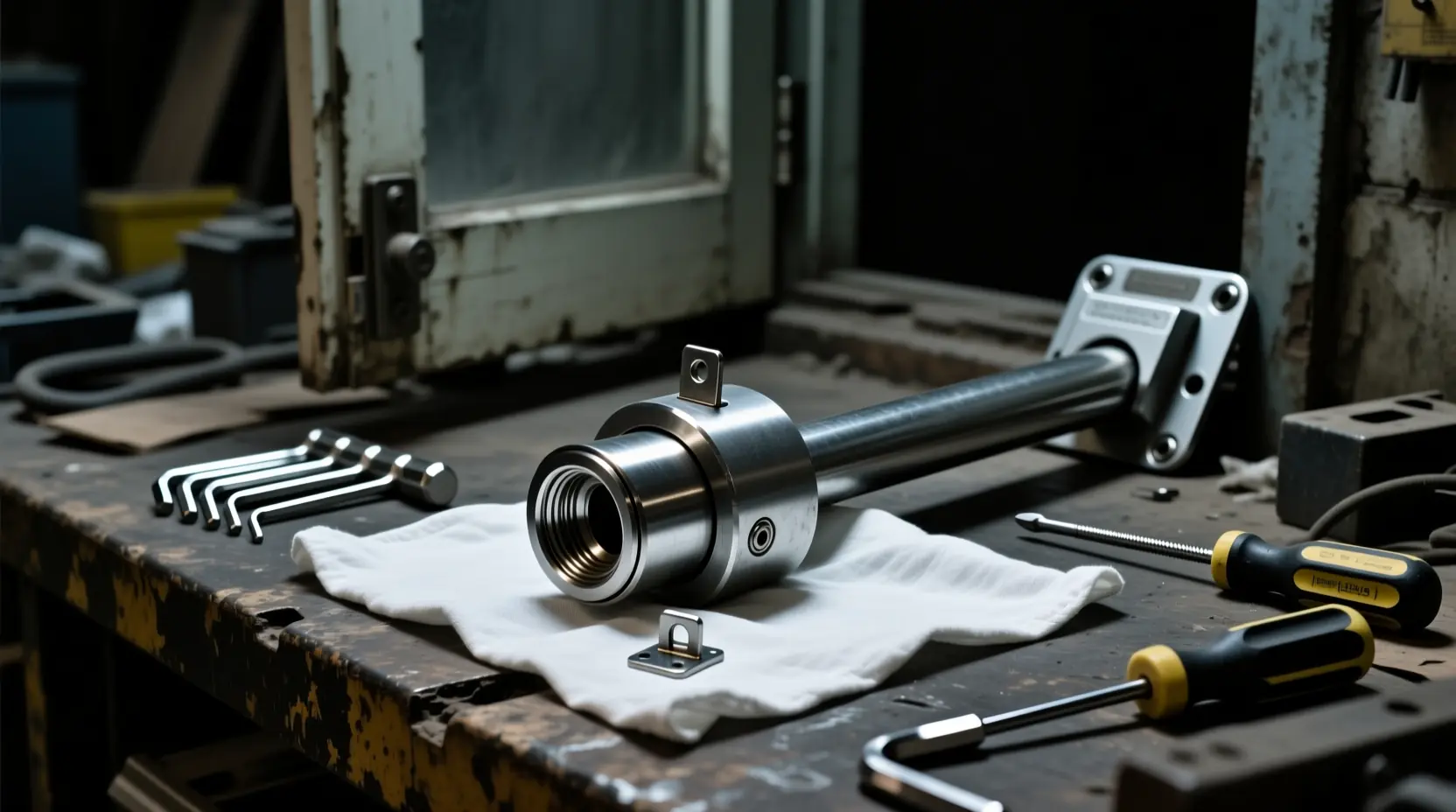
- Controlled Environment. Remove the device (typically 2-4 bolts). Place it on a bench. This is now a visible, manageable repair.
- Predictable Labor. The swap takes literal minutes. No fishing, no guessing, no dropped parts.
- Preventative Maintenance Opportunity. While it’s off, the mechanism can be cleaned, lubricated, and rods can be adjusted. You’re not just fixing a cylinder; you’re extending the asset’s lifecycle and preventing the next failure. This is procurement value.
- Guaranteed Result. The job is done to manufacturer spec. It works. You get an invoice for the quoted time, not an open-ended exploration fee.
The time “saved” by the shortcut is fictional. It’s always consumed by the problems it creates, multiplied by your technician’s hourly rate.
The One Acceptable Scenario (And It’s Rare)
There is a legitimate exception: a through-boiled cylinder. Here, the cylinder has a long threaded stem that passes through the door and panic bar, secured by a nut on the inside. No internal clip. You remove the nut, the cylinder comes out. This is a clean, designed-for serviceability feature. It’s also not the norm on most installed bases. If you’re specifying new hardware, demand this. For existing hardware, don’t assume.
The Grumpy Procurement Verdict
Replacing a rim cylinder without removing the panic bar is a false economy. It trades predictable, billable maintenance for a gamble that most often increases total cost of ownership. It turns a simple line-item repair into an unbudgeted project with hidden labor and parts risks.
Your job is to manage assets and budgets, not approve Hail Mary passes by technicians having a bad day. The directive is simple: Service the device per the manufacturer’s instructions. This removes ambiguity, controls cost, and ensures compliance. Anything else is a liability masquerading as initiative.
AHJ WARNING: The Bottom-Line Liability
Let’s talk about the Authority Having Jurisdiction (AHJ)—the Fire Marshal. They don’t care about your clever shortcuts or labor savings. They care about the panic bar functioning within its UL-listed specifications. A poorly seated cylinder or a dislodged internal clip can affect operation. If that device fails during an emergency, your cost-saving measure becomes a forensic audit, a lawsuit, and a catastrophic reputational loss. The only way to guarantee compliance and limit liability is to follow the manufacturer’s documented service procedure. Which, inevitably, involves removing the device. Do the job right. Document it. Sleep well. Your CFO will too.