Alright, listen up. I’ve been buying and specifying door hardware since “access control” meant a janitor with a key ring. We had a door. It had a panic bar. You pushed, it opened. The fire marshal nodded, the building didn’t burn down, and I could clock out before the sun set. It was a beautiful, simple, mechanical ballet.
Then the tech bros arrived. The ones who think every problem needs a microchip and an app. They looked at our perfect, reliable panic bar and saw a canvas for their “innovation.” “Let’s integrate a keypad!” they cried, probably from a spotless Silicon Valley cafeteria. “It’ll be sleek! It’ll be smart!” What it is, in my experienced, coffee-stained opinion, is a masterclass in overcomplication. Let’s dissect this particular flavor of madness.
The Shiny Sales Pitch (The Siren’s Song)
First, the nonsense they’ll try to sell you, delivered by a rep whose hardest day involved a dead tablet battery.
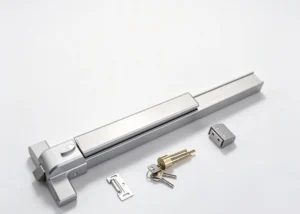
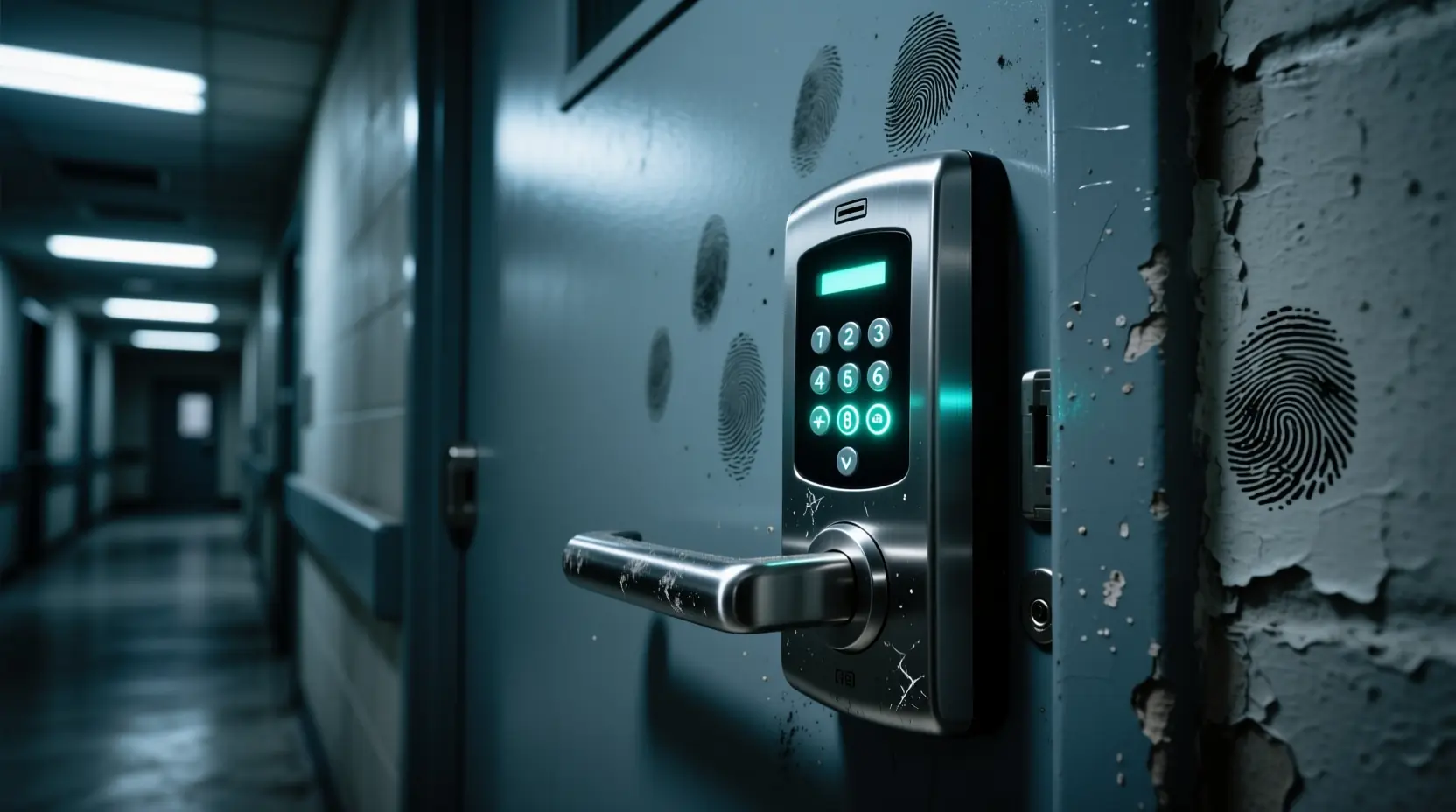
The All-in-One Wonder: Fine. I’ll concede one point. Combining the panic bar and keypad into a single unit saves wall space. It looks cleaner than the old spaghetti of separate devices. Your architect, who dreams in brushed aluminum and minimalist voids, will swoon. It checks the “aesthetic” box for those corporate temples where form forever outweighs function.
The Illusion of Fort Knox: It feels more secure. Having the code entry right on the exit device creates a single, imposing point of control. It whispers to management, “We own the traffic flow, in and out.” For scenarios where controlling egress is as critical as ingress—think server rooms, pharmaceutical storage, or places where people might try to sneak out with something that doesn’t belong to them—this psychological deterrent has some merit. It’s a fancy “Keep Out” sign for the inside.
The War on the Doorstop: This is their best argument. The age-old battle against the propped-open door. With a standard bar, any chucklehead can push it and jam a rock in the gap, nullifying your security and HVAC budget. With an integrated keypad, they need the code just to unlock it for normal passage. Prop-posing it becomes a conscious, two-step act of rebellion, and most people are terminally lazy. It adds a friction that, admittedly, works.
The Cold, Hard, Infuriating Reality (The Toolbox Truth)
Now, let’s talk about what happens after the ribbon-cutting, when the sales team has vanished and the building manager has my number on speed dial.
The Cardinal Sin Against Egress: The core, sacred, non-negotiable purpose of a panic device is unthinking, immediate, fail-safe escape. It’s a mechanical promise: push, flee, live. By grafting an electronic keypad onto it, you inject a layer of potential failure—power, logic, firmware—directly into that promise. Yeah, they all have “fail-safe” or “mechanical override” features (push REALLY hard!), but now you’re asking someone in a blind panic to understand force differentials. You’ve complicated salvation. This alone should make any veteran’s eye twitch.
A Festival of Failure Points: A traditional panic bar is glorified levers and springs. I can fix it with a hammer, a hex key, and a rich vocabulary of profanity. The integrated unit? It’s a computer strapped to a door. Circuit board, solenoid, micro switches, LEDs, power regulator, maybe a network chip. Each component is a ticket to the failure lottery. Keypad buttons wear out from a million greasy fingers. The solenoid freezes in the cold. The LCD fades in the sun. Now your door isn’t just a hardware issue; it’s an IT ticket. Good luck finding the unicorn technician who understands maglocks and TCP/IP settings.
Installation: A Three-Ring Circus of Blame: This isn’t an install; it’s an interdisciplinary hostage situation. You need the door hardware guy to hang it, the electrician to run power, and the IT/access control programmer to make it talk to the network. They will stand in a triangle, pointing at each other, while you watch the project timeline and budget evaporate. What used to be a half-day job morphs into a multi-day odyssey of callbacks.
The Never-Ending Money Pit: The unit cost is eye-watering—three to five times a standard bar. Then tack on the “specialist” installation labor, the dedicated power supply, the programming hours, and the integration fees. But the real kicker is the lifetime cost. Batteries die. Components fail. Firmware needs updates. It’s a subscription service for a door, disguised as a capital purchase.
People Are… People: Never underestimate human confusion. Occupants will stand inside and try to enter a code to exit. They’ll give the bar a tentative nudge, it won’t open, and they’ll report a “broken door.” And my personal favorite: they’ll use their code to leave legitimately and then, out of ingrained politeness, hold the door for the stranger right behind them. Poof. Your integrated security just enabled a tailgater. The social contract of door-holding is more powerful than any keypad algorithm.
The Elements Always Win: Electronics despise reality. Sun, rain, snow, salt, and the sheer physical abuse a door endures—people lean, kick, slam, and spill their latte on it. A wall-mounted keypad can have a protective hood. The panic bar keypad is out there on the front lines, taking a beating. Its operational lifespan in harsh conditions is a fraction of its simple, mechanical ancestor.
The Grumpy Procurement Verdict
So, do I buy these things? I sigh heavily just thinking about it.
If you have a highly controlled, benign interior environment—a data center door inside a secure area, a narcotics cabinet in a hospital, a high-value R&D lab—and your absolute primary need is to audit and control who leaves during normal operations… then maybe. The scales might tip slightly in its favor, assuming you have the budget and dedicated maintenance crew.
For virtually any exterior door, main egress route, or high-traffic area? It’s a hard pass. You are inviting operational chaos, maintenance headaches, and potential life-safety confusion for a bit of aesthetic sparkle.
In most cases where a client is enamored with this idea, their actual need is simple: a top-quality, code-compliant standard panic bar for fail-safe egress, paired with a separate, well-positioned access control reader (keypad, card, whatever) for entry. Segregate the functions. Let the panic bar be the dumb, reliable, lifesaving beast it was born to be. Let the electronics live separately, where they can be serviced without condemning an entire exit.
The Bottom Line: This is a product that solves a handful of niche problems while creating a dozen new, more expensive ones for everyone else. It prioritizes sleek marketing over operational sanity. My job is to buy things that work, not things that look good in a brochure.
***AHJ WARNING: THE ONLY PART OF THIS ARTICLE THAT MATTERS***
Stop. Right now. Before you even consider one of these units for a nanosecond, you pick up the phone. You call your Authority Having Jurisdiction (AHJ)—your local Fire Marshal, Building Official, the person whose signature means you pass inspection.
You do not assume. You do not extrapolate. You do not trust the sales literature.
You ask this exact question: “Do you approve the installation of [Specific Model Name and Number] panic hardware with an integrated keypad on a [Type of Door] serving a [Type of Occupancy] in this jurisdiction?”
You get the answer in writing. You review the product’s specific listing (UL 294, UL 10C, etc.) with them. Because if you don’t, here’s what will happen: a fire marshal, on a rainy Tuesday, will walk up to your fancy door, see a keypad on an exit device, and see a potentially locked exit. Their gut reaction will be to red-tag it. Your elegant integration becomes a code violation. Your expensive hardware is now a liability. Their interpretation is the only one that counts. My grumpiness is forged in the fire of cleaning up these exact, preventable, expensive messes. Don’t join the club.