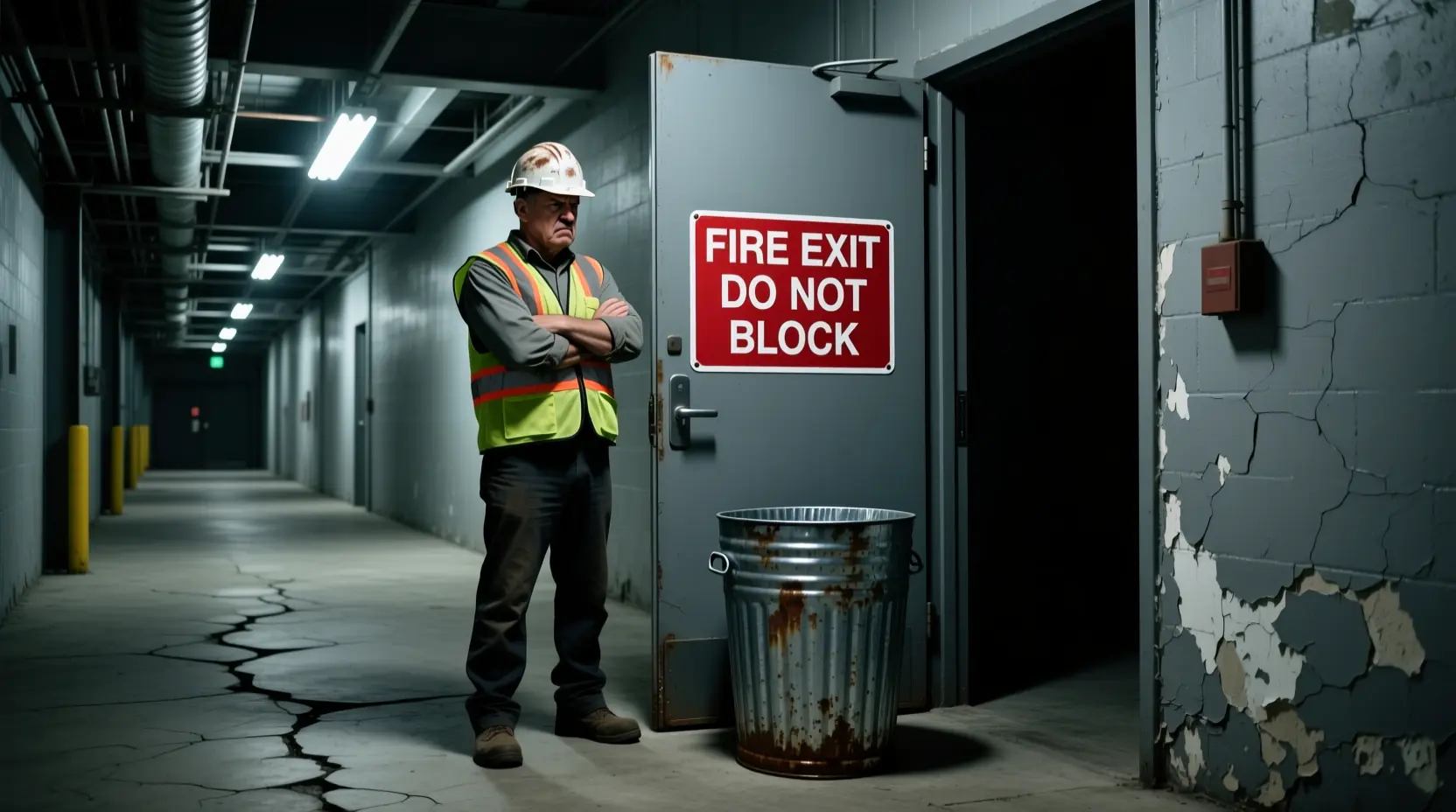
Look. I’ve negotiated contracts with vendors who make used car salesmen look like saints. I’ve managed supply chains through pandemics, port strikes, and acts of God. But nothing, nothing, prepares you for the soul-crushing, brain-cell-murdering challenge of getting humans to leave a dang fire door closed. It’s the procurement nightmare you didn’t order, delivered daily by your own staff.
They’ll prop it with a pallet of the very safety manuals you overpaid for. They’ll use a doorstop "borrowed" from the CEO’s ergonomic footrest. The creativity is a testament to wasted talent. It’s also illegal, staggeringly dangerous, and the quickest way to turn your facility from an asset into a liability spreadsheet nightmare.
You can’t just weld it shut. That invites a different kind of fire—the one from your local Authority Having Jurisdiction (AHJ). So, you have to get strategic. You must work within the chaotic framework of life safety codes to outmaneuver the profound laziness of the average Homo sapiens. Think of it as sourcing a compliance solution from the world’s most frustrating supplier: Human Nature.
Part 1: The Spec Sheet on Stupidity (And the Code)
First, let’s diagnose the problem with the snarky clarity of a post-audit review. A fire door isn’t a décor item. It’s a rated assembly, a purchased component with a specific performance spec (usually 60/90 min fire resistance) designed to compartmentalize smoke and flame. Propping it open voids the warranty, catastrophically. It turns a protected stairwell into a chimney. It sabotages the building’s pressurization system—another expensive asset you’re responsible for. But sure, Steve in Logistics needed a breeze while he texts.
The governing documents here are NFPA 101 (Life Safety Code) and the International Fire Code (IFC). Their key clause for our purposes is deliciously simple: fire doors must be self-closing and latching. The magic word is "self-closing." Not "usually closed." Not "closed unless inconvenient." Self-closing.
Any device that holds it open is, by the bureaucratic definitions we love, a hold-open device. Here’s the rub: you can have a hold-open device. But it must be a listed, approved, integrated system that releases automatically upon:
1. Fire Alarm Activation (The main system goes haywire).
2. Power Failure (Failsafe = closed).
3. Local Smoke Detection (Sometimes a dedicated detector does the trick).
Your procurement objective, therefore, isn’t to eliminate the open door. It’s to eliminate the unauthorized, non-compliant, idiot-simple propping. You need to replace the rock with a system that meets spec and then does the enforcement for you.
Part 2: The Supplier Catalog of Solutions (The Legal RFQ)
Here’s your messy, multi-vendor approach. A single solution rarely works. You need a layered defense, like sourcing from multiple regions to mitigate risk.
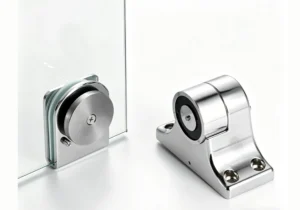
1. The Capital Expenditure: Approved Electromagnetic Hold-Open.
This is the "if you can’t beat ’em, budget for ’em" play. You install an electromagnetic holder, wired into the fire alarm. The door can be held open legally. Alarm sounds? Power cuts? It slams shut. It’s expensive, requires an electrician (good luck with that lead time), and needs AHJ sign-off. The ROI is measured in avoided fines and not burning alive. Sometimes, you just have to capex the stupid out of people.
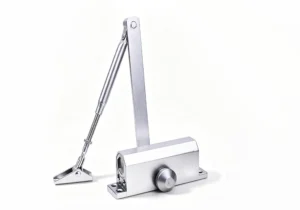
2. The Maintenance & Upgrade Path: The Door Closer Tango.
Often, the root cause is a poorly sourced or adjusted door closer. If it’s set to "bank vault," people will fight it. NFPA 80 has guidelines on closing force. Hire a competent door hardware specialist (yes, it’s a niche market) to adjust it. Smoother operation reduces friction.
Consider upgrading to closers with a delayed action feature. Door opens, stays open for 5-15 seconds (for that cart move), then closes. It’s a psychological contract fulfillment: "You get your convenience, then it self-resolves."
The aggressive option? A closer with a high-power, low-speed spring. Opens easy, closes with relentless, wedge-crushing finality. It’s a passive-aggressive masterpiece.
3. The Environmental Modification: Make It Unpleasant.
People prop for laziness or discomfort. Attack the latter. If it’s a doorway to outside, make that threshold miserable. A powerful air curtain ("fly fan") or a directed HVAC blast creates a wind tunnel. It’s noisy, messes with hair, blows papers. It transforms a casual passage into a dramatic, annoying event. They’ll close the door to stop the nuisance. Petty? Deeply. Effective? Often.
4. The Low-Cost, High-Impact PO: The Alarm of Shame.
A personal favorite. Install a local, standalone door alarm. Not tied to the fire panel (that’s a violation), but a shrill, 120-decibel "BEEEP-BEEEP-BEEEP" that triggers after 15-30 seconds of being open. It’s social enforcement. It makes the propper the office pariah. The cheap, battery-powered models are like window alarms for idiots. The ROI is instant.
5. The Process Re-Engineering: Remove the Need.
Conduct a value-stream map of why that door is a problem. Is it a shortcut? Reroute the official path. Is it for moving carts? Install a nearby traffic door designed for that purpose. You’re procuring a better workflow. Remove the incentive.
6. The Training & Enforcement Sink Cost.
You must train. But forget boring slides. Show the graphic aftermath. Explain how propping this door suffocates someone three floors up. Make it visceral.
Then, enforce with the cold efficiency of a cost-cutting initiative. Departmental charge-backs. "Shipping owes $50 to the coffee fund for three propping incidents." Tie manager KPIs to it. Make it their problem, because the financial and legal liability ultimately is.
Part 3: The Non-Compliant Items (Reject These Quotes)
Do NOT, under any circumstance, source or approve:
* Chains or hasps.
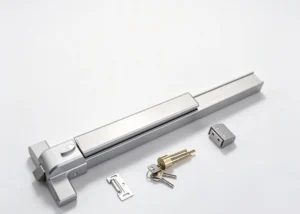
* Keyed locks on the egress side.
* Non-listed, online "fixes."
* Disabling the self-closer.
* "Temporary" blocks like pallet jacks or vending machines.
* The Operations Director’s advice to "just let it go."
The Final Grumpy Procurement Summary
You won’t achieve 100% compliance. The defect rate in human behavior is too high. But you can reduce it to a manageable non-conformance. Stop viewing this as a security issue. It’s a behavioral engineering and compliance sourcing issue. You are making the correct action (letting it close) the path of least resistance and the incorrect action (propping) a socially, environmentally, and auditably painful fail.
And document everything. Every inspection, adjustment, training, and repair. When the AHJ—your ultimate customer in this nightmare—sees a wedged door, your paper trail is your sole defense. It’s the difference between a corrective action notice and a fine that blows your annual maintenance budget.
***AHJ WARNING: LISTEN UP. THIS IS THE TERMS & CONDITIONS. EVERYTHING ABOVE IS GENERAL GUIDANCE FROM A JADED PROCUREMENT PROFESSIONAL. YOUR LOCAL AUTHORITY HAVING JURISDICTION (AHJ)—TYPICALLY THE FIRE MARSHAL—IS THE SOLE SOURCE OF TRUTH. THEIR INTERPRETATION IS THE CONTRACT LAW FOR YOUR BUILDING. BEFORE YOU ISSUE A PO FOR A MAGNETIC HOLDER OR A $20 SQUEAKER ALARM, GET THEIR WRITTEN APPROVAL. WHAT’S ACCEPTED IN ONE JURISDICTION IS A VIOLATION IN ANOTHER. DO NOT LEARN THIS DURING AN INSPECTION WITH SOMEONE GRUMPIER THAN YOU HOLDING THE CLIPBOARD. THE AHJ IS THE ULTIMATE VENDOR OF YOUR OCCUPANCY PERMIT. NEGOTIATE WITH THEM ACCORDINGLY.***