
The 2026 Exit Device Buyer’s Guide: A Procurement Manager’s Grumpy Truth
Let’s get one thing straight. I don’t have time for fluff, and you can’t afford ignorance. I’ve approved more hardware invoices than you’ve had hot dinners, and I’ve seen the carnage wrought by “value engineering” a life safety device. This isn’t a gentle introduction; it’s a field manual for not getting fired, sued, or morally responsible for a headline you never want to see. Welcome to the grumpy, messy, intentionally chaotic truth about buying what you insist on calling panic bars in 2026. We’re calling them exit devices now. Keep up.
What You’re Really Procuring (Hint: It’s a System, Not a Product)
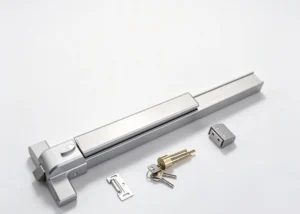
First, purge the word “panic bar” from your RFP template. It flags you as a novice. You are procuring an exit device: a mechanical (or electro-mechanical) system whose sole, non-negotiable purpose is to open a door immediately under duress. Its entire design ethos is failure under pressure. If the operational procedure requires more cognitive load than “PUSH,” you’ve already specified a liability. You’re not buying a piece of metal; you’re buying performance under panic, durability against daily abuse, and compliance with a labyrinth of codes that don’t care about your budget.
The Four Core Exit Device Architectures: Choose Wrong, Pay Forever
This is where your supplier will try to dazzle you with finishes. Ignore them. The underlying mechanism dictates cost, lifespan, and installer sanity.
1. Rim Devices (The So-Called “Panic Bar”)
The budget-friendly classic. Mounts on the interior face (rim) of the door. Pros? Lower cost, simpler installation. Cons? The entire mechanism is a glorified shin-basher, exposed to every delivery cart, backpack, and curious idiot with a screwdriver. It’s a single-door solution. For pairs, you need two, and they operate in lonely isolation. Fine for low-traffic interior egress. A questionable choice for anywhere else.
2. Mortise Devices
For the grown-ups. The mechanism is buried within a pocket (mortise) cut into the door’s edge. Externally, you see only a sleek crossbar or touchpad. Pros? Superior security, cleaner aesthetics, reduced vandalism potential. Cons? Higher upfront cost, requires precise door preparation (translation: a skilled installer, not just a guy with an angle grinder), and when it fails, the repair is a surgical procedure. Spec this for corporate lobbies, hotels, any place where image whispers but code screams.
3. Concealed Vertical Rod (CVR) Devices
The elegant solution for pairs of doors. A mortise device operates rods hidden inside the door that latch at the top and bottom. This resists racking, warping, and forced entry. When the bar is pushed, both points disengage. Pros: Secure, clean look for large entries. Cons: Alignment is a ballet performed by artisans. A millimeter of misalignment causes grinding, sticking, and catastrophic failure. Tolerances are measured in whispers.
4. Surface Vertical Rod (SVR) Devices
The CVR’s less sophisticated, ugly cousin. The rods are surface-mounted. They snag sleeves, collect dust, and look like they belong on a submarine hatch circa 1953. The only pro is retrofit ease onto doors not prepped for concealment. The con is everything else. I dislike them. You should too. But sometimes, the bean counters win, and you’re left explaining aesthetic terrorism to the facilities team.
Materials: Decoding the Metallurgy Before It Decodes Into Rust
- Commercial-Grade Steel: The baseline. It’s fine. It’ll last a few years on an interior door with a powder coat. Ask for the grade. If your supplier mumbles, end the call.
- Stainless Steel (Type 304 or 316): This is for exterior doors, food processing, pools, or any environment where moisture or corrosion is present. 316 for coastal/salty air. This isn’t an upgrade; it’s a non-negotiable for certain applications. The price jump is the cost of not replacing it in 18 months.
- Aluminum: Often used for touchpads or crossbars for weight and corrosion resistance. Rarely the main chassis material. Don’t let them sell you an all-aluminum device for a high-abuse area.
The Trinity of Critical Specs (Ignore These at Your Peril)
Forget the color for a second. These three parameters will make or break your installation.
1. Latch Retraction: The Margin for Error
Measured in inches. This is how far the latch pulls back into the device. If your door frame isn’t perfectly aligned (spoiler: it never is), insufficient retraction means the latch drags on the strike plate. Under panic pressure, that friction can be the difference between outflow and a crush. Do not accept less than 1/2″. Demand 3/4″ for high-traffic or critical doors. This spec is where cheap devices reveal their true cost.
2. Cycle Testing: Predicting Obsolescence
A laboratory rating for operational lifespan. A big-box residential device: maybe 250,000 cycles. A proper commercial unit starts at 500,000. A school main entrance? 1,000,000+ cycles. Do the math: Door uses per day x 365. Then double it. Buying a 250k-cycle device for a main entry is planning for its failure. It’s not savings; it’s a scheduled capital expense.
3. Fire Rating & Listing: The Liability Shield
The device itself isn’t fire-rated. The assembly is. The door, frame, hardware, and glazing are tested as a unit. Your exit device MUST be listed for use on a fire door assembly (look for the tiny UL or WH label). Slapping a non-listed device on a fire-rated door voids the door’s rating. In the event of a fire, your insurer will abandon you, and your lawyer will be drafting settlement papers. This is non-negotiable.
The 2026 Buzzword Minefield: Cutting Through the Nonsense
- “Smart” / “Connected” Exit Devices: They can report status, log events, and integrate with access control. Useful for monitoring door prop alarms or high-traffic analytics. Necessary for every door? Absolutely not. It adds cost, complexity, and another point of failure. Deploy strategically, not ubiquitously.
- “Anti-Ligature”: A specialized, expensive subset for behavioral health, detention, etc. Designed with no gaps for securing a cord. If your risk assessment doesn’t explicitly call for it, you are burning budget on a solution to a problem you don’t have.
- “Delayed Egress”: A system that locks the door for 15-30 seconds upon push, with a local alarm. For retail theft or healthcare wanderer prevention. WARNING: The code requirements here are Byzantine (NFPA 101, local codes). It requires integration with fire alarm systems, specific signage, and AHJ approval. This is not a product; it’s a project. Get it wrong, and you are locking people in during a fire.
Installation: The Graveyard of Perfect Specifications
You can write the world’s most perfect spec for a million-cycle, stainless steel, mortise device. If your installer is a hack, you’ve bought a very expensive doorstop. Installation is precision engineering. Mortise cuts must be exact. Alignments must be perfect. Strike plates must be positioned with micrometer tolerance. This is a job for a credentialed door hardware installer, not the lowest-bid maintenance crew. The 30% you “save” on install will be repaid 300% in service calls, emergency repairs, and inspectors shaking their heads.
A Grumpy Procurement Manager’s Parting Shots
- Buy the Application: A warehouse loading dock door needs a tank. A private office hallway needs a sedan. Don’t cross-spec.
- Spend Money Where Traffic Flows: Your building’s main entrance and high-traffic cross-corridors are not places for value engineering. Save your cost-saving for the low-use interior stairwell.
- Demand a Hardware Schedule: Never, ever buy an exit device in a vacuum. It interacts with the hinges, door, frame, lockset, and closer. These components must be compatible. A full hardware schedule from a qualified consultant or distributor is your single most valuable document.
- Plan for Maintenance: These are mechanical systems. Budget for annual lubrication, inspection for loose fasteners, and operational checks. A device that fails gradually will fail absolutely during an emergency.
AHJ WARNING: THE ONLY PARAGRAPH THAT MATTERS
Everything written above is the accumulated, bitter experience of a professional who has cleaned up other people’s messes. It is NOT code. It is NOT legal or regulatory advice. The final, absolute, unappealable authority is your Authority Having Jurisdiction (AHJ) – your local fire marshal, building official, or life safety inspector. Their interpretation of the code trumps this article, trumps your supplier’s catalog, and trumps your CFO’s budget. You MUST engage your AHJ during the design phase. What passed in the building next door may fail in yours. Proceeding without their buy-in is a guaranteed method to rip out your beautiful, non-compliant hardware at a 300% cost premium and start over. You have been warned. Now go procure something that doesn’t just meet spec, but survives the real world.