Let’s get one thing straight from the jump. I’ve been specifying doors and hardware since disco was dying. I’ve seen “revolutionary” products come and go, most of them just shiny new headaches. But this shift from simple mechanical exit bars to these electro-mechanical marvels? It’s not a trend. It’s a fundamental, messy, and permanent rewrite of the rulebook. And if you think you can just swap one for the other, you’re in for a world of expensive, code-violating pain.
From Beautiful Simplicity to Managed Chaos
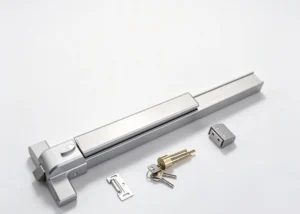
For decades, the panic bar was a thing of beautiful, stupid simplicity. You pushed, it opened, you left. It didn’t need a manual, a battery, or a prayer. It was the pure, mechanical embodiment of the building code: egress shall be immediate and unfettered. It was also a gaping security hole. Once that door closed, it was often just… latched. Not locked. Anyone with a credit card or a strong shoulder could defeat it. We balanced on a knife’s edge: unimpeded life safety versus any semblance of asset protection. We sold fancy deadlatches, which was like putting a better lock on a screen door.
Enter the Franken-Latch: Where Mechanics Meet the Matrix
Then came the buzz. Literally. The electro-mechanical exit device. The name is a bureaucratic nightmare, which is your first clue. The concept is simple yet infuriatingly complex: bolt a little solenoid or motor onto the guts of the old, reliable mechanical device. The inside (egress) remains gloriously, code-compliantly mechanical. Push the bar, physically retract the latch, save your skin.
The witchcraft happens on the outside. That lever or keyhole is no longer just a mechanical thing. It’s a request. It asks the overlord—the access control system in the janitor’s closet—for permission. Valid credential? Correct time? The system sends a jolt of power, the latch retracts electrically, and entry is granted. No credential? The door stays locked, period. The sacred cow of free egress remains untouched, while security gets a quantum leap forward. Sounds great, right? This is where the migraine begins.
The Three Circles of Electro-Mechanical Procurement Hell
1. The Power Problem (It’s Never Just a Door)
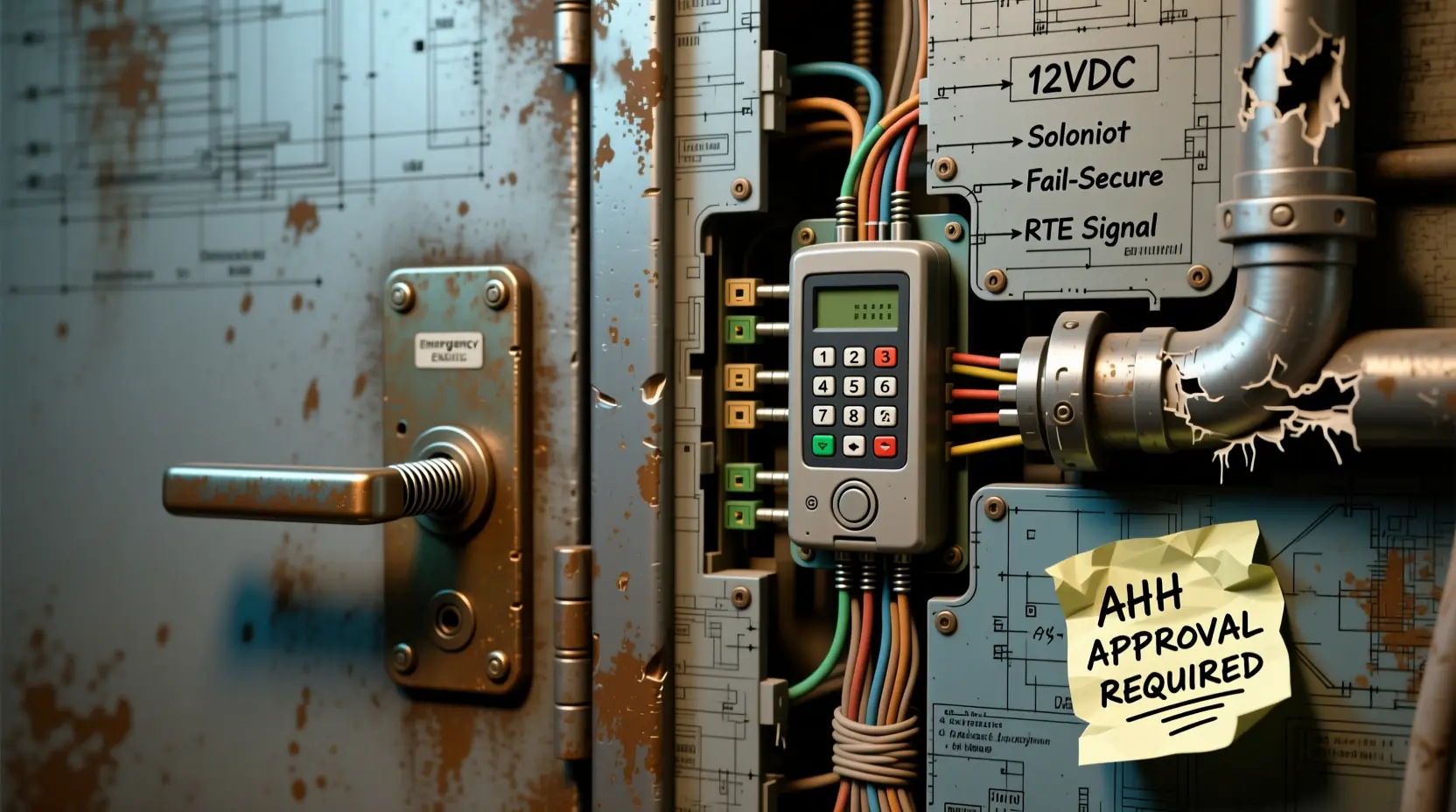
Your old device ran on human panic. Your new one runs on 24VDC. Or 12VDC. Or some proprietary voltage that costs triple. Now you’re not buying hardware; you’re funding an infrastructure project. Conduit. Wire pulls. Power supplies. And because fires and blackouts happen, you need batteries. Big, ugly, maintenance-hungry batteries with a lifespan shorter than your average CEO’s vision. That single door just became a systems engineering puzzle.
2. The Smorgasbord of Confusion (Fail-Safe vs. Fail-Secure)
This is where careers end. You have two fundamental choices, and mixing them up doesn’t mean a door doesn’t work—it means it fails catastrophically.
- Fail-Safe: Power applies to lock. Lose power, door unlocks. Ideal for stairwells during a fire alarm. A gift to burglars on a stormy night.
- Fail-Secure: Power releases to lock. Lose power, door stays locked. Perfect for perimeter security. A potential death trap if your backup fails during an evacuation.
Choose wrong, and you’ve either breached security or barricaded an exit. No pressure.
3. The “Intelligence” Tax (Welcome to Systems Management)
The exit device is now just a peripheral. The real cost is the “brain”: the access control software. Programming credentials, setting schedules, integrating with video—this isn’t a job for your usual hardware installer. It’s for a tech with a laptop, a proprietary dongle, and an hourly rate that would make a cardiologist blush. Then come the service contracts, the software updates, the ongoing maintenance. The hardware is just the ticket to the show.
Why Bother? The Transformative Upside
Despite the gnashing of teeth, we do this for reasons that are, admittedly, game-changing.
- Actual Security: You can give a code for egress that doesn’t also grant after-hours entry. Revolutionary.
- An End to “I Swear I Locked It”: Digital audit trails. Who entered, which door, at what time. The data is a cold, hard truth-teller.
- Centralized Control: Lock down a building from your phone. Grant remote access for deliveries. Unlock all doors automatically during a fire alarm.
- Flexibility: An employee quits? Revoke their credential instantly. No more $5,000 building re-key.
The Non-Negotiable Final Boss: Your AHJ
Pay attention. This is the most important paragraph you’ll read. The Authority Having Jurisdiction (AHJ)—your local fire marshal, building official—is the final arbiter. Their word is law. Electro-mechanical devices fiddle with the core tenet of egress. Installing a fail-secure device on an exit path without their explicit, pre-approval on the exact setup, backup power, and override method is professional suicide. I have seen $200,000 installations torn out of the wall because someone “assumed.” Do not be that person. Engage them first, not last. Get it in writing.
So, the pure mechanical exit bar isn’t extinct. It’s just been relegated to low-risk interior closets where its beautiful stupidity is still a virtue. The future is electro-mechanical. It’s complicated, expensive, and a perpetual commitment. It’s also smarter and more secure than anything we’ve ever had. Proceed. But do so with your eyes wide open, your electrician on speed dial, and your AHJ’s blessing in triplicate.
AHJ WARNING: The Authority Having Jurisdiction (Fire Marshal, Building Inspector, etc.) has final say on all life safety and egress components. Their approval for the specific product, its fail mode, monitoring, and override procedure is mandatory before procurement. Ignoring this step risks project failure, liability, and being banned from their office for life.