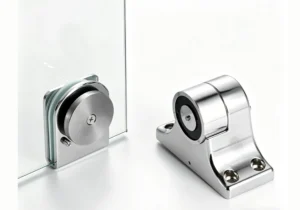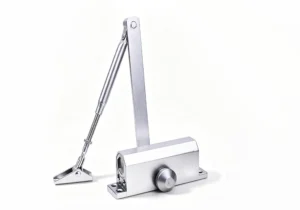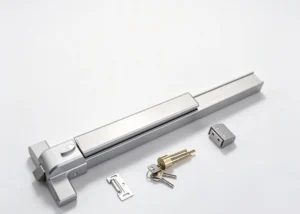

Let’s get one thing straight. I didn’t wake up this morning dreaming about door hardware. I woke up dreaming about my coffee being hot and my spreadsheets adding up correctly. But here we are, dragged into the latest architectural fever dream: the total and utter vanishing of the exit device.
For decades, my world had a comforting, clunky logic. A door needed a thing to open it. That thing was obvious, made of aluminum, and occasionally got slapped in a panic. It was fine. It worked. It was, God forbid, legible.
Now? Now I’m fielding specs for “integrated touch-latch systems” and “flush-mounted push pads” that cost more than my first car. Every designer with a Pinterest board wants the monolithic wall, the seamless transition, the magic disappearing door. And they’re selling it to clients as the pinnacle of sophistication.
My job, in the midst of this intentional chaos, is to be the bucket of cold water. To translate the ethereal design poetry into the gritty prose of procurement, installation, and—crucially—not getting sued. So, strap in. Here’s why everyone wants exit hardware to vanish, and why the reality is making procurement managers like me profoundly, creatively grumpy.
The Sales Pitch: When a Door Isn’t a Door
The allure isn’t complicated. It’s aesthetics on steroids. Modern architecture is in a relentless pursuit of the pure plane. Brushed nickel is passé. A visible hinge is a crime. In this world, a standard panic bar isn’t just ugly; it’s a violent, shouty interruption of a Zen masterpiece.
Invisible hardware promises purity. It turns a mandated fire exit into a subtle, artful suggestion. The wall flows uninterrupted. The sightline is clean. The architect gets to pretend the building code doesn’t exist for five beautiful minutes. I understand the appeal. I also understand that puppies are cute, but that doesn’t mean you should buy one for an apartment with white carpets.
The Machinery Behind the Magic (Spoiler: It’s Not Magic)
This is where my eye starts twitching. “Invisible” hardware is just hidden hardware, and hiding things is a complicated, expensive, and often infuriating business. Let’s demystify the wizardry:
- The Ghost Touch: A section of the door or jamb is secretly pressure-sensitive. Push the right spot, a magnetic catch releases, and voilà. Also known as the “guess where to push in a fire” system.
- The Flush Flop: The panic device is recessed so its face is perfectly planar with the door surface. Looks stunning in a render. Shows every single micron of misalignment, settlement, or dent in real life.
- The Trojan Trim: The elegant, floor-to-ceiling trim strip is the push bar. Slightly more intuitive, assuming users read minds and know to press the decorative molding.
- The Pivot Point: The door swings on a top-and-bottom pivot, eliminating the hinge edge for a uniform gap all around. This requires a door thick enough to hide a battleship’s worth of reinforcement and hardware that would make a Swiss watchmaker blush.
The problem isn’t the engineering. The engineering is often brilliant. The problem is the assumption of a calm, informed user in a perfectly maintained environment. My world contains neither.
The Grumpy Procurement Manager’s Bill of Particulars
Here’s what they don’t put in the glossy brochure.
1. The Identity Crisis
A core function of an exit is to be identified as an exit, often by people who are scared, disoriented, or can’t see well. We spent 50 years training the global population that a horizontal bar means “PUSH TO GET OUT.” Now we’re replacing it with a faint seam in an expensive wall covering. This isn’t progress; it’s regressive design arrogance.
2. The Maintenance Black Hole
Standard hardware is forgiving. It sticks out, you see a problem, you whack it with a rubber mallet (not that I recommend that). Invisible hardware is a high-maintenance diva. That flawless flush mount? A 1mm shift due to humidity turns it into a lip that catches on everything. The proprietary touch-latch mechanism? Good luck finding parts in five years when the manufacturer “innovates” to a new model. Your facilities team will learn to hate you with a fiery passion.
3. The Sticker Shock That Keeps on Shocking
Think of the cost of a standard, high-quality panic device. Got it? Now stop thinking about it, because it’s irrelevant. Invisible hardware isn’t a product; it’s a project. You’re paying for:
- The exotic hardware unit itself (3x-5x cost multiplier).
- A custom, heavily reinforced door (because pivots and flush mounts need serious structure).
- Precision installation by specialists who charge “artisan” rates.
- A long-term relationship with a single supplier for proprietary parts and service.
4. The Panic vs. Press Conundrum
Code tests hardware with calibrated machines applying specific forces. The real world tests it with a 220-pound human being throwing their full, terrified weight at a surface they barely recognize as a door. Mechanisms designed for a gentle, deliberate press can and do fail under genuine panic conditions. We’re optimizing for the photo shoot, not the fire drill.
Where It Maybe Makes Sense (A Tiny Concession)
Fine. I’ll be marginally fair. In ultra-high-end, low-occupancy, controlled environments—a private residence, a CEO’s sanctum, a specific museum gallery where the architecture is the exhibit—the calculus might tip in favor of aesthetics. The users are few, informed, and unlikely to panic. The budget is vast. The maintenance can be obsessive. In these rarefied bubbles, go nuts. But specifying this for a busy corporate atrium, a school corridor, or a hotel lobby is professional malpractice dressed up as design leadership.
The Non-Negotiable: Your Date with the AHJ
This isn’t advice; this is a survival tactic. THE AUTHORITY HAVING JURISDICTION (AHJ) HOLDS ALL THE CARDS. Not the architect, not the excited owner, not the smooth-talking hardware rep. The local fire marshal or building official is the final arbiter of what is, and is not, a legal means of egress.
Your first move, before you even think about a purchase order, is to get the AHJ in the loop. Show them the specific product, its full test reports (those 300-page novels from Intertek or UL), and the installation details. You need to answer their questions before they ask them:
- Does it meet code for operating force (5 lbsf max)?
- Is it clearly identifiable under all lighting conditions, including emergency illumination?
- Does it require signage that will, ironically, ruin the “invisible” look?
- What is the proven, documented maintenance schedule to keep it functional?
So, is invisible exit hardware the future? For a certain slice of projects, unfortunately, yes. It’s a trend powered by powerful aesthetic desires. But for the procurement manager, the facilities director, and anyone concerned with long-term functionality and safety, it’s a minefield of hidden costs, operational headaches, and significant liability.
Specify it if you must. But do so with your eyes wide open, your budget doubled, and your AHJ on speed dial. And for the love of all that is holy, stop asking me if it comes in brushed nickel.
AHJ WARNING: The suitability, approval, and code-compliance of any exit hardware, including “invisibly integrated” systems, is subject to the review and acceptance of the local Authority Having Jurisdiction (AHJ)—typically the fire marshal or building code official. Their approval is absolute and must be secured with full product listings and test reports before procurement and installation. Failure to do so can result in rejected installations, costly rework, and significant liability.