
Exit Hardware for the Broke & Pragmatic: Panic Bars for Low-Budget Church Conversions
Let’s skip the inspirational fluff. You’ve bought a beautiful, cavernous money pit of a former church. Your dreams are big, but your budget—funded by bake sales and the ghost of the organ fund—is microscopic. You’re thinking about paint colors and Wi-Fi passwords. I’m thinking about how sixty panicked people in a smoke-filled hall find the one door that actually opens when they shove against it.
Here’s the grumpy truth: In the holy trinity of a building conversion (Budget, Aesthetics, Safety), you can compromise on the first two. You cannot compromise on the third. The exits—the egress paths—are non-negotiable. And the cornerstone of a safe exit is a reliable panic bar (or crash bar, or touch bar). It’s not an accessory; it’s the bare minimum commandment for any assembly space.
I’ve been the grumpy procurement guy cleaning up these messes for thirty years. I’ve seen the gorgeous, century-old oak door that becomes a death trap because no one wanted to “ruin the look” with a proper device. This isn’t a feel-good guide. It’s a pragmatic, occasionally snarky, dump of how to get this critical element right without requiring a literal miracle.
The Cold, Hard, Unpleasant Truth
That stunning, hand-carved front door? It’s likely a liability. Building codes for assembly occupancies are brutally clear: main exit doors must open with a single, panic-ready motion. No knobs, no levers, no “turn the beautiful iron latch.” You must likely retrofit it with a panic device. Yes, it will look a bit wrong. Safety trumps aesthetics every single time. Your mission is to find the least offensive, most code-compliant, and budget-conscious option. Arguing with the Authority Having Jurisdiction (AHJ—memorize this acronym) over historic charm is a gamble you’ll lose, costing you more time and money than just doing it right the first time.
The “Cheap” Spectrum: A Procurement Manager’s Tiers of Reality
Forget retail. You’re not shopping at a home improvement store. You’re in the trenches of wholesale distributors, online surplus, and the bargain bins of reputable manufacturers. Here’s how I categorize the options for clients who are counting pennies.
Tier 1: The “Ugly but Unkillable” Workhorses (Commercial Surplus)
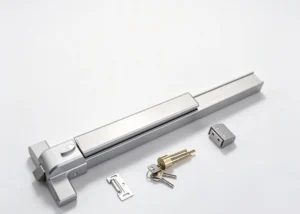
These are the tanks. Devices pulled from a school renovation or a shuttered small business. Brands like LCN (older stock), Von Duprin, and Sargent. We’re talking about simple, rim-mounted devices (they sit on the door face) like the classic 98/99 style. A bar, a latch, a cylinder. No frills, all function.
The Grumpy Procurement Tip: Scour online industrial liquidators and construction surplus sites. Search for “rim panic device surplus” or “exit device overstock.” You can often score them at 40-60% off new cost. Critical check: Verify the handing (which side the hinge is on) and ensure all mounting hardware is included. A missing bracket transforms a steal into a costly headache.
Tier 2: The “New but No-Nonsense” Value Lines
Even the premium manufacturers have a stripped-down, budget-friendly line they don’t advertise to fancy architects. Think Allegion’s “E” series or ASSA ABLOY’s “Express” series. These are simplified versions of flagship models—fewer finish options (sticking with plain aluminum, dark bronze, or black), slightly lighter internal builds, but still tested to UL standards.
The Grumpy Reality: For a low-to-moderate traffic church conversion (you’re not running a nightclub), these will last decades. Find a locksmith or door distributor who works with small businesses and nonprofits. They’re more likely to offer you these practical options than the top-shelf model their corporate clients demand.
Tier 3: The “Roll the Dice” Online Imports (A Rant)
Ah, the online marketplaces. Pages of panic devices with prices that seem divine, shipped from afar under brand names that sound vaguely authoritative.
The Grumpy Warning (Listen Up): DO NOT USE THESE FOR A PRIMARY EXIT. I don’t care about the five-star reviews. I’ve seen the metal fatigue. I’ve tested latch mechanisms that fail after a few hundred uses. I’ve watched finishes corrode in a single season. These are, maybe, for an interior storeroom door where you need a code checkmark. Installing one on a main egress door is an open invitation to liability and catastrophic failure. If this tier is all your budget allows, then your budget isn’t ready for occupancy. Period.
Tier 4: The “Salvage Savior” (If Luck Shines)
Sometimes, a hospital, office building, or even another house of worship undergoes a full-gut renovation. Their old, heavy-duty hardware hits the market. If you stumble upon a set of Von Duprin 98/99 devices in decent shape, buy them. Have them professionally re-keyed and inspected. These old, heavy-gauge steel devices are indestructible. This is the ultimate dollar-to-durability play, but it requires patience, networking with demolition contractors, and a keen eye.
A Short, Functional List of Models to Squint At
This isn’t a “Top 10” list. It’s a shortlist of known entities in the value/durability sweet spot.
- Von Duprin 35 Series (Rim): The less-famous, more affordable sibling to the 98/99. Robust, simple, plain finish.
- LCN 1430/1530 Series: Common as dirt and reliable. Often found in surplus. The 1530 is the cost-conscious version. It works.
- Sargent 80 Series Rim: Sargent’s straightforward, well-made answer to a budget rim device.
- Corbin Russwin AR Series: A “value line” from a major brand. Often priced lower due to name recognition less than its siblings.
The Messy, Unavoidable Ancillary Costs (The Gotchas)
You thought the price tag on the panic bar was the total? Naive. This is where budgets unravel.
- The Door Prep: Your beautiful old door may be too thin, warped, or weak. Installing a panic device often requires cutting precise holes and adding steel reinforcement plates. A skilled carpenter or door specialist is essential—and costs money.
- The Frame: The strike plate in the frame must be mortised perfectly. An old, uneven wood frame complicates this. A metal frame is more forgiving.
- The Cylinder: Don’t you dare stick a cheap, no-name key cylinder in it. Use a reputable brand (Medeco, Mul-T-Lock, Schlage Primus) and key it alike to your other exterior doors. Managing a janitor’s ring of a dozen different keys is a special kind of hell.
- The Signage: You must have the proper, code-compliant “PUSH TO OPEN” or “FIRE EXIT” signage, often with photoluminescent (glow-in-the-dark) properties. The inspector will check this with a light meter. It’s a small cost—just pay it.
The Final, Grumpy Sermon
Procuring exit hardware isn’t about finding the prettiest piece or the absolute lowest number on an invoice. It’s about finding the most reliable, code-compliant device your strained budget can tolerate. It’s a moral and legal imperative. Skimping here to save a few hundred bucks is the worst kind of false economy, gambling with lives for loose change.
THE NON-NEGOTIABLE AHJ WARNING
Everything above is merely advice. It is utterly meaningless until you CONSULT WITH YOUR LOCAL AUTHORITY HAVING JURISDICTION (AHJ). This is your fire marshal, building inspector, or code official. THEIR WORD IS GOSPEL. Codes vary insanely by city, county, state, and even the specific type of occupancy (daycare vs. worship vs. rental hall). What passed inspection five miles away might fail spectacularly in your venue. Present your plans, door specifications, and proposed hardware to them BEFORE YOU PURCHASE A SINGLE THING. A rejected panic bar is a very expensive paperweight. Their approval isn’t a bureaucratic step; it’s the law. Ignore this warning, and you’ll learn its worth when they slap a red tag on your door at the final inspection, with your grand opening scheduled for the next day. You’ve been warned. Now go do it right.