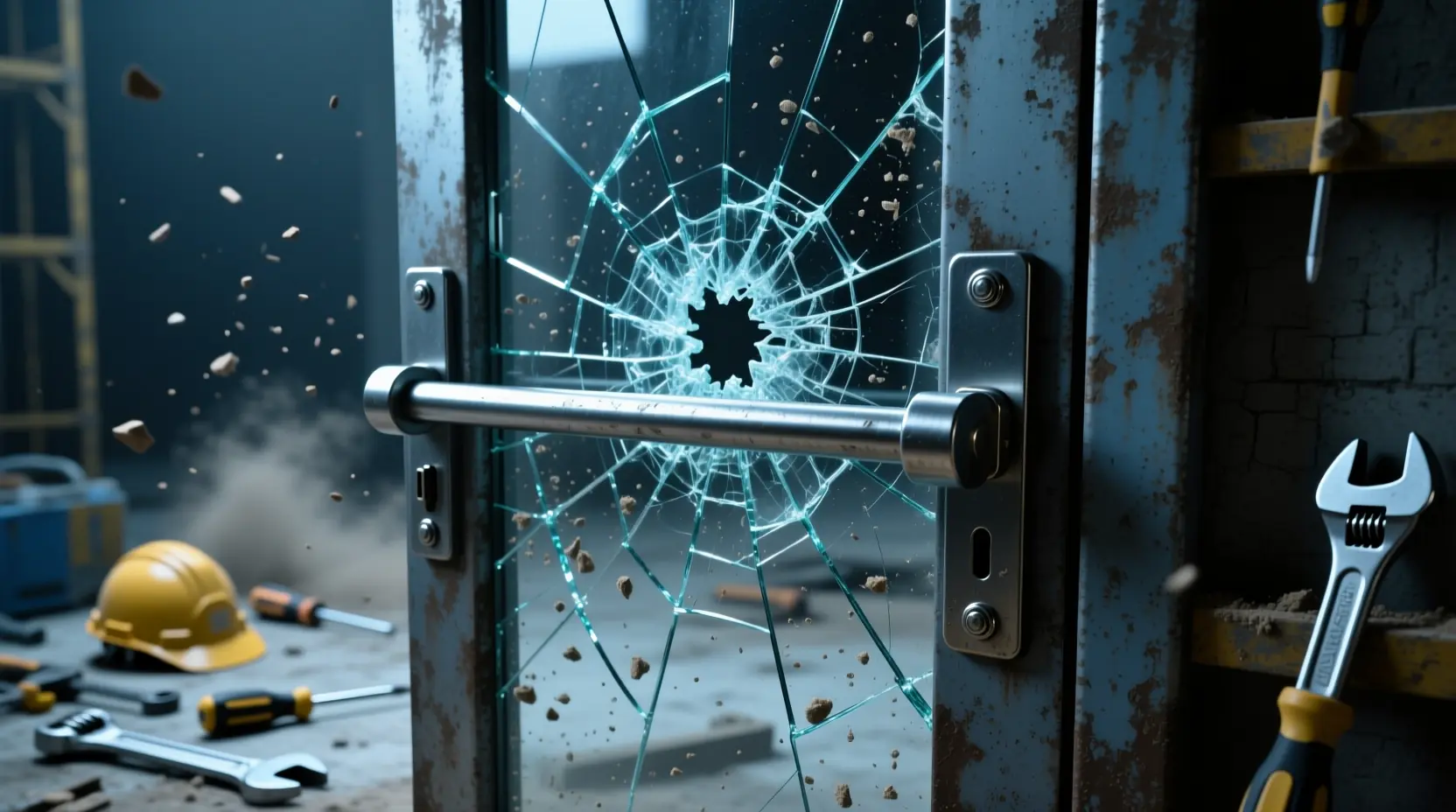
Another email, another photo, another contractor staring at a pile of very expensive, very broken glass with that familiar deer-in-headlights look. The question is always the same, phrased in various shades of panic: “Why did it crack? We followed the specs!”
Did you? Did you really? Or did you just look at the hardware catalog, pick a shiny panic device, and assume that the “1/2-inch glass” note on the cut sheet was the whole story? Let me tell you, as someone who has cleaned up more of these messes than I care to remember, that’s where the trouble starts. You’re not just installing a door. You’re orchestrating a fragile, high-stress ballet between rigidity, force, leverage, and human panic. Get it wrong, and the star of the show shatters.
Glass Thickness: It’s Not a Suggestion, It’s Physics
Let’s talk about glass thickness. It’s not just a number. It’s the single greatest factor in whether your installation succeeds or you’re left with a glittery, hazardous pile of “what-used-to-be-a-door.” Everyone thinks thicker is always better. It’s not. Well, it is, but it’s not that simple. Throwing a 12mm pane at a problem designed for 10mm can cause its own set of issues with frame compatibility and hardware bite. But the real sin, the cardinal sin I see daily, is going too thin.
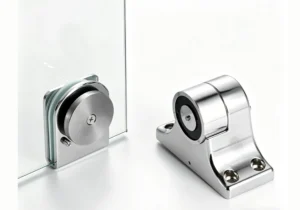
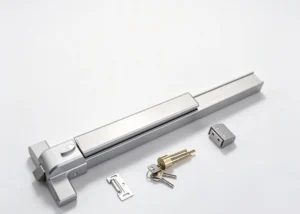
The rule is simple: The glass must be thick enough to handle the concentrated stress imparted by the panic hardware. This isn’t about holding the door up. It’s about physics. A panic device—a rim device, a mortised device, a surface vertical rod—clamps onto the glass. When that bar is pushed, or when the door just swings in daily use, all that force is transferred through those clamps, those posts, those anchors. You’re creating tiny, intense points of stress on a material that hates point loads.
Tempered glass, your only legal choice for this application (don’t even get me started on that), is strong. But its strength is in its surface compression. Scratch that surface with a bad install, nick an edge during handling, or—here’s the big one—over-tighten a mounting clamp, and you’ve created a microscopic flaw. Under tension, which those clamp points are constantly applying, that flaw propagates. It doesn’t creak or groan. It just… fails. Catastrophically. Often hours or days after installation, just to really mess with your schedule and your sanity. We call them “stress fractures” or “spontaneous breakage,” and 95% of the time, they’re neither spontaneous nor mysterious. They’re pre-ordained by a bad plan.
The Hardware is the Dictator, Not a Suggestion
You don’t pick the glass first. That’s amateur hour. You pick the panic hardware first. The hardware manufacturer’s data sheet is your bible, your constitution, and your arrest warrant if you ignore it. It will explicitly state the minimum (and sometimes maximum) glass thickness for that specific model. Not “glass.” Not “door material.” Glass thickness. It’s there because their engineers calculated the stress. They tested it. They know what their clamps will do.
But here’s where the grumpy expert part comes in: THE CHART IS THE MINIMUM. It is the line you do not cross. It assumes perfect conditions: a flawlessly flat and polished glass edge, a perfectly plumb and true frame, a textbook installation by someone with the dexterity of a watchmaker and the patience of a saint. Are your conditions perfect? Of course they aren’t. The building is settling. The frame is out of whack by 1/16th of an inch. The apprentice tightened the west side clamp a quarter-turn more than the east side.
So what’s your margin of safety? Upspec. If the hardware says it’s rated for 10mm (3/8”) minimum, you use 12mm (1/2”). If it says 12mm minimum, you seriously consider 15mm (5/8”). The extra cost in the glass is a pittance compared to the cost of replacement, re-installation, downtime, and the sheer professional embarrassment. This upspec is your buffer against reality, against the less-than-perfect world of an active construction site.
The Usual Suspects: Where Stress Fractures Are Born
Let’s walk through the crime scene. Here’s where you’re probably screwing it up:
- The Frame Isn’t a Pool Noodle. Glass is rigid. It doesn’t flex. If your frame isn’t dead-nuts level, plumb, and true, you are forcing the glass to conform to a warped plane when you tighten those clamps. You’re literally bending it, creating internal stress from day one. The hardware clamps then lock that stress in place. Every swing of the door adds a cyclic load to an already stressed component. It’s not if it fails, it’s when.
- Gasket Gluttony. Those protective vinyl gaskets or spacers that go between the hardware clamp and the glass? They’re not packing material. You don’t stack three because you have them. You use what the manufacturer specifies. Their density and thickness are designed to cushion and distribute the clamp force evenly. Too many, or the wrong kind, and you create uneven pressure points. See “microscopic flaw,” above.
- Torque Tantrums. This is the big one. The number of “professionals” who treat the installation screws on a glass clamp like lag bolts holding a deck together is terrifying. These are precision fasteners. You use a inch-pound torque wrench, not a cordless impact driver set to “Hulk Smash.” Over-torquing crushes the edge, creates immediate stress risers, and is the fastest route to an afternoon of sweeping up little glass cubes. The hardware sheet will have torque specs. Use them. If it doesn’t, call the manufacturer and yell at them until they give you one.
- Edgework is Everything. The glass edge must be seamed (arrised) or pencil-polished, as the hardware spec requires. A raw, machine-cut edge is riddled with micro-fractures. Clamping onto that is like clamping onto a zipper. It will unzip. Furthermore, any contact between metal hardware and a flat glass surface is forbidden. All contact must be on a properly finished edge or through the specified protective gasket. No exceptions.
- The Swing is the Thing. The door’s swing, the closer, the stop—they all play a part. A door that slams open hard against a rigid stop transmits a shockwave back through the hardware into those clamped points. A closer that’s too strong for the door mass does the same. It’s death by a thousand shocks.
A Non-Polished, Messy Conclusion
So you’ve got your upspecced glass. You’ve torqued the clamps to spec with the right gaskets. The frame is truer than a politician’s promise. You’re golden, right?
Maybe. Until the first person leans on the panic bar. Or slams the door. Or a cart bumps it. Or the sun heats one side of the frameless entrance and not the other. The stress is still there, living in the material, waiting.
This is why you treat every glass door with panic hardware as a live explosive. You respect it. You don’t force it. You follow the hardware manufacturer’s instructions like they were written in blood—because in a liability sense, they were.
And finally, the most important grumpy warning I can give:
AHJ WARNING: Listen up. The Authority Having Jurisdiction—the building inspector, the fire marshal, the cranky person with the clipboard who can shut your job down—does not care about your excuses. They do not care that the glass was on backorder and the thinner one “fit just fine.” They do not care that your torque wrench was in the other truck. Their code books and inspection manuals reference the hardware manufacturer’s published listings. If you install a panic device on glass thinner than its listed minimum, you have created a non-compliant, non-listed assembly. You have violated the code. They will fail the inspection. They may issue a citation. And when (not if) that door fails, your liability shield will be as fragile as the glass you installed. The AHJ’s approval is your only get-out-of-jail-free card. Don’t screw it up by being lazy about thickness.