Panic Bar Integration with Salto or HID: A Grumpy Procurement Manager’s Guide
Right. You’re here. Probably because someone—an architect, a facilities manager, a tech consultant who’s never had to actually *install* anything—said the magic words: ‘We need access control on the exit doors, and it has to integrate with our Salto or HID system.’ And now you’re staring at a catalog of panic bars, wondering which one won’t turn into a money-pit nightmare. You should be nervous. This is where life safety, electronics, mechanical engineering, and proprietary software hell collide.
I’m not here to sell you pretty dreams. I’m here to tell you what actually works, when it works, and more importantly, when it’s going to blow up in your face. The goal is simple: a door that stays securely locked until an authorized user presents a credential, then unlocks for egress via the panic bar, all while complying with codes. Easy, right? Ha.
The Hardware Reality: It’s Just a Lock
First, let’s abandon a fairy tale. There is no such thing as a ‘Salto-brand panic bar’ or an ‘HID Global panic bar.’ These are access control *system providers*. They make software, controllers, and readers. The panic bar is a separate, brutal piece of hardware that needs to *work with* their signals. The integration happens in the wiring, the voltage, the relay, and the configuration software. You’re making two different animals share a cage.
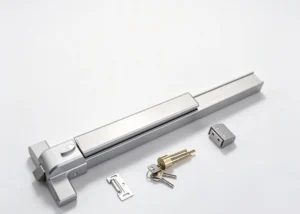
You need an electrified panic device. This typically falls into two camps:
- Electrified Push Pads: The bar is mechanical for egress, but it has an electric lock mechanism. Present your credential, the system sends a signal, the lock retracts, and you can push the bar to open. Most common and reliable.
- Electrified Latch Retraction: The premium option. Upon a valid credential, the bar’s latch retracts automatically. You don’t have to push to enter; it’s just unlocked. Smoother, but more expensive and complex.
The Manufacturer Shortlist (For People Who Don’t Like Callbacks)
The Heavy Hitters
Von Duprin (Allegion): The tank. Their 98/99 Series electrified rim devices are ubiquitous for a reason. Robust, simple, and every installer has wired one. Integration is straightforward: power supply, relay, a lock/unlock signal from your controller. You pay for the name and the weight. If the door needs to survive a riot, start here.
ASSA ABLOY (Sargent, Corbin Russwin): The other giant. Their offerings are in the same league. Excellent quality, widely specified, and their electrified versions are designed to play nice with major access control systems. Versatile wiring options (fail-safe/fail-secure) are critical for your setup.
LCN (Allegion): The closers and exit device experts. Their 4010/4040 Series surface vertical rod devices are standard for double doors. Integration is about coordinating the power supply, electric latch retraction, and relays for two leaves. More complex dance, but LCN provides the steps.
The Smarter Players
Allegion with Schlage NDE: An ‘integrated’ solution. A Von Duprin panic bar can come pre-packaged with a Schlage NDE (Non-proprietary Digital Entry) wireless lock. The NDE lock has its own reader and brain, talking wirelessly to a bridge that integrates with Salto or HID software. Benefit? Drastically reduced wiring. Downside? You’re dependent on wireless communication and battery life for a life-safety device. It makes architects happy. It makes old-school installers grumble.
DORMA Group (DORMA, McKinney): Strong competitors. Their TS93 series electrified panic devices are direct competitors. Reliable, well-made, with similar electrification kits. Often more aggressive pricing. The integration story is the same: a dumb electric lock waiting for a signal.
The ‘Make Sure You Know What You’re Doing’ Bunch
Off-Brand / Imported Electrified Devices: They exist. They are cheap. They are a gamble of cosmic proportions. The solenoid burns out. The finish flakes. The wiring diagram is gibberish. Trying to integrate these with a high-end system is like trying to run a Ferrari on cooking oil. In life safety, the device on the door is the last place to cut corners. Don’t.
The Messy Reality of ‘Integration’
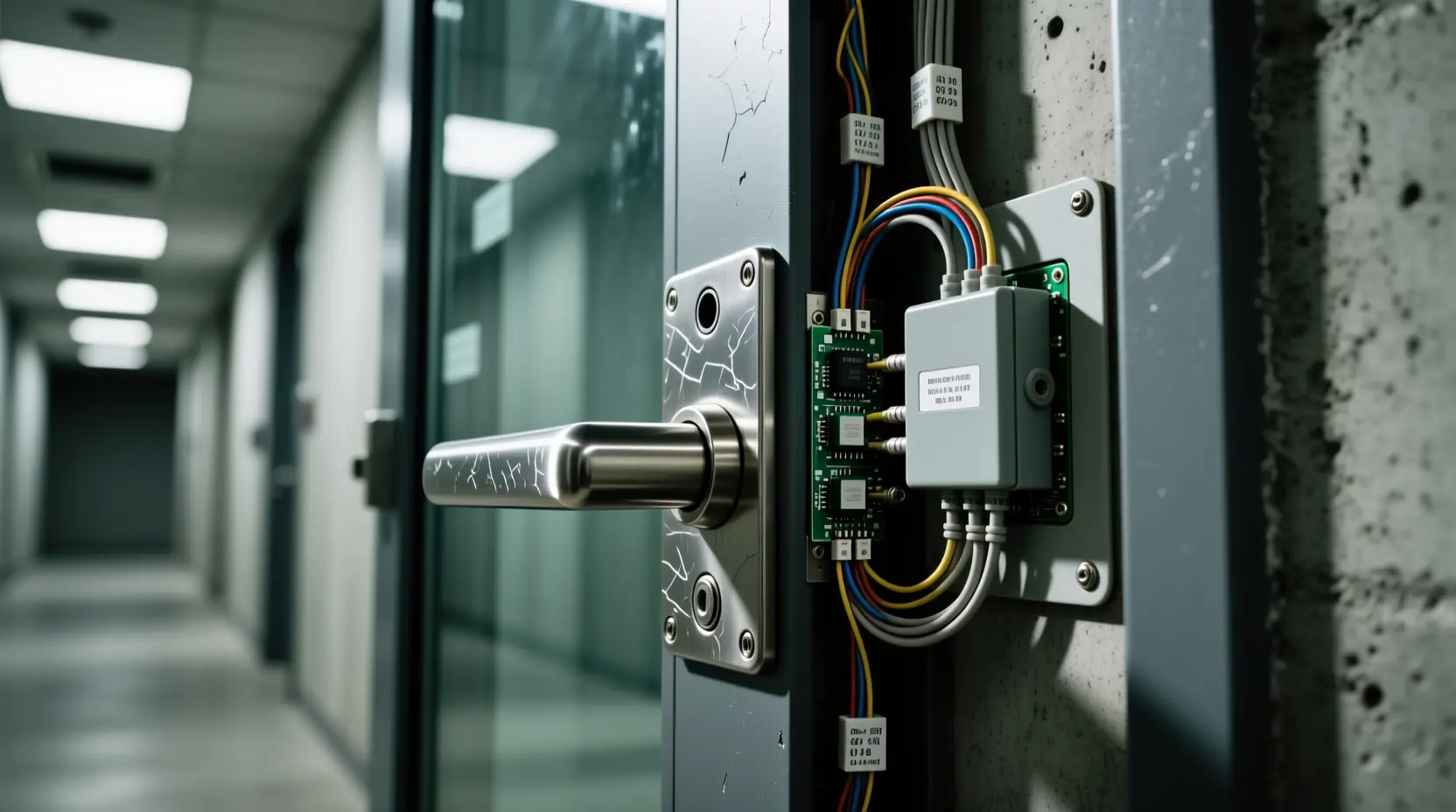
Here’s the secret: the panic bar is the easy part. The integration is all about the interface hardware.
- You Need a Proper Power Supply / Controller: A regulated, UL-listed power supply (like Altronix or LifeSafety) that provides clean, stable DC power to the lock. It must be sized for the solenoid’s inrush current.
- The Relay is the Translator: Your Salto or HID panel sends a low-voltage ‘unlock’ signal. This triggers a relay in the power supply, which closes the circuit, sending main power to the panic bar’s lock. *Poof*, it’s unlocked. Salto doesn’t ‘know’ it’s unlocking a Von Duprin. It just knows it’s triggering Relay #4.
- Request-to-Exit (RX) Sensors: Critical. When someone pushes the bar from inside, a sensor tells the system. This can trigger an unlock and, crucially, suppress a ‘door forced open’ alarm. This is usually a simple dry contact switch inside the panic bar housing.
- The Software Mapping: This is where you, in the Salto or HID software, map it all: ‘Door 104 – Hardware: Electrified Rim. Lock controlled by Relay Output 4. Exit monitored by Input 2.’
The ‘best’ panic bar for integration is the one whose electrified kit comes with a clear, accurate wiring diagram and whose physical construction makes it easy to run the wires without them being destroyed.
The Grumpy Summary
- For a standard, heavy-duty single door: Von Duprin 98/99 Series or equivalent from Sargent/Corbin Russwin.
- For a complex double door: LCN is your likely starting point.
- For a retrofit with minimal wiring: Look hard at the Allegion/Schlage NDE integrated wireless packs, but verify battery and signal reliability.
- For everything else: Stick with the major brands’ core electrified lines. The headache will be in the field wiring and software setup, not the bar itself.
AHJ WARNING: Nothing here is gospel. The final, absolute authority on your installation is your local Authority Having Jurisdiction (AHJ) – the fire marshal and building code official. They can, and will, reject the most beautifully integrated system if it doesn’t meet their interpretation of the codes for your specific building. They care about free egress, fire ratings, and public safety. You *must* involve them early. A panic bar that doesn’t release properly during a fire isn’t just a failure; it’s a potential tragedy. Get your hardware UL-listed. Get it inspected. Your sleek integration means nothing if the fire marshal slaps a red ‘CONDEMNED’ sticker on the door. Do it right, or don’t do it at all.