Alright. Pour yourself something strong. This isn’t a gentle primer. It’s the bitter, overcooked truth about California’s Building Code Title 24, served by someone who has watched too many “value-engineered” projects turn into compliance dumpster fires. You think you understand exit hardware? You installed a panic bar and called it a day. The inspector signed off, so it must be right? How charmingly naive. The California Building Code (CBC, Title 24 Part 2), intertwined with the Fire Code (CFC, Part 9) and the Electrical Code (CEC, Part 3), is a glorious mess of contradictions and nuances. And you, my procurement-minded friend, are likely sourcing based on price, not performance. Let’s get grumpy.
1. The “Panic” vs. “Fire Exit” Semantics That Cost You Money
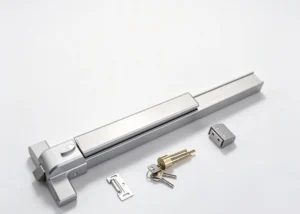
Stop calling everything “panic hardware.” It’s a specific term. “Fire exit hardware” is for doors in fire-rated assemblies. If that door is in a 1-hour corridor, your cheap, non-listed panic bar is a beautifully packaged violation. CBC 1010.1.1 doesn’t care about your budget. It demands hardware listed to ANSI/BHMA A156.3 for fire doors. Your internet bargain-bin special isn’t listed. Fail.
2. Your Low-Voltage Wiring is an Electrical Code Violation
That sleek electrified push paddle? The low-voltage wire you ran through the door frame to save conduit? You’ve just voided the fire rating of the entire assembly and likely violated the California Electrical Code. Power for access-controlled egress devices isn’t a suggestion; it’s a regulated system. Hope you enjoy peeling that wire out during final inspection.
3. Latch Throw: The Measurement You Didn’t Take
CBC 1010.1.10 dictates latch throw. Your hardware might be rated, but if the door frame was shimmed a quarter-inch out of alignment by a frazzled installer, the bolt barely engages. The inspector’s little gauge doesn’t lie. Your perfect spec sheet is irrelevant if the installation is sloppy.
4. Dogging the Device = Voiding the Fire Rating
You dogged the exit device open for convenience. Is that door in a fire-rated corridor? If yes, you’ve just invalidated the fire rating of the entire wall assembly. CBC 716.2.6.4 is clear: a fire-rated door must be self-closing. Permanently dogging it open is not an option unless you have a listed, fire-alarm-connected hold-open device. You don’t.
5. “Free Egress” Means a Panicked Idiot Can Operate It
CBC 1010.1.1. The releasing mechanism must be obvious, intuitive, and operable under duress, in low light, by someone with no prior knowledge. That architecturally beautiful, flush-mounted touchpad that requires a user manual? Not obvious. If the inspector can’t role-play as a terrified occupant and get out in one motion, it’s wrong.
6. The Mullion is Your Procurement Nemesis
Pairs of doors with a center mullion. One leaf is active with exit hardware. You’ve specified an astragal and called it done. Wrong. CBC 1010.1.9.3 often requires the *inactive leaf* in a pair to have its own releasing mechanism if it’s over a certain width. This is chronically missed on storefronts. Your elegant solution just failed.
7. Maglocks: A Three-Code Tango of Misery
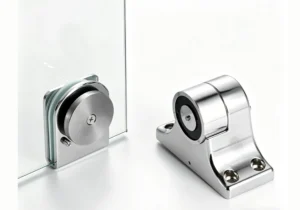
Want an electromagnetic lock on an exit door? Strap in. You need: A *listed* delayed egress system (CBC/CFC 1010.1.9.7). Properly installed wiring per the CEC. Integration that releases the lock upon fire alarm, sprinkler flow, AND power failure. The “and” is crucial. You can’t just slap a maglock on a power supply and call it security.
8. Door Swing: Stop Fighting Physics and Code
CBC 1010.1.2. Egress doors shall swing in the direction of egress travel when serving an occupant load of 50 or more. This isn’t a design suggestion. It’s a fundamental safety principle. Stop trying to value-engineer inswinging doors for main exits to save a few bucks on hardware. It’s cheap, dangerous, and wrong.
9. The Undercut Gap You Forgot to Measure
The latch engages perfectly. The door seals. But the gap under the door is 1.5 inches. For a 1.5-hour fire door assembly, CBC 716.2.6.3.1 mandates a maximum undercut of ¾ inch. Your fancy automatic door bottom doesn’t count for the rating. The fire test assumes a specific gap. Exceed it, and the assembly’s rating is fiction.
10. Signage is Not an Aesthetic Afterthought
“PUSH TO EXIT” or similar signage is required by CBC 1013.3 on any door with a latch or lock. The lettering height, contrast, location, and phrasing are codified. That minimalist, brushed aluminum plaque your designer selected? It’s probably non-compliant. Function over form, always.
11. The Corridor Width Squeeze Play
Two opposite doors in a corridor, both with exit hardware. When opened to 90 degrees, they cannot reduce the clear width of the corridor below the required minimum (CBC 1018.2). Your beautiful, wide-throw doors might be creating a lethal pinch point during evacuation. Did you model this? Of course not.
12. Access Control on Egress Doors is a Minefield
Card reader on the outside? Fine. The inside **must** provide free and immediate egress. The exit hardware must function at all times, regardless of the access control state. Any request-to-exit (REX) motion sensor or button must be *continuously* illuminated, per code. Not an LED that blinks on when it senses you. Continuously.
13. The Retrofit Trap (Chapter 34)
Working on an existing building? “It was grandfathered!” you cry. Chapter 34 of the CBC governs alterations. If you touch the door assembly—say, to replace the exit device—you often trigger a requirement to bring the *entire assembly* (door, frame, hardware, sidelights) up to current code. Your “simple hardware upgrade” just turned into a five-figure door replacement. I’ve seen the change orders. They’re ugly.
14. “Label” vs. “Listing”: The Devil in the Details
The door has a label. The frame has a label. The hardware? It needs to be **listed** for use on a fire door assembly. The hinges, the exit device, the closer—all must be listed by an approved agency (UL, WH, etc.). Your off-brand, “identical” hinges are not listed. The entire assembly’s fire rating is now void. The inspector can, and will, ask for the listing paperwork.
15. The Coordinator: The Tiny Part That Causes Big Problems
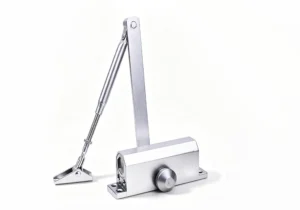
On a pair of fire-rated doors with exit hardware, the leaves must close in a specific sequence so the inactive leaf seals first. This requires a listed door coordinator. It’s not optional. It’s a separate piece of hardware. If it’s missing, incorrectly specified, or broken, the doors won’t latch properly in a fire. I find broken or missing coordinators on a third of my site walks.
16. Operating Force: It’s Not a Feeling, It’s a Measurement
ANSI/BHMA A156.3 and CBC 1010.1.3 specify maximum operating forces. That heavy, “substantial-feeling” push bar you selected because it conveyed quality? It might require 30 lbs of force to operate. The code-mandated maximum is typically 15 lbs. Your choice just excluded people with limited strength. That’s not just non-compliant; it’s exclusionary.
17. The Astragal is a Fire & Smoke Seal, Not Decorative Trim
On pairs of fire-rated doors, the astragal is a critical part of the fire and smoke seal assembly. It must be listed for use with that specific door assembly. Using a standard, non-listed aluminum astragal is a breach in the rated barrier. It’s not trim; it’s life safety equipment.
18. Automatic Doors and Power Failures
Installing an automatic door operator for ADA compliance on an egress door? Wonderful. What happens when the power fails? CBC 1010.1.4.1 requires it to default to a *manual* mode that complies with all egress requirements. If the door locks up solid or becomes immovable, you’ve created a death trap.
19. The Secondary Door Deadbolt Dilemma
A secondary door within a tenant space also serving as a means of egress. You’ve specified a deadbolt for security. Does that deadbolt require a key, twist, or tool to operate from the inside? If yes, you’ve likely violated the “one motion to egress” rule (CBC 1010.1.9). Double-cylinder deadbolts are almost never permitted on egress doors.
20. Glass Doors and Incompatible Hardware
Full-glass storefront doors with narrow stiles. You cannot simply slap a standard rim exit device on them. The mounting screws and pressure can shatter the glass. You need a *full-width* push bar or a device specifically listed and engineered for that door type. Your standard hardware is a liability lawsuit waiting to happen.
21. The 32-Inch “Clear” Opening Reality
CBC 1010.1.1 specifies minimum *clear* opening width. This is measured from the face of the door stop to the face of the door, with the door open 90 degrees. It is not the width of the door slab. A 36-inch door slab, once you account for the thickness of the door, the hinges, and the latch projection, might only provide a 32-inch clear opening. Your hardware selection just rendered the door non-compliant.
22. Stairwell Re-Entry: The Lockout You Designed
Buildings over a certain height require stairwell re-entry (CBC 1022.2). This means the door from the stair back onto a typical floor cannot be locked against re-entry. Your brilliant, secure access control system that locks all stairwell doors on every floor? **It’s likely illegal.** There are exceptions for smokeproof enclosures, but the criteria are strict. You probably don’t meet them.
23. The Fire Department’s Key Box (CKBS)
CFC 1030.1.3.1. If you have an access-controlled egress door or a delayed egress system, you likely need a **California Knox Box System (CKBS)** key box installed at the main entrance. The fire department holds the master key. Your sophisticated digital access system is meaningless to a firefighter with an axe. Put the override keys in the box.
24. The “Temporary” Prop That’s a Permanent Violation
Using a door wedge, a prop, or even a trash can to hold a fire-rated door open for moving or ventilation? That’s a violation the moment you walk away. CFC 1030.1.5 is explicit. Any device used to hold open a fire door must be *listed* and *connected to the fire alarm system*. A brick is not a listed device.
25. The Document Discrepancy That Dooms You
The architect’s door schedule says “Fire Exit Hardware.” The hardware specifications say “Panic Device, Rim Type.” The shop drawings from the contractor say “Rim Device.” Three different terms, three different potential products. Who wins? The most restrictive requirement and the one that matches the *listed assembly*. This inconsistency is a red flag for any plan reviewer or inspector. Your procurement package is a liability.
26. The Missing Test & Inspection Tag
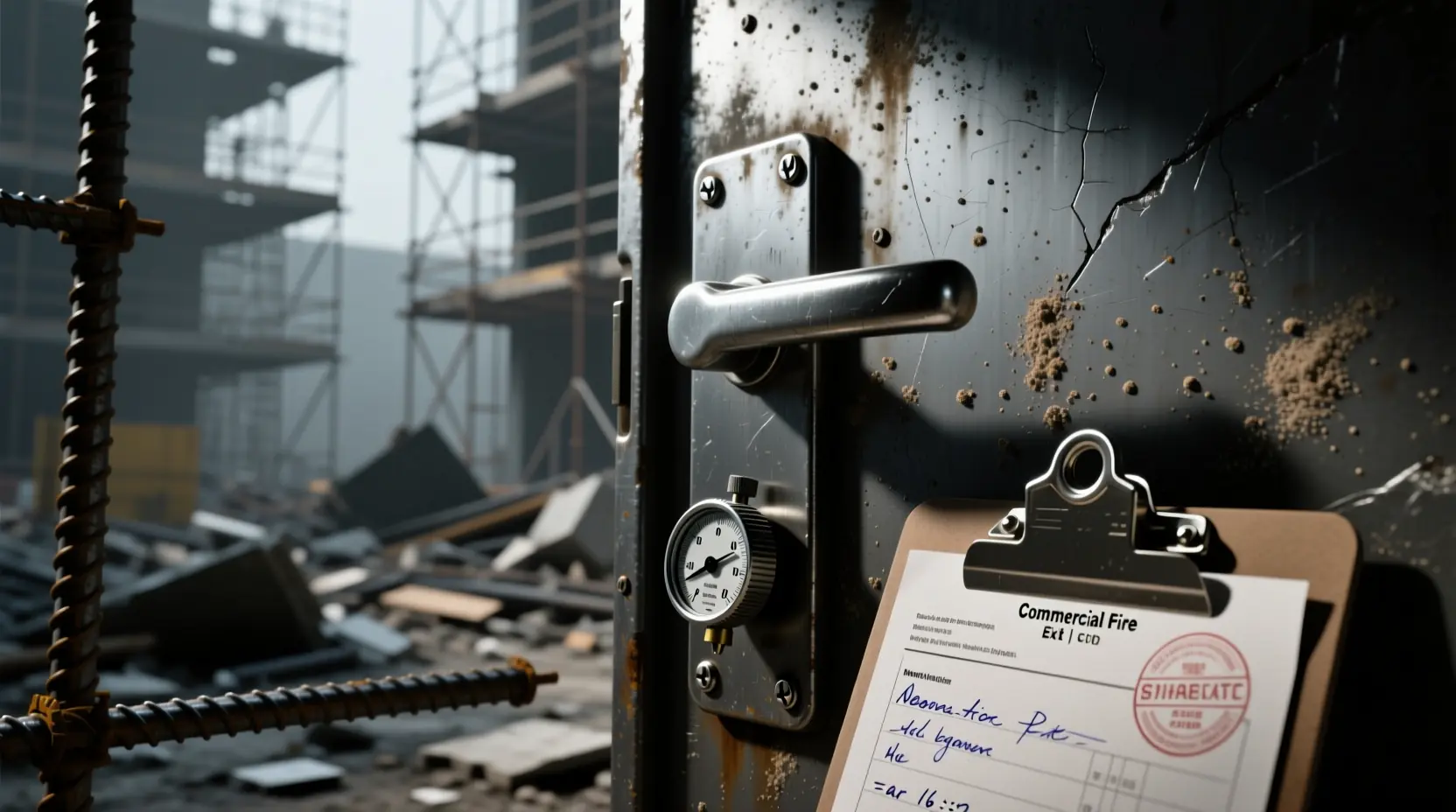
Fire exit hardware, like fire doors themselves, requires annual inspection and testing per CFC 1030.1.2.1. A permanent, durable tag must be affixed to the door or frame, showing the last inspection date. No tag = presumption of non-compliance. The building owner is ultimately responsible, but you specified and installed it. Guess who they call when the violation notice arrives?
27. The Unwritten Rule: The AHJ’s Pet Peeve is Law
Forget everything else for a moment. This is the cardinal rule. **The Authority Having Jurisdiction (AHJ)**—the local building official, fire marshal, or their hybrid—has final, absolute authority. They can be more restrictive than the CBC. They have local amendments. They have interpretations born from local tragedies. They can have a deep, personal aversion to a particular brand of electromagnetic lock. Their word is final. All this research you’re doing? It’s just homework. The AHJ can look at your “perfectly code-compliant” installation, frown, and say “nope.” And you will change it. Your best procurement strategy is not just knowing the code, but engaging the AHJ *early and often*. Their nuance is your ultimate specification.
There. Twenty-seven truths. You’re probably guilty of at least a handful on your current bid list. Go check. And for the sake of everyone’s sanity, stop buying non-listed, cut-rate hardware. It costs more in the end.
AHJ WARNING: This article is a grumpy perspective, not formal code consultation. Codes are amended, interpretations vary, and local jurisdictions hold ultimate power. The Authority Having Jurisdiction (AHJ) for your project is the final arbitrator of compliance. Engage them early, submit plans for review, and obtain written approvals. Assuming compliance is a direct path to costly failures. The AHJ’s interpretation is the law. Full stop.