Let’s skip the corporate poetry. I’ve managed maintenance, operations, and procurement for longer than most of your 3D printing sales reps have been alive. I’ve spent lifetimes on hold, begging for obsolete brackets or proprietary fasteners that hold a million-dollar line hostage. So when the ‘additive manufacturing’ evangelists glide in, chirping about ‘democratizing the supply chain,’ I don’t get excited. I get a tension headache. But I’m also not stupid. The impact is real. It’s also a chaotic, overhyped mess of brilliant potential and catastrophic liability. So let’s talk turkey.
The Siren Song: A Promise of Instant Gratification
The dream is seductive. Critical part fails. It’s discontinued. The OEM wants $5,000 and a 12-week lead time. In the old days, you’d start machining a sketchy replacement or strip a donor machine.
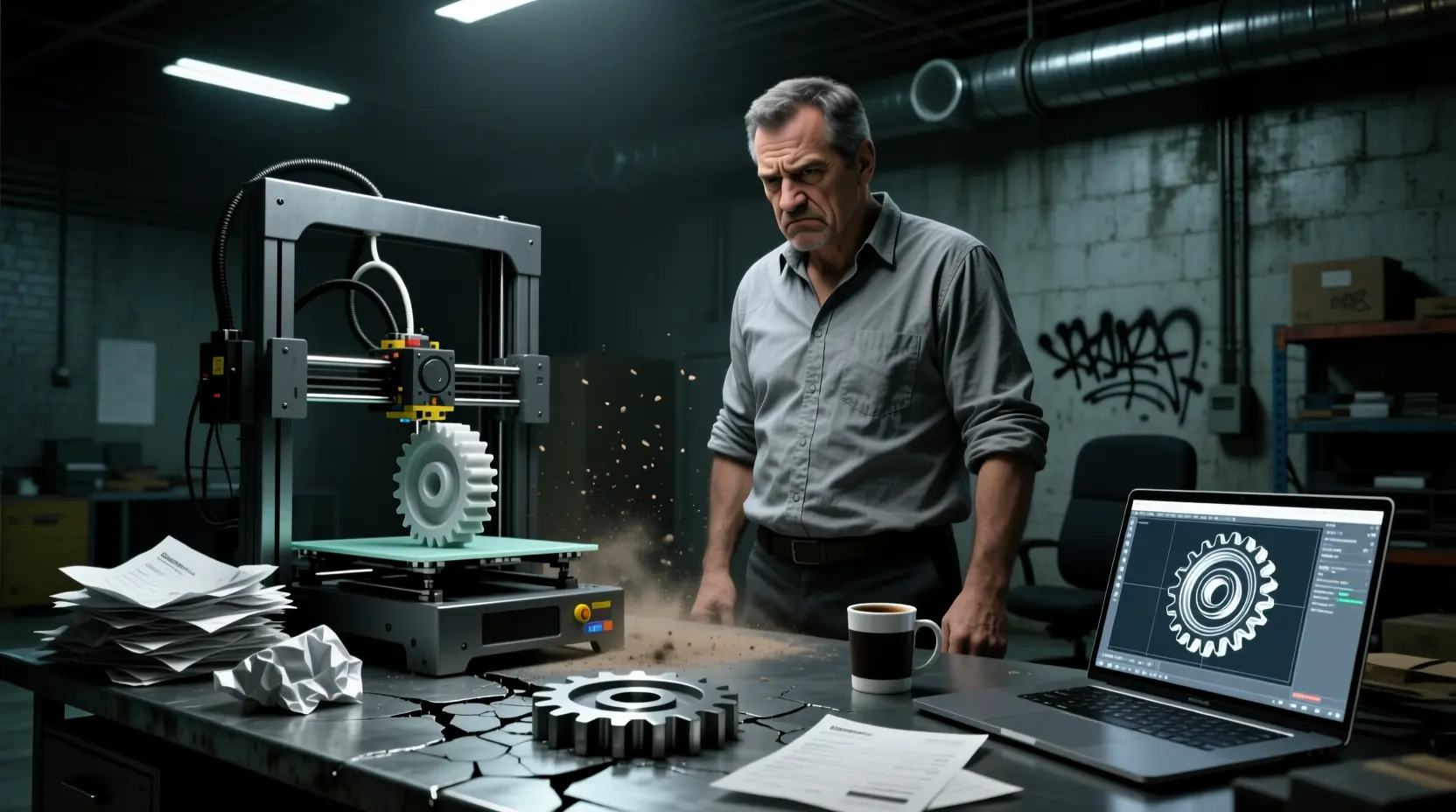
Enter The Printer. In this fairy tale, your tech pulls up a perfect CAD file, hits print, and a few hours later, a new part is born. Downtime slashed. Cost negligible. You’re a hero. For simple, non-critical plastic bits–clips, bushings, shrouds, custom jigs–this isn’t a fairy tale anymore. It’s a Tuesday. This is the low-hanging fruit, and when you pluck it, it feels like wizardry. The ability to materialize a physical object from a filament spool in a back room remains, objectively, cool.
The Ice Bath of Reality: Where My Cynicism Earns Its Keep
Now, wipe that grin off your face. The hype has completely ignored the canyon-sized gaps in this ‘revolution.’
First, Materials Matter, You Know. Your average printed PLA or ABS part has the mechanical soul of a soggy cracker compared to its injection-molded or machined ancestor. Layer adhesion is a persistent weak spot. Anisotropy means your part is a stud in one direction and a wimp in another. Heat resistance? Please. And don’t even start with ‘just print it in metal.’ Metal additive manufacturing (DMLS, Binder Jetting) requires a house-sized machine, a noble-gas atmosphere, and post-processing that needs a full machine shop. This isn’t agile procurement; it’s capital project management.
Second, The ‘Just Use the CAD File’ Fantasy. The fanboys assume you have a flawless, archived 3D model. Wake up. Half the parts you need were drafted on graph paper by a guy named Bob who retired in 1994. The other half are protected by OEMs with tighter security than Fort Knox. So now you need reverse engineering: 3D scanning (a delightful world of point clouds and software that costs more than your quarterly budget), then a skilled CAD monkey to clean it up. You’ve just recreated the skilled labor shortage you were trying to avoid.
Third, and most critically, Certification & Liability: The Lawyers Are Waiting. Print a cable clip? Fine. Print a load-bearing pivot, a valve actuator, or any component in a safety-critical system? Congratulations, you have just personally shouldered liability that would give your corporate counsel night terrors. That part has no material certs, no understood fatigue life, no regulatory stamp. When it fails–and it will–the lawyers will bypass the OEM and come straight for you and your ‘MakerBot.’ The principle of ‘fitness for purpose’ gets very expensive, very quickly.
The Pragmatic Middle Ground: Where Actual Work Gets Done
So is it all vaporware? No. The real, unsexy value is in hybrid pragmatism.
- The Bridge Part: Its most powerful use is printing a temporary part to keep a line running for 48 hours while the real, certified part is expedited. It turns a catastrophe into a managed hiccup.
- Jigs, Fixtures, Tools – The Unsung Heroes: Need a custom alignment guide to install the real component? A protective cap for threads? A weirdo socket? Print it. These non-product aids save man-hours and scrap metal.
- Legacy System Lifeline: For industries with 40-year asset lives (marine, rail, utilities), OEMs fade away. A ‘digital warehouse’ of scanned, approved, benign legacy parts is a legitimate strategy. It requires upfront work and discipline, but it beats a $10M asset being idle over a $50 polymer sleeve.
- The Distributed Supply Chain: Maybe you don’t need the printer. Online services or local fabricators can print in nylon or resin overnight. You outsource the capex and expertise. Of course, you now trust their calibration and material batch. More links in the chain. More things to go wrong.
The People Problem: Training the Beast
Dropping a printer in a maintenance bay without training is like giving a chainsaw to a toddler. Bad things happen. You need new skills: rudimentary CAD, slicing software sense (infill, orientation), and–above all–the critical judgment to know what not to friggin’ print. Cultivating a culture of ‘just because you can, doesn’t mean you should’ is hard. It fights against a good tech’s ‘fix-it-now’ instincts. Without iron-clad protocols–a simple, red-light/green-light decision tree–you will have someone printing a load-bearing bracket for a man-lift. I guarantee it.
The Bottom Line: A Powerful, Dangerous Wrench
3D printing for emergency parts is not a magic solution. It’s a phenomenally useful tool sitting in a field of technical, legal, and ethical landmines. Its impact is profound but specific: annihilating downtime for well-defined, often non-critical applications. It rewards the prepared, process-driven outfit and financially disembowels the reckless.
The grumpy manager’s playbook? Start trivial. Print a desk organizer. Then a non-structural cover. Document everything. Build a small, vetted digital library of approved parts. Drill the limitations into your team harder than the possibilities. And for the love of cash flow, understand the liability.
AHJ WARNING: Listen closely, because this is where careers end. Any 3D-printed part used in a system under an Authority Having Jurisdiction (AHJ)—fire alarms, sprinklers, elevators, boilers, life-safety gear, anything governed by OSHA, NFPA, ASME, etc.—is likely NOT CODE-COMPLIANT unless it has been formally tested and certified. Using one can violate code, void insurance, cause catastrophic failure, and result in you being personally sued into oblivion. Don’t be the case study.