That Thing on Your Door is a Lawsuit Waiting to Happen
Right. Let’s get this over with. I’ve been procuring, specifying, and untangling other people’s messes in this industry since before your favorite “systems integrator” was in diapers. I’ve seen fire door installations that would make a grown inspector cry. And in the endless parade of incompetence, one champion of confusion reigns supreme: electric trim on fire exit hardware. Specifically, the grand, soul-crushing misunderstanding of Fail-Safe versus Fail-Secure.
Get this wrong, and you’re not dealing with a simple malfunction. You are architecting a trap. You are personally involved in creating a condition that could get people killed. And you will, quite rightly, be sued into oblivion. So wipe that glossy-brochure look off your face and pay attention.
The “Simple” Definitions (They’re Not)
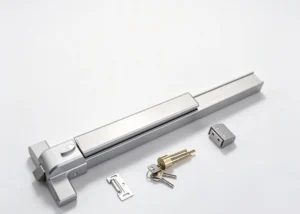
You’ve got a fire door. It has a panic bar. It also needs access control. So someone bolts on an electric trim—a gizmo with a solenoid that controls the latch. Here’s the only part of this that seems straightforward:
- Fail-Safe (a dangerously comforting name): Power is required to keep the door locked. Cut the power (fire alarm, outage, janitor unplugging it for a vacuum), and the door unlocks. Its default, failed state is unlocked. Think: stairwell re-entry doors, any door in a primary egress path. Safety priority: Get people out.
- Fail-Secure (the one that sounds responsible): Power is required to unlock the door. Cut the power, and the door stays locked. Its default, failed state is locked. Think: IT server room door, a secured storage room off a hallway. Security priority: Keep things in (or out).
See? Easy. Which is why it’s baffling how consistently, spectacularly, and dangerously everyone screws it up.
The Two Catastrophic (and Common) Mix-Ups
Scenario 1: The Fire Exit That Becomes a Tomb
Procurement gets a request: “Need to lock the rear fire exit during hours to prevent pilfering.” Fine. They issue a PO for “electric panic hardware trim.” The installer, whose expertise peaked at running wire, looks at the two options. “Fail-Secure. We want it secure. Duh.” It gets installed. The fire alarm system is programmed with the standard logic to cut power to doors on alarm. Fire alarm triggers. Power cuts. The fail-secure door… jams shut. The panic bar rattles, but the electrically held deadbolt or auxiliary latch stays put. Congratulations. You’ve just created a bottleneck of panicking humans. This is not an “oopsie.” This is gross negligence.
Scenario 2: The Stairwell That Sucks Smoke Like a Chimney
Opposite nightmare. A stairwell pressurization door must be fail-secure to maintain the smoke barrier. In a fire, the alarm system should send a signal to unlock it. But if power fails before that signal, it must default to locked. Someone installs fail-safe trim because the word “safe” is in it. Now, a simple power flicker unlocks a critical fire compartment door, letting smoke flood the escape route. You’ve compromised the entire life safety strategy to save five minutes of thought.
The Grumpy Field Diagnostic (A.K.A. How to Figure Out Who to Blame)
Your door is misbehaving. The security log is full of alarms. The facility manager is having an aneurysm. Follow this path, preferably with a strong coffee and a stronger vocabulary.
Step 1: The Identification Tango
Find the model number on the electric trim. It will be faded, scratched, or covered in paint. Once found, locate the actual product data sheet—not the sales PDF with smiling people walking through doors. The tech sheet will state, in microscopic print, its fail mode. If the label is gone, you’re already in troubleshooting hell.
Step 2: The Only Test That Matters: Kill the Power
For a door that SHOULD be Fail-Safe (egress path): With the door in its normal, secured state, find and disconnect its power source. You must hear a definitive clunk. The door must now open freely via the panic bar. If it stays locked, you have a fatal error: fail-SECURE hardware where fail-SAFE is mandated by code.
For a door that SHOULD be Fail-Secure (security area): With the door unlocked (power on), kill the power. The door should now be locked—the panic bar will move, but the latch won’t fully retract. If it swings open freely, you have fail-SAFE hardware where fail-SECURE is needed, creating a security breach.
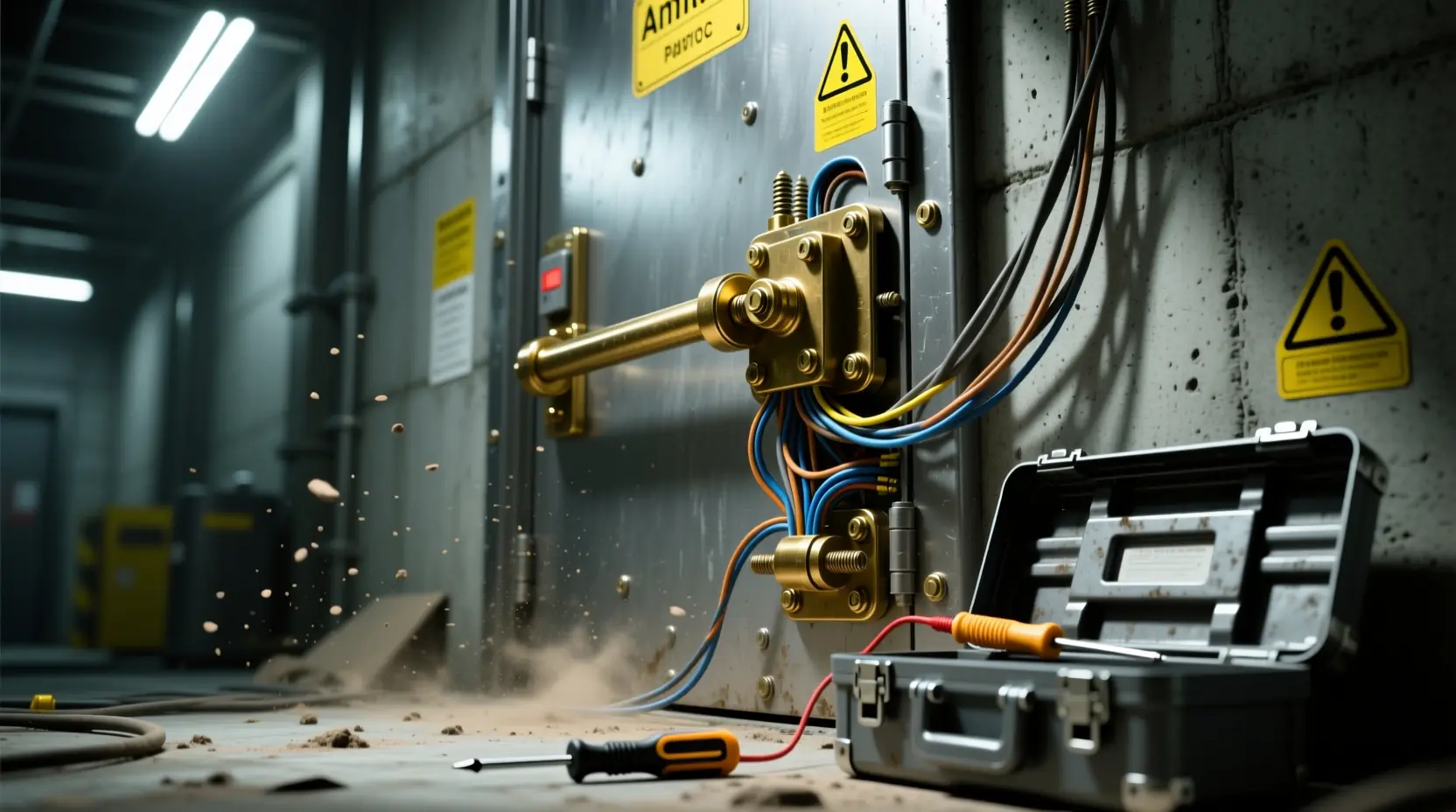
Step 3: Trace the Wiring (A Descent Into Madness)
This is where the comedy of errors compounds. Where do the wires go?
- To a simple keyswitch? Does applying power lock or unlock? You can’t know without knowing the trim type.
- To the Access Control System? Herein lies the devil. Some programmer in a data closet sees a parameter: “Lock: Normally Locked/Normally Unlocked.” They guess. Their guess is informed by software logic, not door hardware physics. A fail-secure lock “locks” when you remove power. A fail-safe lock “locks” when you apply power. The programmer’s configuration is wrong approximately 50% of the time.
- To the Fire Alarm Relay? The grand finale. The standard practice for a fail-safe egress door is to have the fire alarm break the circuit on alarm, unlocking it. If that same relay setup is applied to a fail-secure door, you just locked it permanently during a fire. Conversely, if they send power to unlock a fail-secure door on alarm, that’s correct… unless they do the same to a fail-safe door, which would lock it on alarm. The permutations are a monument to human error.
The Blame Matrix (Spoiler: It’s Systemic)
Failure this profound is a team effort.
- The Specifier/Architect (25%): Wrote “electric trim” on the door schedule. Full stop. No mention of fail mode, wiring diagram, or interface requirements. Specified by catalog number without context.
- The Procurement Manager (15%): (Yes, you. Look in the mirror.) Sourced the cheapest compliant unit from the takeoff without asking, “What does this actually DO?” Treated a life-safety component like a commodity box of screws.
- The Distributor (10%): Fulfilled the PO exactly as written. Asked no questions. Provided no guidance. Moved on to the next invoice.
- The Installer (35%): Picked the trim from the box that “looked right” or was in stock. Connected wires color-to-color without a wiring diagram. Never performed a power-cut test. Called it a day.
- The Systems Integrator (15%): Programmed the access control or fire alarm interface based on assumption, not hardware verification. Used a “standard template” that is standardly wrong.
The Unavoidable Truth: You Are Playing With Legal Dynamite
This isn’t a technical squabble. This is about NFPA 101, IBC, OSHA, and your local building codes. These documents are not suggestions. They are the legal baseline for not being criminally negligent. They explicitly dictate the performance of doors in a means of egress. Installing the wrong fail mode isn’t a “bug”; it’s a code violation. It can and will:
- Get your building red-tagged by the Fire Marshal.
- Invalidate your property and liability insurance.
- Result in six-figure fines.
- Make you the star defendant in a wrongful death lawsuit.
The chaos stems from a fundamental breakdown: treating a fused discipline—where life safety, electrical, access control, and architectural hardware collide—as separate, simple tasks. It’s not. It’s a single, integrated system. And you, as the procurer or manager, are the one holding the bag when that system fails.
AHJ WARNING – THE ONLY PART THAT MATTERS
Listen closely. I am a grumpy professional sharing war stories. This article is a tool for understanding, not a design guide or a substitute for competent, licensed, local professional advice. The Authority Having Jurisdiction (AHJ)—your local Fire Marshal, Building Official, or Code Inspector—is God, Judge, and Jury. Their interpretation of the code is the law in your building. Before you touch, modify, or specify a single piece of electric trim on a fire door, you must consult with a qualified life safety consultant and get your plans reviewed and approved by your AHJ. Attempting to DIY a solution based on an internet article is a one-way ticket to massive liability, financial ruin, and potential tragedy. Do not be the reason for the next warning bulletin. Engage the professionals. Do it right.