Perplexity and Burstiness: The Twin Demons of Powered Hardware (And How to Beat Them)
Listen. You’re sourcing door hardware. You’ve got a spec, a budget, and a vague, nagging dread that the ‘value-engineered’ solution will bite you. Nowhere is this truer than with Motorized Latch Retraction (MLR). It’s a simple concept: a magical bolt that pulls back electrically to allow egress, then resets. The reality is a swamp of electrical gremlins, and they have names: Perplexity and Burstiness.
Let’s define our enemies. Perplexity is the state of your control panel when it sends a command and gets back gibberish—a voltage sag so deep the logic boards have a nervous breakdown. Burstiness is the raw, physical appetite of the MLR’s motor. It doesn’t sip power; it lunges at the wire and takes a huge, savage gulp of current to overcome that spring. This one-two punch—the chaotic system response to a bursty demand—is what kills projects and reputations.
The Unforgiving Physics of the Gulp
Forget the datasheet’s neat ‘operating current.’ That’s for holding. The inrush current—the burst—is what matters. It can be 4-5 times higher. When you trigger that MLR, for about 100-200 milliseconds, it’s a short, ravenous beast. If your power supply and wiring are sized for the gentle ‘operating’ sip, the system voltage collapses under the gulp. The motor stalls. The control logic gets perplexed. The door doesn’t open. You get a phone call laced with panic.
This is the core truth everyone ignores until the lock fails at 2 AM. Your system isn’t defined by its steady state. It’s defined by its worst moment. You are not designing for normality; you are designing for the burst.
A Grumpy, Practical Field Guide
So, how do you tame burstiness and avert perplexity? You get mean and smart about electrons.
1. The Power Supply: Your Reservoir
Stop buying power supplies based on the sum of operating currents. That’s amateur hour. You need a supply rated for the sum of the inrush currents that could happen simultaneously. Is two MLRs on the same door controller going to fire at once? Then your supply needs to handle 2 x [Inrush Amps]. And it needs to be a regulated, high-quality unit. The cheap, unregulated bricks? Their voltage sags under load, feeding the perplexity. Buy once, cry once. Overspec by 50%. No, really.
2. The Wire: The Pipe to the Beast
This is where dreams die. You cannot fix a burstiness problem with a garden hose. Voltage drop over wire is a function of resistance, which is a function of length and gauge. You need to calculate for the inrush current over the round-trip distance.
Here’s a rule of thumb that will make your project manager blanch: For a 24V DC MLR with a 1A inrush, running 100 feet, you likely need 14 AWG wire. Minimum. Not 18. Not 22. Fourteen. Like you’d use for a 15-amp household circuit. It looks insane. It feels wasteful. It is also the difference between a working door and a costly, embarrassing service call to re-pull everything. The cost of thicker copper is less than the cost of a single failure.
3. Localized Power: The Elegant Hack
The best way to defeat voltage drop is to eliminate the long power run. Use a local power supply near the door. Your main access control panel or door controller then sends only a low-current signal—a dry contact closure or a data command—to a relay or local module. That module switches the hefty power from the local supply to the MLR.
Think of it as a relay race. The skinny, fast signal wire (carrying milliamps) runs the long distance without breaking a sweat. The big, bursty power lifter only has to sprint the last few feet from the local supply. It’s cleaner, more reliable, and often cheaper in the long run when you factor in installation and troubleshooting.
4. Capacitors: The Band-Aid (Use Sparingly)
Some MLRs have terminals for an external capacitor. A capacitor stores charge and can dump it quickly to feed the initial burst. It can help smooth over minor, calculated voltage sag. But let’s be clear: A capacitor is a compensator for a suboptimal design, not a design feature. If you’re relying on a capacitor to fix your voltage drop, you’ve already failed at steps 2 and 3. It’s a field fix, not a plan.
5. Testing: The Moment of Truth
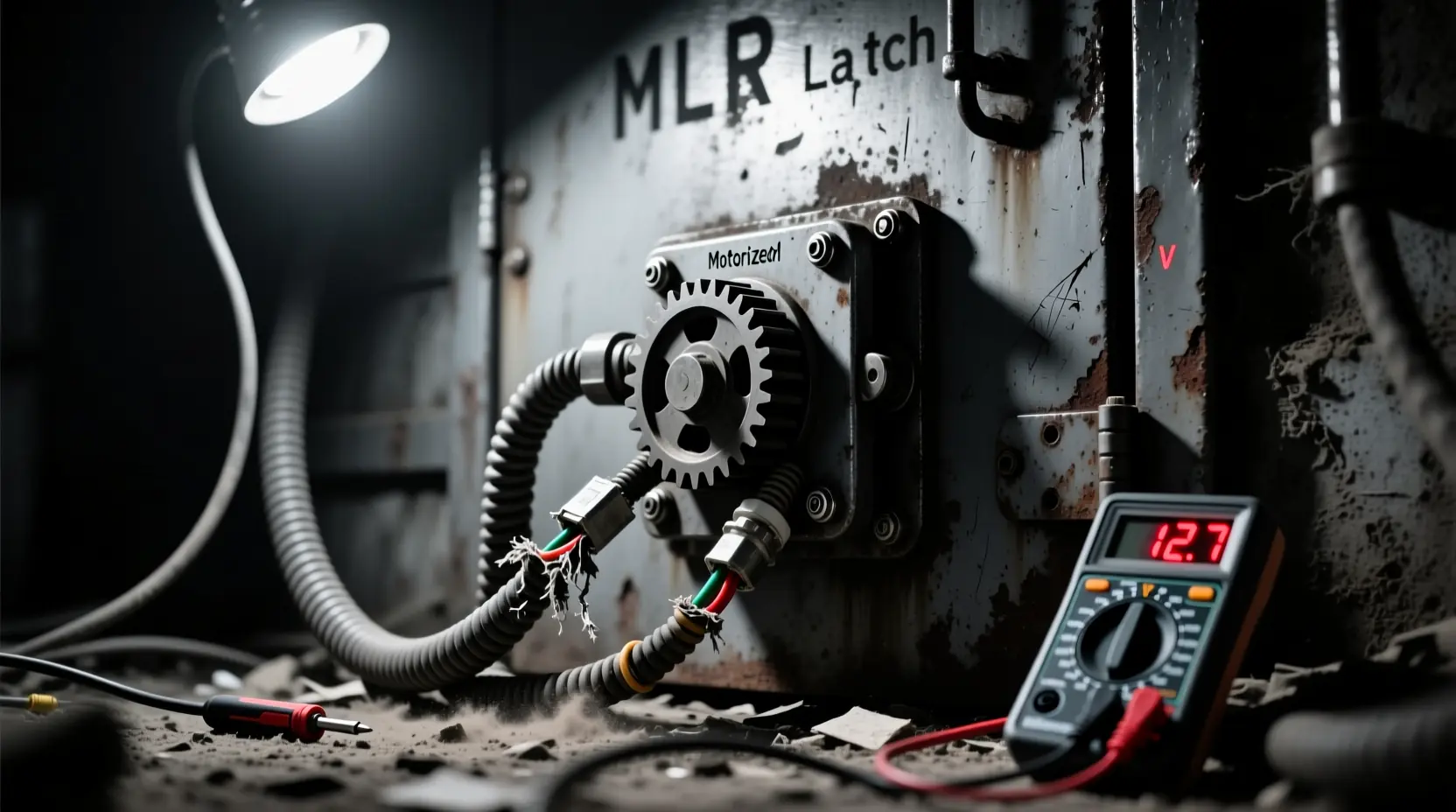
You don’t test with a static multimeter reading. That’s a fantasy. You test under load. The only way to see the true effect of burstiness is to measure the voltage at the MLR terminals while it cycles. Use a multimeter with a MIN/MAX or inrush recording function. Cycle the lock ten times. What was the lowest voltage it saw during that brutal gulp? If it dips below the manufacturer’s minimum operating voltage (often 18-20VDC), you have a failing system, no matter what the idle voltage reads. Test it right, or don’t bother.
The Messy Reality of Integration
The MLR is never alone. It’s on a door with a request-to-exit sensor, an exit button, a door position switch. All this loops back. Your burstiness calculation just got more complex. Is the REX PIR also power-hungry? Does the door controller have enough capacity on its power output? Did you read the actual, specific installation manual for the MLR model you bought, or just the generic guide? Wiring it wrong is a fantastic way to release the magic smoke. That smoke is expensive.
The Grumpy Summary
To conquer Perplexity and Burstiness:
- Respect the Gulp. Design for inrush, not operating current.
- Oversize the Power Reservoir. Dramatically.
- Use Shockingly Thick Wire. Calculate for inrush over round-trip distance.
- Consider Localized Power. It’s often the most elegant solution.
- Test Under Real Load. Use a MIN/MAX meter. Static lies.
This isn’t advanced electrical engineering. It’s fundamental applied physics. But in our world, fundamentals are treated as optional. We ignore the burst, are perplexed by the failure, and then act surprised. Don’t be that person. Specify for the chaos.
AHJ WARNING: All information herein is for discussion purposes only. The Authority Having Jurisdiction (AHJ)—your local fire marshal, building official, or code inspector—has absolute, final authority over all installations involving life-safety and fire-rated door assemblies. Their interpretations of codes (NFPA 80, NFPA 101, IBC, etc.) supersede any advice, manufacturer instructions, or clever workarounds. Compliance is not optional; it is a legal and ethical imperative. Failure to obtain proper approvals can result in project shutdowns, fines, liability, and most critically, a failure that risks lives. Always consult with your AHJ.