Right. You’ve got a problem. A herd of adolescents, a bottleneck of doors, and a vague directive to ‘secure the building’ without, you know, violating a dozen fire codes or causing a stampede. Some shiny-shoed consultant muttered ‘access control’ and now it’s your problem. Wonderful.
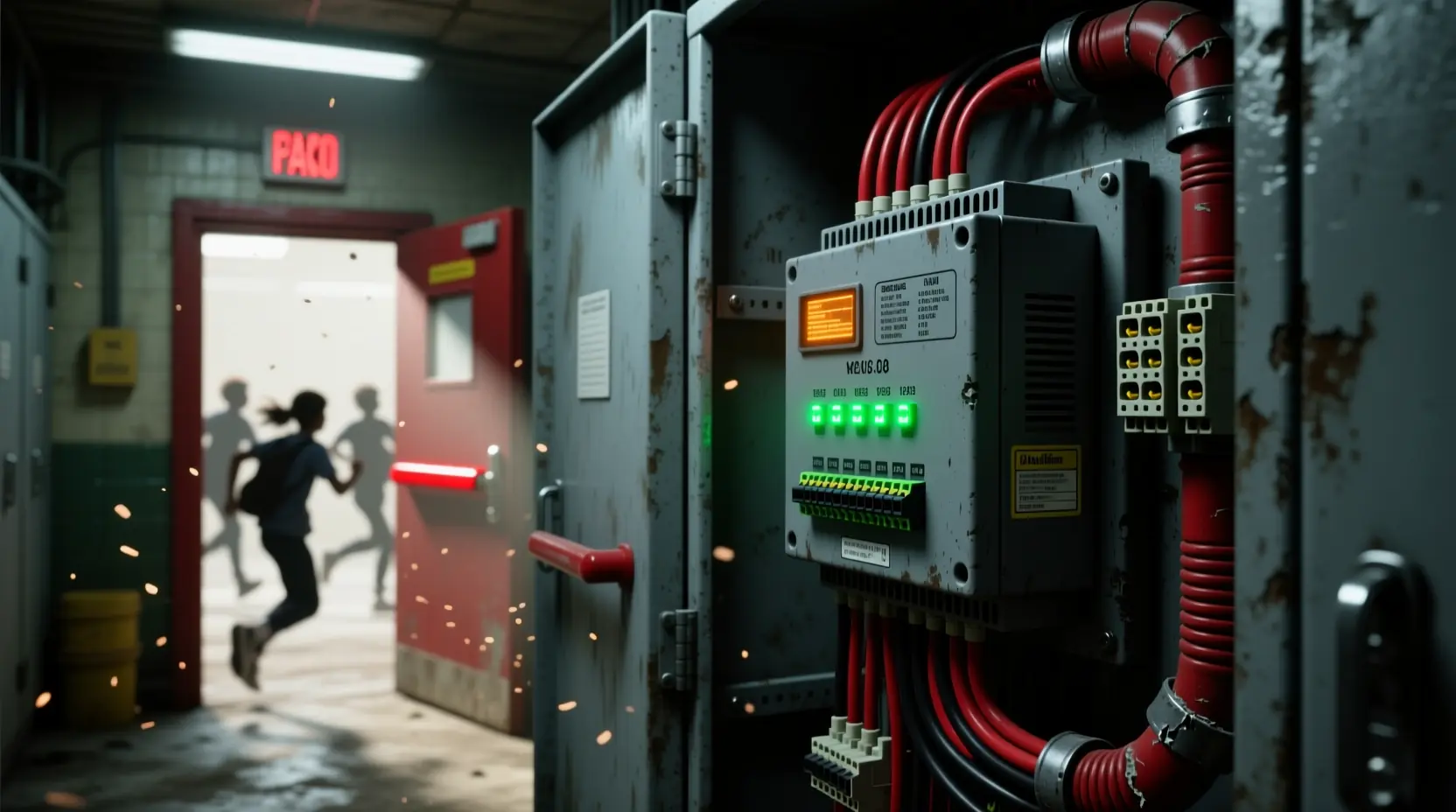
Take a seat. The hard chair. Let’s strip away the marketing nonsense and talk about the only piece of hardware that stands between you and total anarchy: the logic controller. It’s not glamorous. It’s a metal box that lives in a janitor’s closet and thinks in binary. But understand it, or prepare for a world of expensive, non-compliant pain.
What This Metal Box Actually Does (Spoiler: It’s Not Magic)
Forget ‘smart technology.’ Think of it as a profoundly literal, slightly obsessive bouncer for your doors. Its entire existence is governed by one non-negotiable hierarchy:
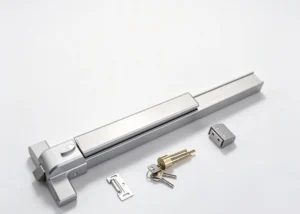
- FIRE/PANIC > EVERYTHING. The panic bar is king. When it’s pushed, the controller’s sole purpose is to kill power to the lock instantly. Everything else—schedules, lockdowns, the principal’s override—is irrelevant at that millisecond.
- Follow the pre-programmed rules. Unlock Door A at 07:00. Lock it at 15:30. This is its core, unshakeable religion.
- Listen to the fancy software… maybe. If the network is up and the stars align, it might take a remote command. But it never depends on it.
Its job isn’t to be ‘smart.’ Its job is to be predictably, reliably dumb. It applies simple logic to chaotic human behavior. That’s the whole point.
The “High-Traffic Entry” Lie and the Vestibule Trap
Ah, the ‘high-traffic entry.’ A charming term architects use for ‘designed bottleneck.’ It’s usually a double-door vestibule. The naive plan: Door 1 is the controlled entry (keypad). Door 2 is locked from outside, exit-only inside. Neat. Tidy. It will fail immediately.
Without specific logic, you’ve built a tailgating paradise. Student badges in at Door 1, holds it open, and the entire soccer team waltzes in behind them. The solution is vestibule sequencing or airlock control. This is where your controller earns its keep.
The rule is simple: Both doors cannot be unlocked at the same time. The sequence is everything:
- Credential presented at Door 1. Controller unlocks Door 1.
- Door 1 opens. Controller immediately slams Door 2 into a locked state, no matter what.
- Person enters the vestibule. Door 1 closes.
- Only after Door 1 is verified closed will the controller even consider allowing Door 2 to be unlocked (via a second reader or request-to-exit button inside).
This requires one controller monitoring both doors as a single system. If your installer proposes two separate controllers ‘talking’ over a network, show them the door. (The mechanically unlocked one, of course.) You want one brain for this interdependent mess.
The “Integration” Fantasy vs. The Wired Reality
‘Integration.’ A beautiful word that sells systems. A terrible word that makes them fail. You have a bell schedule system, a security VMS, a visitor management platform. You want them all to talk to the doors. Fine. But understand the chain of command.
The logic controller is the sergeant. The other systems are the generals. The sergeant must be able to function perfectly when the generals stop answering the radio.
- Schedules: The controller’s schedule must live in the controller. You program ‘Unlock 07:00, Lock 15:30’ directly into its memory. The network software can suggest overrides, but if the network dies, the sergeant follows its standing orders. Never let a Windows-based bell schedule PC be the single point of failure for your building access.
- Fire Alarm ‘Integration’: This is not integration. This is a hardwired, code-mandated divorce. A dry contact from the fire alarm panel must be wired directly into a dedicated input on the controller. When that contact closes (alarm), it tells the controller one thing: ‘UNLOCK EVERYTHING ON THIS CIRCUIT. NOW. AND KEEP IT THAT WAY.’ This bypasses all other logic. It is not a request. It is physics.
The Parts No One Budgets For (The Real Cost)
The controller box? $300-$800. The project? Multiply by ten. The money is in the guts:
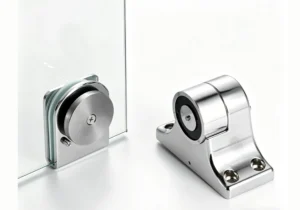
- The Power Supply & Battery: Not a wall-wart. A serious, UL-listed power supply with enough amperage for all locks and a battery backup that meets code for 24 hours minimum. Does the lock fail safe (unlocked) or fail secure (locked) on power loss? Figure that out now. Your controller and power supply must handle the choice.
- Request-to-Exit (RX) Devices: Every door needs a way to signal ‘someone is exiting.’ The panic bar has one built-in. For other doors, you need exit buttons, motion sensors, or levers with sensors. More inputs, more wiring, more money.
- Door Position Switches (a.k.a. Door Contacts): If the controller doesn’t know a door is open, your beautiful vestibule sequencing logic is worthless. These are critical.
- Conduit, Wire, and Labor: This is 80% of the cost. Running Class-2 low-voltage wire properly, in conduit where required, back to that janitor’s closet is skilled labor. The cheap bid will use zip-ties and hope. You will pay for that hope later.
A Grumpy Manager’s Pre-Procurement Grievance List
- Stop Buying ‘Access Control.’ You are procuring a Life Safety and Door Management System. The ‘access’ part is a feature. This semantic shift focuses everyone on what matters: egress first, convenience second.
- Demand a Single Box for Linked Doors. Vestibules, stairwell doors, series of rooms—if the doors interact physically, they need one logical brain in one physical unit.
- Battery Backup. For All of It. Controller, locks, strikes, the whole circuit. Test the duration. ‘It has a battery’ is not a spec. ‘It provides 24 hours of standby per NFPA 72’ is.
- Ask for the Installation Manual. Before the Bid. Not the sales sheet. The actual technical installation and programming guide for the proposed unit. If the vendor balks, walk. If you can’t understand the basics of its programming logic, it’s the wrong unit.
- The Only Test That Matters: During commissioning, with the system in ‘locked’ mode, walk up to the door from the inside and smack the panic bar. The door must open immediately
AHJ WARNING: THE SECTION YOU CANNOT SKIP
Listen carefully. The Authority Having Jurisdiction (AHJ)—your local Fire Marshal, Building Official, or State Fire Marshal—is not a stakeholder. They are the final arbiter. Their whims, based on the International Fire Code (IFC), NFPA 101, and local amendments, are law. Disregard them, and your beautiful, expensive system is a very heavy paperweight.
This system is a fire and life safety system. That triggers a specific, painful process:
- Permits: Electrical. Low-Voltage. Fire Alarm Interconnection. You will need them all.
- Plans: Not sketches. Shop drawings. Showing every device, every wire, every circuit, and the exact logic flow for every scenario. Submitted for review before any equipment is purchased.
- Installation: By technicians licensed for fire life safety work in your jurisdiction. Your IT guy or a general alarm installer may not qualify.
- The Final Inspection: This is your trial by fire. The AHJ will witness a full, live test of every function. They will trigger a fire alarm and verify every door on the circuit unlocks. They will initiate a lockdown and then hit the panic bar. They will kill the main power. They will fail components. If one door fails to operate per code in any scenario, you fail. The building does not get its Certificate of Occupancy. You reschedule the inspection (weeks later) and pay for it all again.
Engage the AHJ on day one. Show them your planned product specs and logic. Their grumpiness is a feature, not a bug. It will save you from yourself.
So there it is. The logic controller: a tool for imposing simple, reliable order on the beautiful chaos of a school. It’s not about keeping the world out. It’s about managing the flow in, while guaranteeing—with absolute, mechanical certainty—that the way out is always, forever, clear.