Slim-Line Panic Bars: A Grumpy Procurement Manager’s Guide to Avoiding Catastrophe
Let’s get one thing straight. I’ve overseen procurement for buildings that make your average “luxury” showroom look like a garden shed. I’ve wrangled specs for marble quarried by monks and glass so clear it’s a public hazard. And in all my years, nothing has induced a more profound, soul-crushing sense of deja vu than the current obsession with slim-line panic hardware.
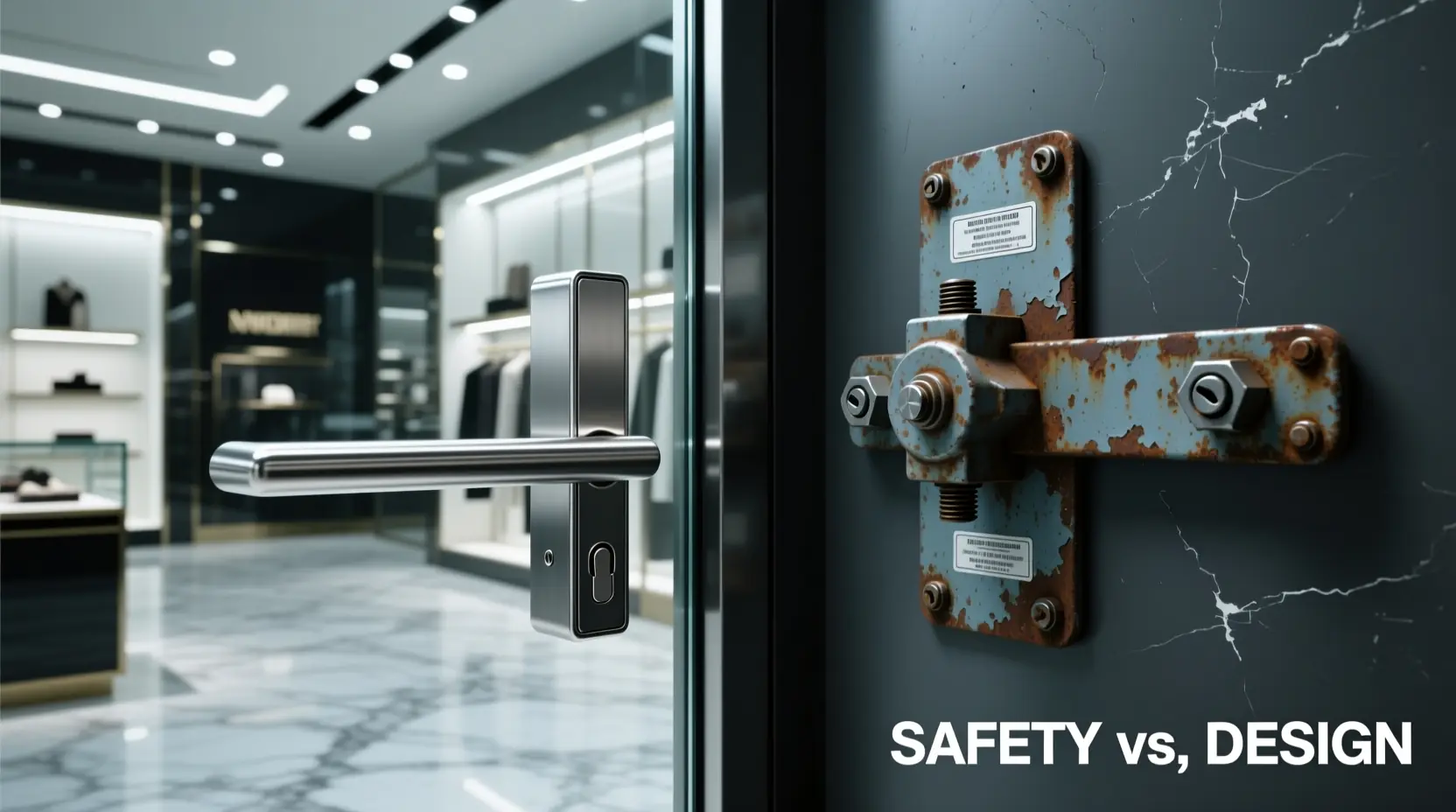
You know what I’m talking about. Those sleek, whisper-thin bars or touchpads that architects and interior designers foam at the mouth over. They’re presented not as life-saving devices, but as pieces of minimalist sculpture. They come with finishes like “Satin Oyster” and “Midnight Chrome.” They are, in the parlance of our times, very *on-brand*.
And they are, almost universally, a terrible idea.
The Seductive Lie of the Invisible Exit
The sales pitch is compelling. Why clutter your pristine, billion-dollar visual narrative with a hulking, industrial crossbar? That’s for schools and hospitals—places where function sadly, vulgarly, triumphs over form. Your space is a temple of commerce. The exit device should be a discreet whisper, not a shout.
This is where we divorce ourselves from reality. A panic device is not a door handle. It is a piece of crowd-safety infrastructure mandated by code for one reason: to allow a mass of panicked, disoriented, potentially injured people to open a door *instinctively* under zero visibility. It is the epitome of function.
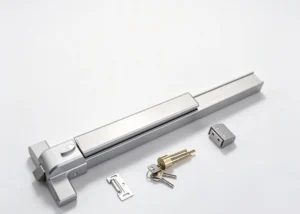
The classic crossbar works because it presents a massive, unambiguous target across the door’s width. You can hit it with your hands, your hip, your elbow, your forearm. A child can activate it. An elderly person can lean into it. It is brutally, beautifully effective.
Now, consider the slim-line alternative. Often a single, shallow bar mounted only at the top. In a true panic, people push at the center of the door. They push at the glass. They fall against it. The instinctive action misses the narrow activation zone entirely. You’ve traded a fool-proof mechanism for one that requires precision in a moment dedicated to chaos.
The Engineering Charade: When Specs Meet Physics
This is where my ulcer starts singing show tunes. The beautiful renderings show this elegant line on a vast sheet of glass. What they don’t show is the engineering nightmare required to make it work.
Problem 1: Door Flex. Large glass doors move. They sway. A traditional panic device is a rigid structure that reinforces the door. A slim-line bar offers little to no structural support. The result? You now need a thicker, heavier, astronomically more expensive glass door to prevent flex that would render the latch mechanism useless. The architect’s delicate vision just gained 50 pounds and a 50% cost overrun.
Problem 2: Mechanism Fatigue. The internal workings of these devices are tiny. Making a miniature, sleek mechanism that can reliably retract a door latch thousands of times, against weather seals, with temperature expansion, and under the code-mandated maximum pressure (usually 15 lbs), is a feat. The failure mode isn’t a dramatic break; it’s a slow descent into sponginess, followed by constant false alarms or failure to latch.
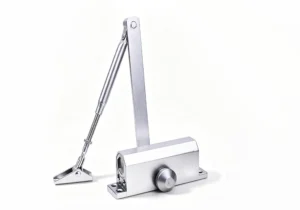
Problem 3: The Double-Door Debacle. This is my personal favorite theater of the absurd. Pairing slim-line devices on a double door requires coordination so both leaves release simultaneously. The hardware to do this—an overhead coordinator or a floor-mounted monster—cannot be hidden within the sleek profile. So you get your beautiful, minimalist bar, accompanied by a clunky, visible coordinator that utterly destroys the aesthetic you paid a fortune to achieve. You’ve bought the worst of both worlds.
The Only Opinion That Matters: Meet Your AHJ
You can ignore me. You can ignore your contractor. But you cannot ignore the Authority Having Jurisdiction (AHJ). This is your local building or fire official. This person does not care about your brand’s tonal palette. They do not care about the “customer experience.” They care about the fire code. They care about egress. They have the power to shut down your grand opening.
A savvy AHJ will look at your specified slim-line hardware and ask for its certification listings. They will want proof it’s rated for the door size, weight, and traffic. They may perform a simple test: applying pressure to the door *below* the bar. If it doesn’t open, it fails. Their solution won’t be aesthetic. It will be to demand a bulky, secondary push pad installed lower on the door, making your sleek hardware look like a botched afterthought, or to reject it outright.
I have seen this happen. I have seen six-figure hardware ripped out days before a launch. I have seen CEOs pale at the cost of replacement and the delay. The AHJ is the wrecking ball that swings through your beautiful dream.
A Grumpy, Pragmatic Compromise (If You Must)
Fine. You’re determined. The designer will have an existential crisis without their “Satin Oyster” touch bar. If you’re going to walk this path, do it with your eyes open.
- Single Doors Only. Do not, under any circumstances, specify them for double doors. The coordination problem is a money pit.
- Maximize the Target. Choose the model with the widest, deepest activation surface you can find. Avoid the “filament”-style bars. Opt for a broader touchpad.
- Reinforce Everything from Day One. Budget for a heavier-duty door, frame, and hinges. This is not an optional upgrade.
- Spec for Credentials, Not Curves. Demand hardware with BHMA (Builders Hardware Manufacturers Association) certifications and clear UL listings for panic exit. Do not accept decorative European imports without verified testing for your local codes.
- Pre-Clear with the AHJ. This is non-negotiable. Before you finalize orders, have a meeting. Show them the product data. Get their conditional approval in writing. This is your only insurance policy.
In the end, my role isn’t to build ugly buildings. It’s to ensure the buildings we create don’t become death traps in an emergency. The exit hardware is the last line of defense. Making it less effective in the name of aesthetics isn’t innovation; it’s negligence wrapped in brushed aluminum.
So go ahead. Marvel at how the slim-line bar catches the ambient light. Just remember, to those of us who understand what it’s for, that elegant line doesn’t signify good design. It signals a calculated risk, a gamble where the stakes are measured in lives, not likes.
AHJ WARNING: This article represents the grumpy opinions of a seasoned professional. Your local Authority Having Jurisdiction (AHJ—building, fire, or code officials) has the FINAL and ABSOLUTE authority on what is compliant in your project. Their interpretation overrides manufacturer claims, architectural plans, and online articles. Never finalize exit hardware specifications without their explicit pre-approval. Failure to do so will result in costly delays, replacements, and potential liability.