Panic Bar Pressure Limits: The Grumpy Procurement Manager’s Guide to Not Getting Fined
Coffee’s cold. Again. Let’s talk about the single most irritating line item on any commercial door schedule: the panic bar. Or exit device. Or crash bar. Call it what you want, I call it a liability wrapped in aluminum. Specifically, let’s talk about why your perfectly specified, “code-compliant” hardware fails the moment an inspector leans on it with a force gauge. The culprit? The pressure limit. The pull-force. The difference between a signed-off project and a costly, embarrassing callback.
You think you understand this? You probably don’t. I buy these things by the truckload, and I watch projects get held up weekly because some installer treated a precision life-safety device like a barn door latch. Reputations sink, change orders balloon, and it’s always someone else’s fault. It’s not. It’s physics. Annoying, unforgiving physics.
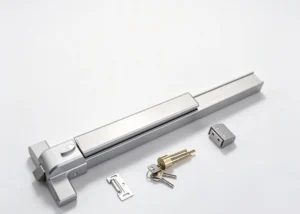
A panic bar isn’t just a lever. It’s a calibrated release mechanism. Its entire purpose is to open under duress—panic, fire, chaos—with minimal effort. The codes (IBC, NFPA 101, your local amendments that you definitely didn’t read) aren’t suggestions. They are the law. And they state a very simple, non-negotiable fact.
The One Rule That Matters: 15 Pounds of Force
Here it is, stripped of all marketing fluff and contractor optimism: The actuating portion of the exit device must release the latch with not more than 15 pounds of force (15 lbf).
Fifteen pounds. That’s the weight of a decent-sized house cat. Not a person’s body weight. Not a hearty shove. A firm push. The intent is that anyone—a child, an elderly person, someone injured—can operate it.
Now, read that rule again. Carefully. It says “the actuating portion.” That’s the bar or pad you push. It does not say “the latch mechanism inside the door.” It does not say “under ideal laboratory conditions.” It means the force required right where the human hand meets the metal, on the job site, with the door hung, the building settled, and the frame probably out of plumb.
Why “15 lbf at the Bar” Often Means “22 lbf at the Latch”
This is where procurement meets reality. Manufacturers design these devices. To achieve that 15 lbf at the bar, the internal latch mechanism often sees about 22-25 pounds of retraction force. This is the engineering buffer. It assumes a perfectly installed device on a perfectly prepared door in a perfect frame.
Let me laugh bitterly for a moment. Perfect? In construction? The buffer exists to account for real-world variables. But it’s not a forgiveness fund. It’s a thin margin that evaporates instantly in the face of the three fatal enemies of panic hardware: misalignment, friction, and door sag.
Your expensive panic bar is a lever. If the door binds on the frame, if the hinges are shot, if the threshold drags, that lever isn’t just working against the latch spring. It’s fighting the entire door assembly. Your 15 lbf requirement becomes 30, 40, or 50 lbf. That’s not a fail. That’s a lawsuit wearing a hard hat.
The Grumpy Installer’s Checklist for First-Time Pass
Hope is not a strategy. Begging the inspector is not a tactic. You need a process. Here’s mine, forged in the fire of failed inspections and angry project managers.
1. The Door & Frame: It All Starts Here
Never install a panic bar on a crap door. Just don’t. The door must be correct for the application (fire rating, material, core). The frame must be plumb, level, square, and structurally robust. A flimsy frame will flex under pressure, altering the geometry of the entire panic bar mechanism. A flexing frame is a failing frame. Check the rough opening before the door ever shows up. This is basic, and it’s always wrong.
2. Hinges: The Foundation Everyone Ignores
Hinges are bearings. Treat them as such. Use commercial-grade, ball-bearing hinges. Three minimum per door, four for heavier doors. Are they aligned correctly? A misaligned hinge pin doesn’t just squeak—it creates massive, invisible friction that the panic bar must overcome. This is the #1 silent killer of pull-force compliance. Lubricate them? Sure. But proper alignment is sacred.
3. Door Prep: Precision, Not Approximation
The cutout in the door for the panic bar chassis must be precise to the manufacturer’s template. Not “close.” Precise. Burrs, rough edges, or a cutout even 1/16” too tight will cause the internal mechanism to bind. This isn’t carpentry; it’s machinist work. And when mounting the device, follow the torque specs for the fasteners. Do not over-tighten. Cranking down the screws can twist the chassis, creating internal binding that no amount of adjustment will fix. Snug is sufficient. Striped is stupid.
4. Latch & Strike Alignment: The Final Frontier
The latch bolt must seat seamlessly into the strike plate. No rubbing, no dragging, no “close-enough.” The door should close smoothly with a positive click, not a slam. If you have to shoulder-check the door shut, your alignment is off, and you’ve already lost the battle. The friction created will fail the force test every time. Use an alignment tool. Shim the strike. Do whatever it takes.
5. The Inevitable Test: Be Your Own AHJ First
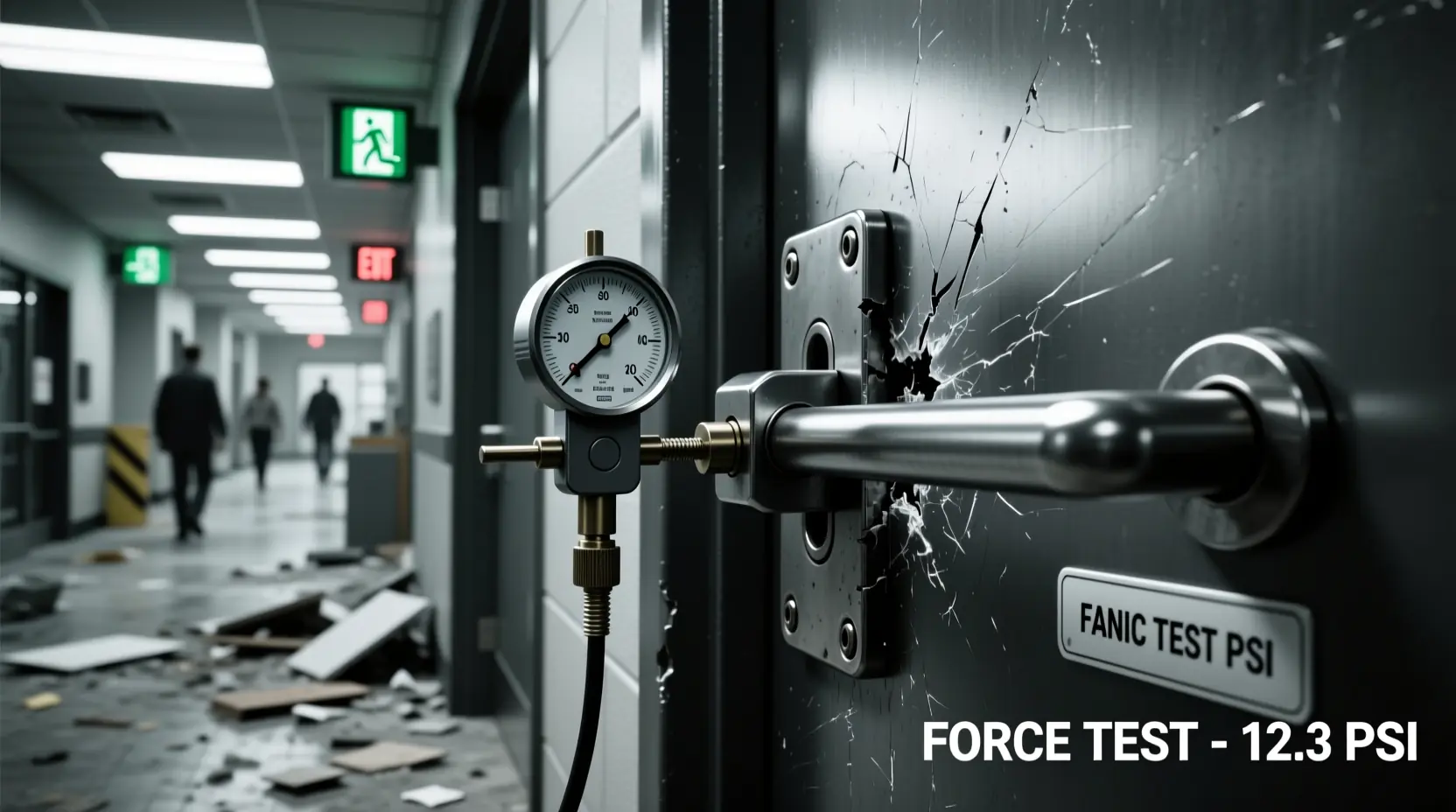
Before you ever call for inspection, test it yourself. With a calibrated force gauge. They are inexpensive tools—far cheaper than a callback. Test the bar in multiple places: near the ends, in the middle. The force should be consistent, smooth, and easy throughout its travel.
What does 15 lbf feel like? It’s a light, firm push. If you find yourself leaning into it, if there’s a gritty feeling or a jerky “breakaway” sensation, you have a problem. Diagnose it immediately.
Common Failure Points & Brutally Simple Fixes
- High initial force: Binding in the door prep or an over-tightened chassis. Loosen mounting screws in sequence.
- Binding mid-travel: Often debris in the mechanism (sawdust, metal filings) or a defective unit. Clean it out.
- Door “kicks” open at the end of travel: This is the latch spring finally overcoming huge door friction. The problem is the door alignment, not the device.
- Force is okay, but latch doesn’t retract fully: The connecting rod between the bar and latch is incorrectly adjusted. Read the installation guide (yes, actually read it).
The Procurement Morale
Specifying and installing panic hardware that passes inspection isn’t about buying the most expensive brand. It’s about understanding it as a system. The panic bar, the door, the frame, the hinges, the building itself—it’s all one interconnected system. Ignore one component, and the system fails. The 15 lbf limit is a performance requirement for the entire door assembly, not just the shiny piece of hardware you bolted to it.
Treat it with the respect a life-safety device deserves. Because when the alarm sounds, that’s exactly what it is.
AHJ WARNING: Everything written here is based on general codes and industry practice. I am not your AHJ. Your local Authority Having Jurisdiction—the inspector with the clipboard—has the final, absolute say. Their gauge, their interpretation, and their local amendments override any article, any manufacturer’s spec, and certainly any grumpy procurement manager’s advice. Talk to them early. Their requirements are gospel. Ignorance of their standards is a choice, and a expensive one.