
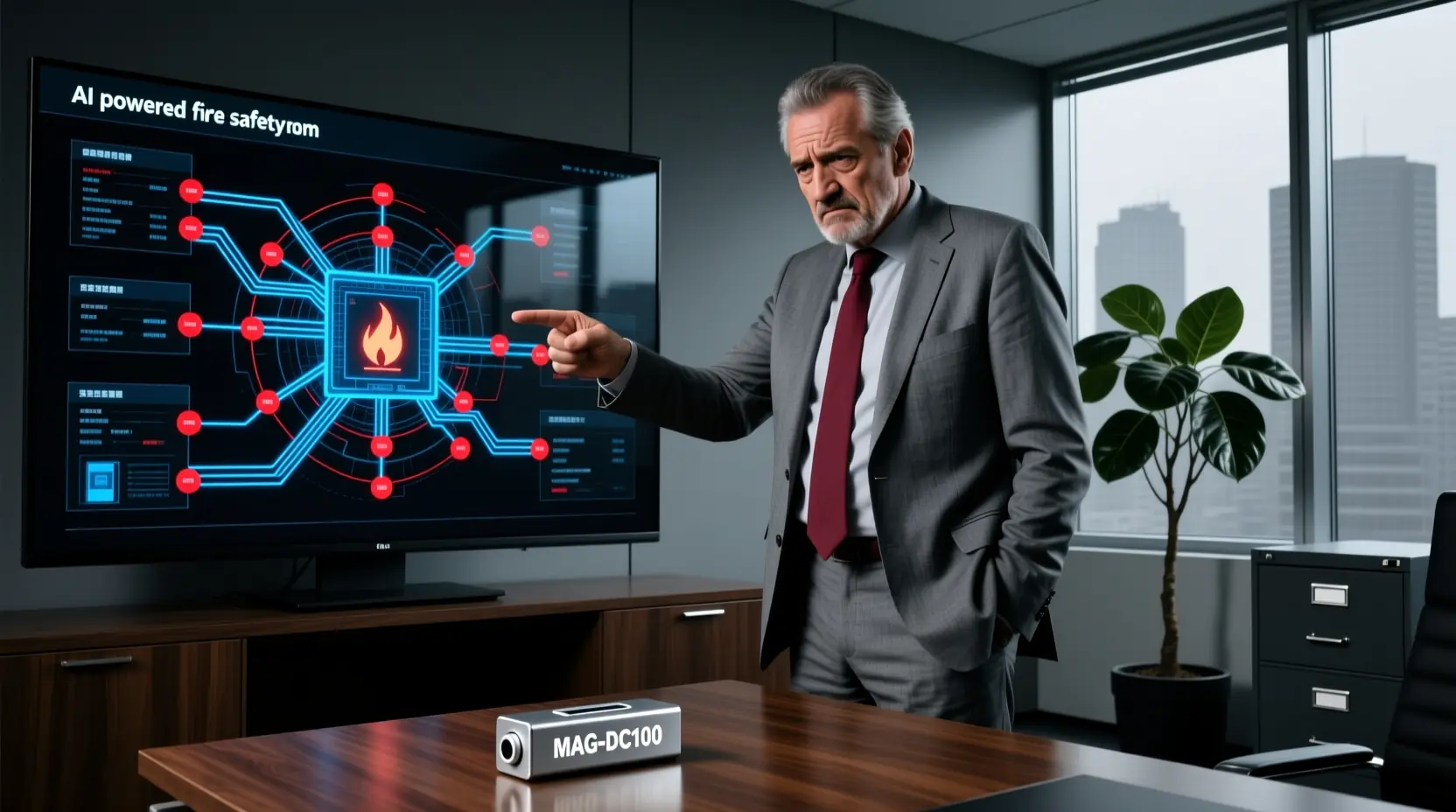
AI in Exit Path Monitoring: A Grumpy Manager’s Rant on Chaos & False Promises
Let’s cut through the vendor fog. I’ve overseen fire and life safety procurement since some of these “AI evangelists” were in diapers. The latest circus act? Shoving artificial intelligence, or what they’re calling “AI,” into monitoring the paths people use to not die in a fire. Spoiler: It’s less of a revolution and more of a migraine wrapped in a service contract.
Demystifying the Buzzword Beast
First, strip away the hype. This isn’t Skynet. It’s usually a pattern-matching algorithm—often machine vision—strapped onto a camera or sensor. The core idea isn’t insane: keep exit paths clear. Old school meant human checks or simple break-beam sensors. The AI pitch is constant, automated vigilance. A “brain” should tell the difference between a human walking and a pallet that’s become a permanent, code-violating fixture.
The Glossy Brochure “Benefits” (And Their Ugly Underside)
The sales spiel is seductive: “Proactive Compliance!” “Real-time Obstacle Detection!” “Predictive Congestion Analytics!” It sounds brilliant in a PowerPoint. The theory? Instead of a monthly inspection finding a blocked stairwell, the system alerts Facilities the moment some genius parks a cart in front of a fire door. Some even claim to learn traffic patterns to flag dangerous crowd build-up. They dangle carrots of reduced liability and pristine data logs for the AHJ.
Time for a heavy dose of reality. Here’s what they don’t put in the brochure.
1. The Data Hog & Infrastructure Nightmare
A traditional monitored exit? A couple of low-voltage wires. Maybe a network cable. Simple. Robust. An AI vision system? It’s a starving digital beast. It needs high-bandwidth, uninterrupted streams of video or 3D point cloud data. You’re not just running life safety cable anymore; you’re building a mission-critical IT network. And when the office Wi-Fi (or the server room switch) takes a nap, your “intelligent” monitoring goes comatose. We’re anchoring safety to the same fragile infrastructure that struggles with the CEO’s video calls. Genius.
2. The Boy Who Cried Wolf: False Positive Hell
I’ve watched a demo unit declare a mop bucket a “permanent obstruction” and a neat stack of chairs a “crowd formation.” Sunlight, shifting shadows, a posted flyer—all can confuse the algorithm. Now picture this at 3 AM, blaring alerts because a night cleaner’s cart is in the hall. After the third false alarm, what happens? Alerts get silenced. The system gets ignored. The tech meant to heighten awareness instead breeds complacency. You’ve bought a very expensive, very annoying boy who cries wolf.
3. The Integration Swamp of Despair
Most of us work with existing buildings. So now you’re trying to graft this AI black box onto a legacy fire alarm panel, a Building Management System (BMS), an access control system, and probably some useless “smart building” app. These systems speak different languages. The result? A Frankenstein’s monster of middleware, custom APIs, and gateways. Each connection is a new potential point of failure. Good luck finding a technician who understands fire code, network security, and the whims of a machine learning model. You’ll need a committee.
4. The Bottomless Pit of “Service” & Maintenance
A conventional exit device is an asset. You test it, maybe clean it, replace it in a couple of decades. An “AI-Powered Monitoring Node” is a liability. It’s a service. The software needs updates. The “model” needs retraining for layout changes. The camera lens gets dirty—does it think grime is an obstacle? When the vendor folds (and they will), your system becomes a dumb, expensive brick. The real cost isn’t upfront; it’s the endless subscription for “software support” and “model optimization.” You’re renting your peace of mind.
Where It *Might* Not Make Me Want to Scream
Fine, I’m not entirely unreasonable. In specific, deep-pocketed, tech-saturated environments, there’s a flicker of sense. Think major airports or stadiums. The flows are chaotic, stakes are enormous, and IT infrastructure is already military-grade. Using AI to spot an unattended bag in a critical egress path before a human does? Potentially valuable. Monitoring real-time crowd density to manage exit flow during an event? That’s a logical application.
But for your standard office block, school, or retail space? You’re using a quantum computer to solve a simple arithmetic problem. The investment is better spent on more physical patrols, better staff training, and design that naturally discourages blockages. No algorithm comprehends context like a human: that a box is there because someone is actively moving it, not because it’s abandoned.
The Unspoken, Ugly Truth
Here’s the real kicker that keeps procurement veterans like me awake: We’re flirting with performance-based design on dangerous steroids. The fire code is prescriptive. It says, “Have X exits of Y width, with Z illumination, kept clear.” It’s a clear, pass/fail standard. AI monitoring is inherently reactive. It says, “We’ll detect when the standard is already broken.” You’re shifting from prevention to detection. You allow a hazardous condition to exist, hoping a complex, fallible system will notice. This is a seismic philosophical shift most building owners and Authorities Having Jurisdiction (AHJs) haven’t fully digested. When the AI misses an obstruction because of “unusual lighting conditions,” who’s liable? The vendor? The integrator? The owner who skipped the model retraining? It’s a litigation feast waiting to happen.
The Non-Negotiable AHJ Warning (Pay Attention)
All this tech is utterly worthless without approval. Let me be brutally clear:
WARNING FROM A BATTLE-SCARRED PROCUREMENT PRO: Your local AHJ—the Fire Marshal, the Building Official—didn’t become a civil servant to evaluate “proprietary neural networks.” They think in UL listings, NFPA standards, and proven, hard-wired reliability. If you’re eyeing an AI-driven system, you MUST engage your AHJ at the CONCEPT STAGE. Not after purchase. You’ll need a mountain of documentation, third-party validation from a recognized lab (not the vendor’s shiny brochure), and crystal-clear explanations of fail-safes, backups, and maintenance in plain English. Roll up with a black box and a smirk, and you’ll be shown the door. Your fancy algorithm does NOT override the code. Ever. Save your breath and budget.
So, is AI the future of exit monitoring? In a few hyper-specialized cases, perhaps. For the other 95% of buildings? It’s a complex, expensive solution chasing a simple problem, bringing a tsunami of new costs, failures, and regulatory risk. Now, I’m off to spec some simple, rugged, magnetic door contacts. They’ll be faithfully clicking along long after this AI fad’s servers have been powered down and recycled.