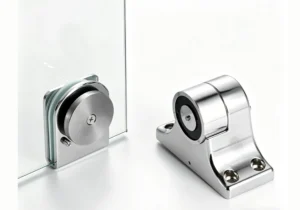
Carbon-Neutral Door Hardware: The Grumpy Procurement Manager’s Guide
Let’s talk about carbon-neutral manufacturing for door hardware. Pull up a chair. The one with the wobbly leg and the stain from the ’90s coffee incident. That’s the spirit. We make things you slam, things you kick, things that fail spectacularly when you’re running late. And now, the global mandate is that we save the planet while we’re at it. Terrific.
The term “carbon-neutral” gets slapped onto spec sheets and websites like a cheap powder coat. In our world—hinges, levers, exit devices, the gritty guts of a building—it translates to a chaotic, expensive, and often deeply annoying balancing act. It’s the math of trying to offset the carbon belched out from making this essential junk. Simple, right? It’s as simple as reassembling a multi-point lock after you’ve launched the springs into the HVAC duct.
The Unvarnished Truth: Where the Carbon Really Lives
Forget the corporate brochure fluff about turning off the lights. The real carbon story is written in molten metal and diesel exhaust. It starts far upstream, and it’s uglier than a mismatched lever set on a grand entrance door.
1. The Metal Problem (It’s a Big One)
Zinc. Brass. Aluminum. Steel. These aren’t conjured by eco-wizards. They’re ripped from the earth by diesel-belching monsters and melted in furnaces hungry for fossil-fuel heat. That’s before we even cast a prototype. “Recycled content” is the industry’s favorite band-aid. Sure, using scrap is less bad. But melting it down still takes a staggering amount of energy. It’s a step, not a solution. The carbon debt is incurred before the metal hits our dock.
2. The Machine Grind
CNC machines, polishing lines, automated assembly. It’s all electricity. Is your supplier’s factory plugged into a coal grid or a hydro dam? It makes a continent-sized difference. Many are on the dirty grid because, shockingly, moving a 50-year-old foundry next to a waterfall isn’t a simple CAPEX line item. Switching to a “green tariff” is the low-hanging fruit. It’s also the thing everyone shouts loudest about. It’s like slapping a “Save the Whales” sticker on a container ship.
3. The Dirty Secret of Finishing
Here’s where the environmental sins get technical. Electroplating? A chemical and energy bath, often involving nasty stuff like hexavalent chromium. Anodizing? Better, but still an energy hog. The new darling, PVD (Physical Vapor Deposition), is less chemically toxic but happens in a vacuum chamber under intense heat and pressure. Translation: different kind of energy hog. Every beautiful, corrosion-resistant finish has a carbon shadow.
4. The Last-Mile Carbon Superhighway
We lovingly wrap our hardware in foam and cardboard (itself a carbon tale), stack it on pallets, stuff it into containers, and put it on the global carbon superhighway—ships, trains, trucks. That last delivery to the job site in a sprinter van? It all adds up. The supply chain is the silent, diesel-powered partner in every “green” product.
The Path to Less-Bad: A Series of Expensive, Grumpy Choices
So how do you, the weary specifier or procurement gnome, navigate this? Not with trust, that’s for sure. With cynical, detailed scrutiny.
Step 1: The Energy Inquisition
This is the biggest lever. Grill them. Do they have on-site generation? Solar-sagged roofs? Wind turbines? This is major CAPEX, the kind of commitment that moves needles, not just marketing copy. If not, are they buying certified renewable energy through a PPA? Demand the documentation. A paperwork fix is still a fix, but know what you’re buying.
Step 2: The Material Interrogation
Time to bully your suppliers. Where does the brass come from? Is the steel from an electric arc furnace (scrap-based) or a basic oxygen furnace (virgin ore)? Ask for life-cycle assessment (LCA) data. They’ll groan. You’ll groan. Do it anyway. Lightweighting designs helps—less mass, less to melt, less to ship. But try telling that to an architect married to their solid bronze manifesto. Good luck.
Step 3: Process Pandemonium & The Efficiency Grind
This is unsexy, engineer-level work. Heat recovery from furnaces. Capturing compressor waste. High-efficiency motors. Optimized machining paths. This is where the real, gritty gains are found in established factories. It’s tuning up an old diesel truck, not buying a shiny new EV. It’s also often where the most credible progress is buried in technical reports, not press releases.
Step 4: The Circular Economy Daydream
The dream: hardware that lasts a century, is fully repairable, and can be completely disassembled and recycled. The reality: it clashes with cost targets, value engineering, and the fact that the cheapest bid usually wins. Yet, some are trying. Look for standardized components, take-back programs, designs that allow for re-finishing. It’s fringe now, but it’s the right annoying, difficult idea.
The Great Big Snarky Elephant: Carbon Offsets
Here’s where my grumpiness peaks. Many “Carbon Neutral” claims are built on a foundation of offsets. They buy a certificate for a wind farm in Chile or a forest in Indonesia. Does it help the global atmospheric ledger? Possibly. Does it clean the local emissions from their plating line in Ohio? Absolutely not. It’s financial engineering for the atmosphere. A necessary bridge for truly hard-to-abate emissions, perhaps, but a bridge. Relying on it is like fixing a broken door closer with zip ties and calling yourself a master builder.
Why Even Bother? (The Cynical & The Real)
First, because building codes and green certifications (LEED, WELL, BREEAM, etc.) are slowly but surely baking these questions into specs. Big clients—tech giants, universities, forward-thinking corporations—are demanding the data. Second, and let’s be brutally honest: it’s risk mitigation. Future carbon taxes, supply chain disruptions tied to climate, and reputational damage are real business costs. It’s about not being left holding the (carbon-intensive) bag.
It will never feel virtuous. You’ll have a hard drive full of PDF reports, conflicting data, and the lingering knowledge that the only true zero-carbon hardware is a hand-forged iron latch made by a hermit with a waterwheel. Which doesn’t scale for a 40-story skyscraper. So we operate in the messy middle, reducing what we can, offsetting what we can’t, and hoping the door closer we specify doesn’t seize up in three years and become landfill.
The Grumpy Specifier’s Checklist
Don’t just accept the badge. Dig. Annoy them.
- Ask for the report: Is their “neutrality” 90% offsets or 50% direct reduction?
- Demand material transparency: Post-consumer recycled content percentages. Supplier LCA data.
- Interrogate the finish: What is the specific coating process and its energy footprint?
- Consider geography: A factory across the ocean vs. one a few states away has a massive shipping impact.
THE NON-NEGOTIABLE AHJ WARNING
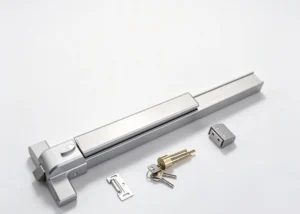
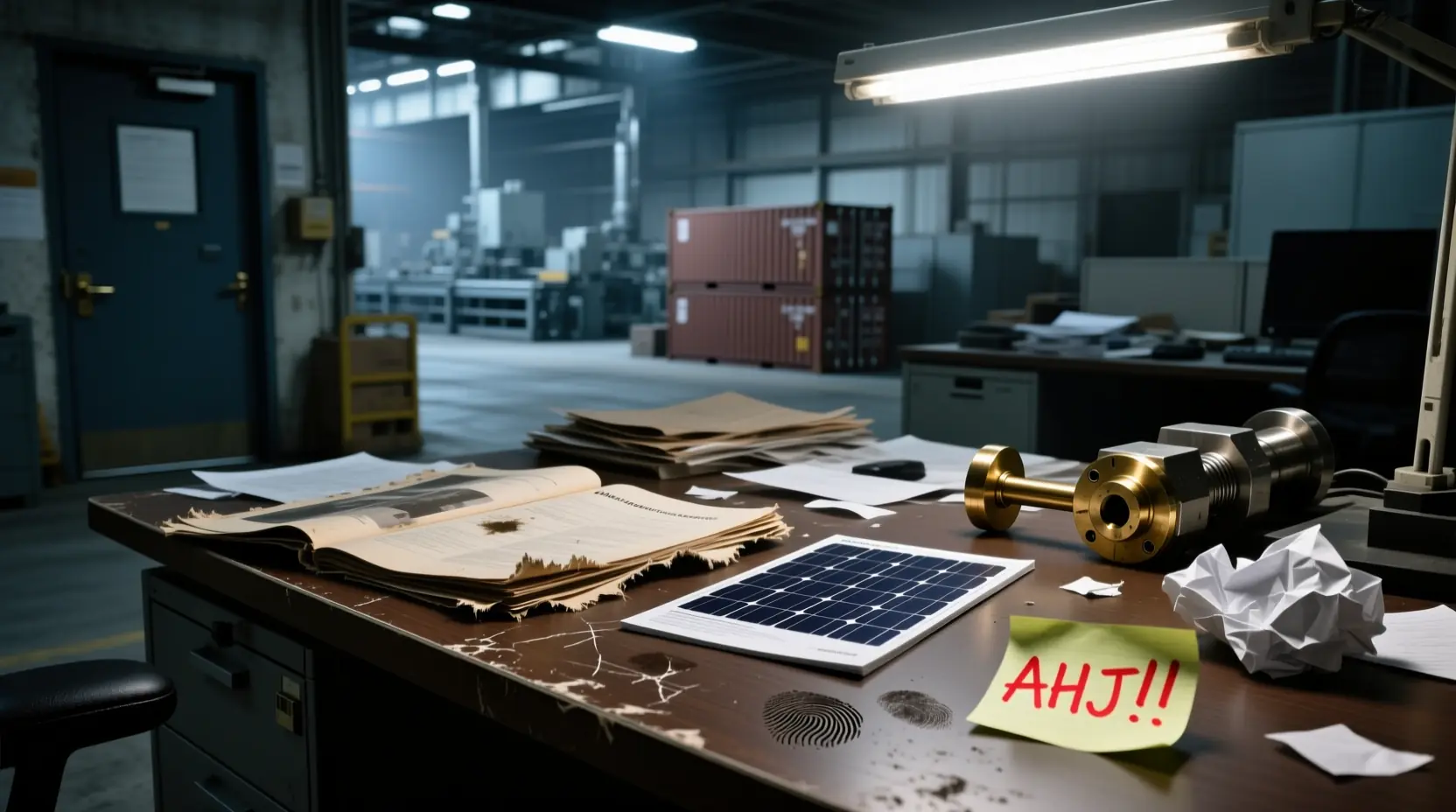
Listen closely. This is the most important part. Whatever eco-friendly, bamboo-infused, carbon-sequestering magical lever you fall in love with… YOU MUST VERIFY IT MEETS ALL CODES AND AHJ (AUTHORITY HAVING JURISDICTION) REQUIREMENTS FOR THE APPLICATION. Fire ratings, egress codes (like IBC), accessibility standards (ADA), life safety, security—these are sacrosanct. A carbon-neutral panic device that fails in a fire or doesn’t meet the mandated cycle count is not sustainable. It’s a catastrophe. The planet gains nothing if a building burns down or people can’t escape. Performance first. Always. Then, and only then, push for greener performance. Don’t get architecturally cute with safety. I don’t care how many mangrove trees they planted.
There. The unfiltered, slightly snarky, intentionally chaotic truth. Now, if you’ll excuse me, I have to go argue with a metallurgist about the embodied carbon in a hinge pin. My wobbly stool awaits.