Let’s get one thing straight. I’ve been buying door hardware longer than most of your “smart” buildings have been standing. This whole touchless exit device frenzy? It wasn’t born from innovation. It was born from panic. A global event handed marketing departments a blank check, and in 2026, we’re all living in the expensive, buggy, slightly absurd aftermath. We traded simple, reliable mechanics for complex, costly electro-mechanical theater. And the final bill is still coming due.
Remember the good old days? A crash bar had one job: open. Every single time. No batteries, no sensors, no questions asked. It was a hunk of metal you pushed. Life safety was simple. Then hygiene became a headline, and suddenly every architect wanted a magic, germ-free door. Fear, it turns out, is a hell of a sales tool.
The “Touchless” Menagerie: A Field Guide to Frustration
The market is now a zoo of over-engineered solutions. Let me walk you through the exhibits so you know what you’re actually buying.
1. The Optical Illusion (Wave-to-Exit)
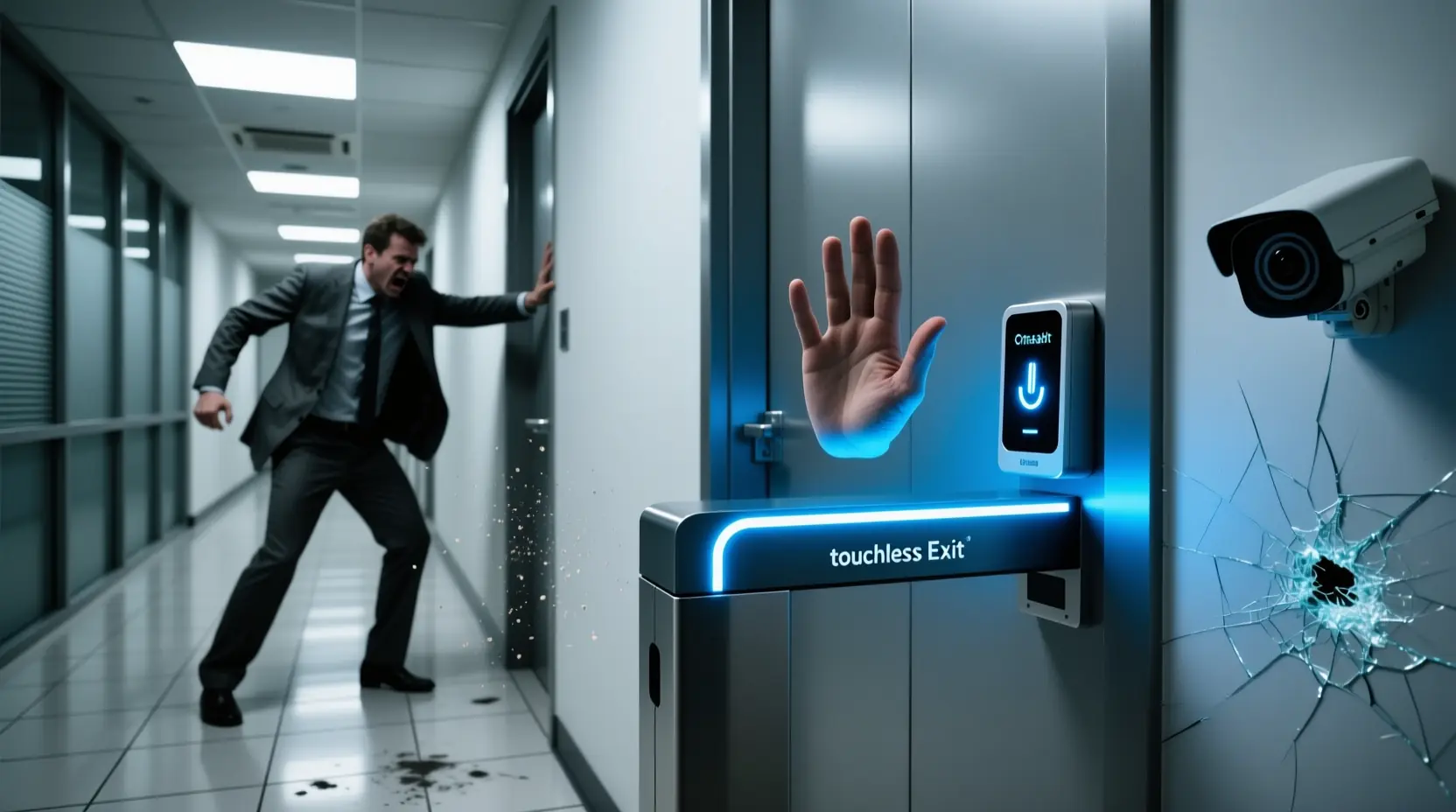
This is the poster child. Wave your hand, a little sensor sees it, latch retracts. Sounds great. In reality, it’s a masterclass in frustration. Direct sunlight? Blinded. Cleaning smudge? Blind. User waves half an inch too high? Nothing. So what happens? After three frantic waves, the user does the logical thing: THEY GRAB THE BAR AND SHOVE. You’ve now paid a $1,200 premium for a device that actively trains people to touch the very surface you’re trying to protect. The irony is physically painful. It’s hygiene security theater at its finest.
2. The Smartphone Sinkhole
This camp decided the key to opening a door was the same device you use to watch cat videos. App-based, Bluetooth, NFC credentials. Fantastic if your user base is exclusively tech-literate adults with 100% phone battery. For everyone else—delivery personnel, contractors, visitors, kids, anyone in a hurry—it’s a barrier. Now your humble fire door is an IT asset. It needs firmware updates, cybersecurity protocols, and integration meetings. The door has a software roadmap. Let that sink in.
3. The Foot-Fetish Fiasco (Mostly Retired)
We don’t talk about the dark period of kick-plates and foot pedals. Awkward, terrible for accessibility, destructive to shoes and hardware, and they invented a whole new liability claim: the “egress-related slip-and-fall.” Most have been mercifully scrapped.
The 2026 Reality: Grumpy Pragmatism Prevails
The blind hype has died. We’re now in the pragmatic, cost-conscious, maintenance-heavy phase. Here’s what’s actually happening on the ground.
Trend 1: The Triumphant Return of the Shove
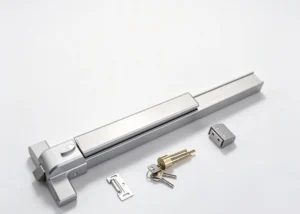
The most significant trend isn’t a new sensor; it’s an old feature making a comeback: obvious, undeniable, mechanical override. The smarter manufacturers now embed a large, clearly marked push pad or ensure the crossbar itself works on pure muscle. The design quietly admits the truth: “Here’s your fancy touchless feature. And right here is the actual door opener for when the fancy part inevitably fails.” This is the industry learning, through a mountain of service tickets, that egress is non-negotiable. The touchless bit is a secondary feature, not the primary function. This is the only sane approach.
Trend 2: Power & Data: The Hidden Cost Monster
Forget the unit cost. The real expense is in the infrastructure. What was once a simple mechanical device now requires conduit runs, power supplies, backup batteries, and data drops. You’re not buying hardware; you’re funding a minor electrical and IT project. And everyone wants the data—usage counts, peak times, “anomalies.” We’re now data-mining the fire exit. I have to ask: to what end? This complexity is a permanent, expensive addition to the building’s DNA.
Trend 3: The End of Hygiene Theater
Let’s be brutally honest. A touchless crash bar in a public building does almost nothing for public health. The person touches the bar with a sleeve, then pushes the door leaf itself, then touches the stair rail, the elevator button, the common-area table. Focusing on the exit device is like cleaning one tile in a dirty shower. The mature conversation in 2026 is about holistic hygiene: better air filtration, scheduled cleaning of all high-touch surfaces, and actual education. The touchless device is a very expensive placebo in that system.
Trend 4: The Maintenance Cliff is Here
The early adopters from 2021-2023 are hitting the wall. Batteries are depleting. Sensors are degrading. Circuit boards are failing. We are deep into the cost-of-ownership phase, and it’s ugly. That sleek, wave-to-open device now means a $500 service call and a 3-week wait for a proprietary part. The market response? A push toward field-replaceable components, diagnostic modes, and standard connectors. We’re learning that “intelligent” hardware has a stupidly high cost to maintain.
The Bottom Line
Touchless exit hardware is no longer a revolution. It’s a product category, mandated by some codes and expected by many tenants. But the madness has cooled. The conversation has evolved from “ELIMINATE ALL GERMS!” to a practical, grumpy murmur: “Alright, fine, spec the sensor option. But for the love of all that’s holy, make sure it’s UL-listed for panic hardware, prioritize 24/7 mechanical operation, and don’t get cute with the software.”
We exchanged flawless, simple mechanics for finicky, expensive tech with a debatable benefit. The market voted with its wallet. My inner skeptic says we over-complicated a perfect thing. But it pays the bills—mostly through the maintenance contracts.
NON-NEGOTIABLE AHJ WARNING: Pay attention. If you’re considering slapping a touchless gadget onto an existing fire door, your very first step is NOT the procurement portal. It’s the phone. You call your local Authority Having Jurisdiction—the Building Official, the Fire Marshal, the person with the code book and the authority to shut you down. This is not optional. Any modification to a fire door assembly, touchless or not, must comply with NFPA 101, NFPA 80, the IBC, and local amendments. Ignore this, and you’re not just risking a failed inspection. You’re risking lives and a liability nightmare that will make your hardware budget look like pocket change. The AHJ doesn’t care about trends. They care about safe, immediate, and unfettered egress. Your priorities should align. /rant.