Right. Let’s get this over with. You need a warranty for an exit device. Not because you want to, but because some spreadsheet jockey thinks it’s a line item to be checked. You’re hoping for a simple promise. I’m here to tell you it’s a minefield of legalese, loopholes, and outright lies designed to protect manufacturers, not your doors. After thirty years of watching people get financially eviscerated by bad agreements, here’s the only checklist that matters. My thoughts are organized like my favorite pub at closing time: chaotic, slightly aggressive, and brutally honest.
1. Full Labor Coverage: The “Who’s Holding the Screwdriver?” Test
They’ll blast “LIFETIME WARRANTY!” across their brochure. It’s meaningless. The real cost isn’t the chunk of metal that fails; it’s the skilled (and expensive) human being who has to install its replacement. If the warranty covers only the part, you’ve bought a very expensive paperweight. A proper warranty must include full, certified technician labor for removal and reinstallation. Not a token stipend. Not a “we’ll reimburse up to…” Full stop. If the word “labor” isn’t explicitly married to “coverage” in the contract, you’re being played. Your fallback is a locksmith billing $175 an hour while muttering about amateur hour.
2. Functional Failure, Not “Manufacturer Defect”: The Forklift Doctrine
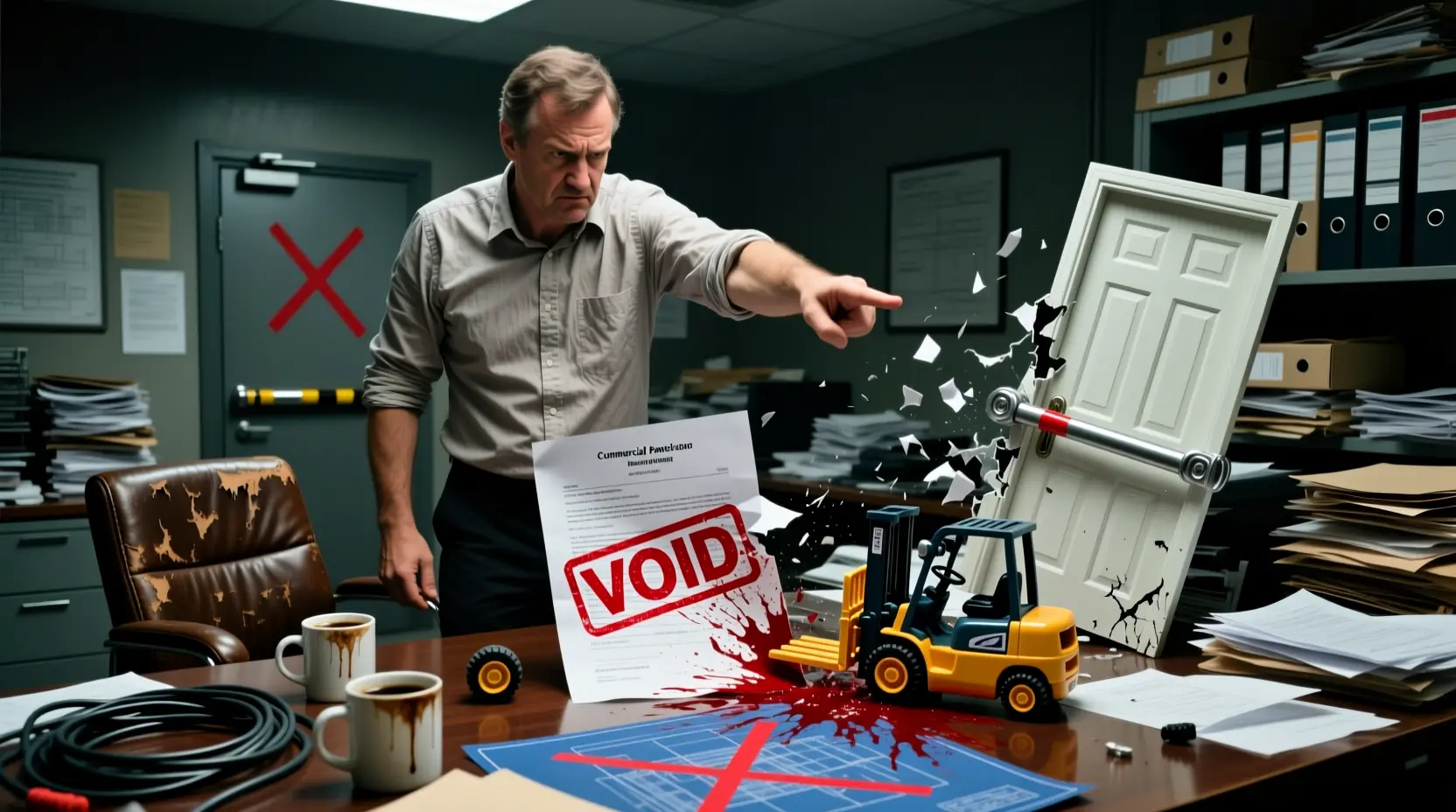
We need to define “defect.” Their definition: a microscopic flaw originating in their factory. My definition: the bar doesn’t work. The cause is almost irrelevant. Was it wear-and-tear from 8,000 daily slams? A rogue pallet jack? A misguided attempt at entry with a battering ram? If the device fails in its core function, the warranty must respond. Period. I call this the Forklift Doctrine: If a forklift backs into the door and the panic bar is destroyed, does the warranty cover it? If the answer requires a committee, a legal review, or starts with “Well, technically…”, walk away. A warranty that acts as a detective agency is a warranty that will never pay out.
3. The Integrated Systems Rider: Ghosts in the Machine
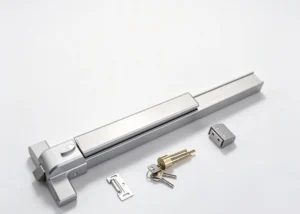
Think a panic bar is just a bar? How quaint. That device is now a node on your security network. It talks to access control, fires alarms, signals monitoring stations. A warranty covering only the mechanical parts is like insuring a car’s frame but not its engine. You must have coverage that includes all integrated electronics: the circuit board, micro-switches, wiring harness, and its communication integrity. One single, unified warranty for the entire device. Don’t let them Balkanize the coverage into “mechanical” and “electrical” silos. When the bar depresses but fails to send the ‘door open’ signal, you’re in violation of a dozen codes, and the warranty weasels will say, “That’s an electrical issue. Not our problem.” Make it their problem.
4. True Transferability: The “Dust-to-Dust” Clause
You will not own this building forever. A warranty that dies with ownership is a ticking liability bomb. A robust warranty is attached to the device itself, not the original purchaser. It must be fully transferable to subsequent building owners or tenants—no fees, no complex paperwork. This isn’t a courtesy; it’s asset preservation. It adds tangible value to the property. If you see “original purchaser only” in the fine print, you’ve found a warranty written by a selfish child. In commercial real estate, that’s worse than useless; it’s a deal-breaker that will haunt you in due diligence.
5. Guaranteed Response Time, Not Shipping Notices
This is the grand separator. The device fails on a Tuesday. What happens? A “good” warranty promises a replacement part in 4-6 weeks. A real warranty guarantees a service response within 24-48 hours. A failed exit device creates an immediately non-compliant door. You cannot board it up and call it a day. You need a technician on-site, with parts, now. A promise to “ship a box” is a promise of protracted liability. Demand a written, guaranteed service-level agreement (SLA) for on-site diagnosis and repair. This is the most costly provision for a manufacturer to provide, which is why most avoid it. Don’t accept less.
***AHJ WARNING – READ THIS OR SUFFER***
Listen carefully. This is non-negotiable. No warranty supersedes the Authority Having Jurisdiction (AHJ)—the fire marshal, the building official, the inspector with the clipboard and the power to shut you down. They do not care about your warranty’s fine print. If they find a faulty device during an inspection, you are ordered to fix it immediately. You cannot plead, “But my warranty service is scheduled for next week!” The sequence is sacred: 1) Call a licensed technician to make the door compliant NOW. 2) Then, and only then, call the warranty provider for reimbursement. Reverse this order, and you will enjoy the unique hell of fines, violations, and AHJ wrath. The warranty is a financial shield, not a compliance get-out-of-jail-free card. You have been warned.