The Voltage Drop Vendetta: Why Your ‘Cheap’ Wire is Buzzing Your Life Away
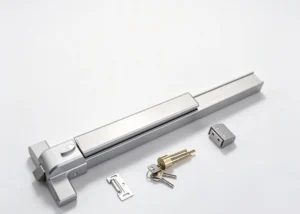
Right. The panic bar on the main egress door is buzzing again. It sounds like a dying hornet trapped in the ceiling. You’ve replaced the hardware. Twice. You’ve glared menacingly at the door frame. You’ve contemplated arson. Before you call an exorcist, let’s talk about the real demon: the invoice from the lowest-bidder installer who saved $1.37 per linear foot by using wire better suited for a child’s science project.
Your problem isn’t supernatural. It’s stupidity, preserved in PVC jacket and sold to you as a ‘value engineering’ win. The buzz is the sound of electromagnetic starvation, and I’m here to explain, with maximum snark, why your procurement ‘victory’ is a operational nightmare.
Ohm’s Law: The Tyrant You Ignored
Electricity, particularly the Direct Current (DC) that runs your access control and life safety hardware, is a petulant, lazy aristocrat. It doesn’t like to travel. It encounters resistance and throws a tantrum, shedding voltage along the way. This is ‘voltage drop.’
Think of your 24V DC power supply as a water tower. The lock is a fountain 500 feet away. The wire is the pipe. If you specified a drinking straw (22 AWG wire) instead of a proper fire hose (12 AWG), the fountain doesn’t gush. It sputters, dribbles, and makes a pathetic gurgling noise. That gurgle? In lock terms, it’s a soul-crushing bzzzzzz. The solenoid inside can’t get enough juice to pull or hold cleanly, so it vibrates in a state of mechanical indecision. Congratulations, you’ve created a haunted door with a PO number.
Wire Gauge: The Inverse Logic of Chaos
Here’s the first grumpy truth everyone in procurement ignores until it’s too late: wire gauge numbers are backwards. A smaller number is a thicker wire. 12 AWG is fat. 22 AWG is anemic. That spool of 22/2 your installer had ‘left over from a security camera job’? It’s for data signals over short distances, not for delivering power to a hungry electromechanical device 200 feet away.
The rule, seared into my cortex by decades of explaining this to furious facility managers: For low-voltage DC, distance is the tax, and wire gauge is the only legal deduction. Your transformer proudly outputs 24V. After 175 feet of undersized copper, the lock might see 18V. The hardware spec sheet, which you filed without reading, says “24V DC +/- 10%.” You are now outside specification. The device is operating in a grey zone of failure. It buzzes. It gets hot. It dies prematurely. But hey, you came in 3% under budget on the electrical line item. A pyrrhic victory celebrated with a background hum.
The Cascade of Carnage (Or, The Real Cost of Cheap Copper)
“But it still functions!” you’ll cry. Oh, you optimist. The buzz is just the first symptom of the systemic disease you installed.
- Premature Hardware Death: That buzzing solenoid is overheating. The coil insulation is degrading. In a year, it won’t buzz. It’ll be silent, forever. Now you’re not just running new wire; you’re buying a new $800 lock body and paying for emergency overtime to install it.
- Ghost Operations & Security Theatre: Voltage on the edge of the logic threshold causes phantom unlocks, random denials, and general schizophrenia. Your ‘secure’ door decides to release at 3 AM for no reason. The fire marshal will adore this story.
- System-Wide Instability: That same anemic wire is often carrying data signals for the access control system. A degraded power line creates noise on the data line. Now your software logs are gibberish, cards fail to read, and the integrator blames the hardware vendor, who blames the installer, who is now bankrupt. The circle of blame is powered by your cheap wire.
You saved a few hundred on material. You are now paying thousands in reactive maintenance, risk, and sanity.
The Idiot’s Guide to ‘Troubleshooting’ (A Tragedy in Four Acts)
I’ve watched your process. It’s a masterclass in wasted capital.
- Act I: The Hardware Swap. Replace the panic bar. Cost: $450 + labor. Result: The buzz persists. Shock.
- Act II: The Power Play. Install a bigger transformer. Cost: $120. Result: You’re now forcing more amperage through the same skinny choke point. The buzz might change pitch. The wire gets warmer. Progress?
- Act III: The Blame Game. Call the manufacturer. They ask for voltage at the lock. You provide voltage at the transformer. They suggest you consult an electrician. You grumble about ‘lack of support.’
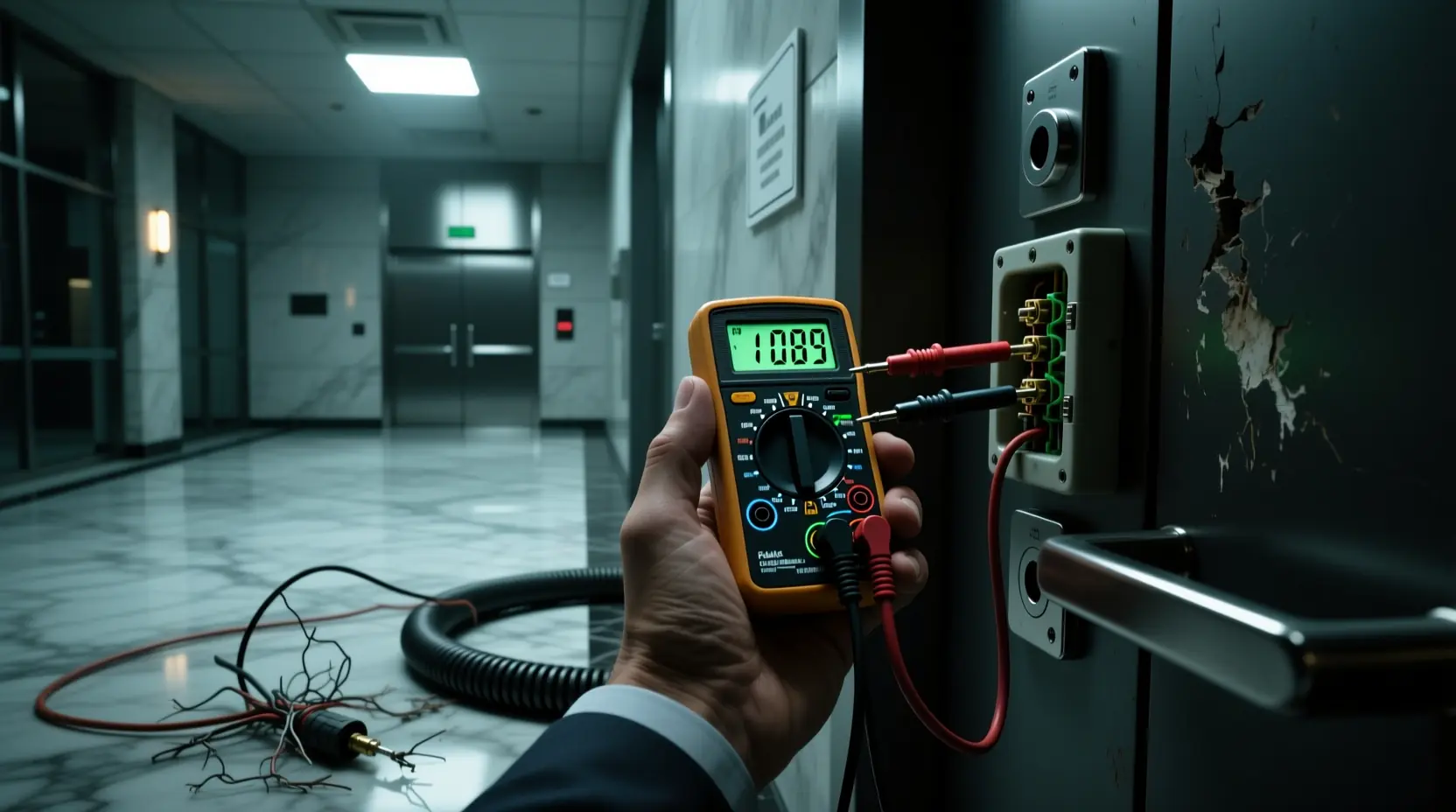
- Act IV: The Inevitable. Call me. I arrive with a multimeter. 24.1V at source. 18.4V at device. I make a sound that’s half sigh, half laugh. I present the diagnosis: voltage drop due to undersized wire. I present the remedy: a full re-pull. The quote makes you pale. This is the moment you realize the ‘savings’ were a hallucination.
The installer knew. Pulling thick, stiff 12 AWG wire is a brutal, knuckle-shredding day of work. Fishing skinny 22 AWG is a breeze. He optimized for his labor, not your 10-year cost of ownership. You bought it.
The Procurement Manager’s Penance (What To Do Now)
Stop the madness. Put down the exorcism manual.
- Arm Yourself with Data. Buy a basic digital multimeter ($30). Learn to measure VDC. Measure voltage at the lock terminals while the device is active. Not at the panel. At the lock. This number is your truth.
- Conduct a Wire Autopsy. Trace what you can. The cable jacket should be printed with something like “16/2” or “22/2.” The first number is the gauge. If it’s 20 or higher for a run over 50 feet, you’ve found your culprit.
- Demand a Voltage Drop Calculation. For your next project, make it a spec requirement. Any quote for low-voltage power must include the calculated voltage drop for the longest circuit run. If the drop exceeds 5%, the wire gauge must be increased. This is not engineering rocket science; it’s basic due diligence.
- Specify Stranded, Not Solid. In door applications, wires move. Solid core wire breaks after thousands of door cycles. Stranded wire flexes. Specify it. The cost difference is negligible. The longevity difference is not.
The Final, Grumpy Verdict
That incessant buzz in your lobby isn’t a technical glitch. It’s a financial echo. It’s the sound of a past ‘cost-saving’ decision reverberating into the present, demanding repayment with interest. You can’t cheat physics. Ohm’s Law always wins. Your only choice is to pay now with proper copper, or pay later with service calls, premature replacements, and the subtle, creeping dread of a system you can’t trust.
Do the math. The right wire is always cheaper.
AHJ WARNING: Let me be perfectly, bureaucratically clear. I am a font of grumpy experience, not your Authority Having Jurisdiction (AHJ). That buzzing lock on a fire egress door? Your local Fire Marshal or Building Inspector will likely classify that as a defective means of egress. That’s a violation. That gets you a red tag. My rant about wire gauge intersects with the National Electrical Code (NEC, Article 725 for low-voltage stuff). This article is illustrative, not instructional. Do not use it as a design guide. Hire a qualified, licensed professional to diagnose your specific mess, pull permits, and get the fix signed off by the real powers that be—your local AHJ. Their word is final, even when it’s baffling. My job is to warn you. Your job is to comply. Now go away, I have other procurement-fueled disasters to audit.