
The Brutal Truth About Cheap Panic Bars: A Procurement Manager’s Grumpy Guide
Let’s not mince words. You’re here because you searched for “reliable panic bars under $50.” Your budget is tight, a spreadsheet is screaming at you, and a shiny online listing promises a 70% cost saving. I get it. I’m a procurement manager, not a saint. But before you click “Add to Cart,” you need to hear the unvarnished, grumpy truth from the trenches. The question isn’t about reliability. It’s about what you’re really buying: a massive, ticking liability disguised as a bargain.
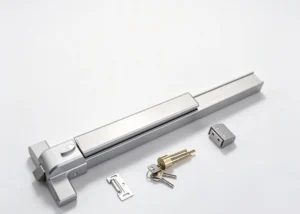
A panic bar (or exit device, crash bar, whatever you want to call it) has one job. One. It must open the door, first time, every time, when a human being—possibly a terrified, panicked human being—throws their body weight against it. Its entire value proposition is 100% failure-free operation. So when you see a device costing less than a decent dinner for two promising that, your professional skepticism should be on red alert.
The Anatomy of a $49.99 Mistake
Forget the big brands. Von Duprin, Sargent, ASSA ABLOY—they’re not playing in this sandbox. A sub-$50 panic bar hails from the shadowy realm of imported, no-name brands. The construction? Think cast zinc or flimsy aluminum alloys designed to imitate the heft of a real device. The internal mechanism is a masterpiece of optimistic engineering: stamped metal parts that resemble the real thing and springs that feel weak straight out of the box. The bar itself often has the structural integrity of a soggy paper straw. I’ve witnessed them bow under the pressure of a frustrated delivery person. A proper panic bar is built for a stampede.
The Three Failures That Haunt My Dreams (And Your Building)
In my line of work, I see the same horror stories on repeat. They’re not anomalies; they’re the predictable end-state of cheap hardware.
- The Phantom Latch: The door appears closed and locked. But the latchbolt doesn’t fully throw or engage the strike. A solid shoulder-check from an angry vendor—not even a panic scenario—is enough to defeat it. Congratulations, your “secure” door is now a security joke.
- The Gradual Seizure: Normal atmospheric dust and moisture invade the cheap, unsealed mechanism. The bar action goes from smooth, to sticky, to requiring a full-body slam. Then, on a random Tuesday, it simply stops retracting the latch. Your emergency exit is now a barricade. The irony is so thick you could choke on it.
- The Finish Fiasco: The “stainless steel” or “architectural bronze” finish is a vinyl wrap or a thin powder coat. Within a year, it’s peeling, corroding, and looks like a chemical spill. It becomes a permanent, ugly billboard advertising your cost-cutting to every visitor, employee, and inspector.
“But It’s Just a Low-Traffic Interior Door!” Spare Me.
This is the most dangerous rationalization in the book. Does a fire discriminate between a main entrance and a stockroom? Does an employee having a cardiac arrest care about your traffic projections? An exit device is a life safety appliance. Its performance standard is binary: it works, or it doesn’t. You don’t get partial credit because you “didn’t think it would be used much.”
And this brings us to the regulatory brick wall. You are likely required by your local building code (IBC, NFPA 101, etc.) to have listed and labeled hardware on fire-rated exit doors. That means the device must be tested and certified by an independent body like UL (Underwriters Laboratories) or BHMA. That stamp is a legally-recognized guarantee of performance under duress.
Go pull up the listing for that $49.99 wonder. I’ll wait.
See a UL or BHMA mark? No. You’ll see weasel words: “Tested To Meet Standards” or “Complies With.” “Tested” could mean the factory manager leaned on it once. Without independent third-party certification, these phrases are worthless. Installing unlisted hardware on a code-mandated exit is a direct ticket to liability hell. It can invalidate your property insurance and leave you personally exposed if something goes wrong.
The Real Cost of a “Bargain” Panic Bar
Let’s run the numbers you won’t see on the Amazon listing. You buy the cheap bar. Now what?
- Installation Headache Tax: The mounting holes are off by 2mm. The instructions are a poorly translated pictogram. Your contractor’s bill includes a line item for “extra time due to non-standard hardware.” The savings evaporate before the door even closes.
- The Inspector’s Invoice: The Fire Marshal arrives. Their trained eye spots the lack of a UL stamp immediately. You receive a violation order. Now you pay for: 1) Removal of the non-compliant device, 2) Purchase of a listed device, 3) Re-installation. You’ve now tripled your initial spend.
- The Premature Replacement Cycle: Even if it passes inspection, a quality commercial bar lasts 10-15 years. The cheap one will rattle, fail, or look deplorable in 2-3. You’ll buy and install 4-5 of them for the lifecycle cost of one proper device. The Total Cost of Ownership math is catastrophically bad.
Smart Procurement Alternatives (That Won’t Get You Sued)
If the budget for new, top-tier hardware isn’t there, here are responsible paths forward. These are the moves of a savvy, grumpy professional, not a reckless one.
- Source Certified Refurbished Major Brands: Reputable distributors sell refurbished Von Duprin, Sargent, etc., devices. These are professionally rebuilt, often with new springs and latches, carry a real warranty, and are still listed. Cost: 30-50% of new. This is your best value play.
- Re-Evaluate the Device Type: Is a full panic bar overkill? For a low-risk interior door, a listed Fire Exit Lever or Touchpad Exit Device might be code-compliant and more affordable. Consult a door hardware specialist (yes, they exist, and they’re worth their fee).
- Prioritize and Phase: You have 20 doors? Fine. Budget for replacing the 5 busiest/most critical exits this year with listed, quality hardware. Plan to do the next 5 next fiscal year. Strategic prioritization beats uniform cheapness every time.
The Grumpy Bottom Line
Budget panic bars under $50 are reliable at precisely two things: looking okay in a product photo and separating you from your money. They are a liability in a shiny package. They represent the dangerous fallacy that safety is an area for creative accounting.
Saving money is our job. But there’s a profound, professional difference between cost-optimization and negligence. Life safety hardware is the absolute final frontier for the latter. When that bar is needed, it’s not a component; it’s a critical system. Don’t bet your people, your property, and your professional reputation on a piece of costume jewelry from a factory no one can name.
AHJ WARNING: THE GRUMPY MIC DROP
Pay attention. I’ve tossed around “listed” and “code.” Here’s the ultimate reality check. The Authority Having Jurisdiction (AHJ)—your local Fire Marshal or Building Official—has absolute, final authority. They do not care about your procurement KPIs or your clever sourcing. If you install an unlisted, non-compliant device on a required exit, they will red-tag it. You will then incur: removal cost, correct hardware cost, re-installation cost, and potentially fines or operational shutdowns. The “bargain” becomes the most expensive mistake on your ledger. And in a worst-case scenario, you become a cautionary tale in their next inspector training seminar. Don’t be that story. Hire a professional. Buy the right hardware. Sleep at night.