
Listen Up: The Unvarnished Truth on Cheap Door Hardware
Let’s skip the pleasantries. You’re here because a spreadsheet somewhere is bleeding red, and the shiny, perfectly functional hardware on your doors looks like an easy target. You’re considering the cheap stuff. I get it. I’ve watched this movie a hundred times, and it usually ends with a callback, a furious facilities manager, and a vault of wasted cash.
Fine. You want to cut costs? I’ll show you how. Not by being cheap, but by being brutally, cynically efficient. Pay attention. This is the grumpy, coffee-stained manual you won’t get from a smiling sales rep.
Rule Zero: Price is a Lie. Cost is the Truth.
The most expensive mistake you can make is confusing the number on the invoice with the number you’ll actually pay. That $45 lock from a fly-by-night online seller isn’t a bargain. It’s a placeholder. In 14 months, when the spindle snaps or the latch fails to engage, you’ll buy the $280 lock you should have purchased initially, plus the $350 emergency service call, plus the management time spent apologizing for the insecure stockroom. Real savings don’t come from the lowest bid; they come from the smartest total cost of ownership over a decade. Wrap your head around that, or stop reading now.
The Tactical Playbook: Saving Money Without Dooming Your Building
1. The Audit: Know Thy Frankenstein’s Monster
You have no clue what’s on your doors. It’s a historical archive of every procurement manager’s whim for the last 30 years. Before you even think about a purchase order, walk the floors. Catalog every door. Document the brand, model, function, keyway, and condition. You’ll find discontinued locks held together with hope, six different key systems (hello, six different locksmith bills), and closers installed before the internet. This isn’t busywork; it’s intelligence gathering. Consolidating keyways and eliminating dead product lines is the single biggest, fastest win for long-term cost reduction. Do it.
2. Maintenance Isn’t Boring. It’s Free Money.
“Run-to-failure” is the most expensive strategy in the book, championed by the short-sighted. A loose hinge isn’t a five-minute tightening job if you ignore it. It’s a $700 repair for a torn jamb, a damaged door, and a new hinge set. Spend 30 minutes a month. Lubricate hinges and closers with proper silicone or lithium grease (not WD-40, you philistine). Check for loose screws on strike plates, closers, and exit devices. Tighten them. This mind-numbingly simple routine prevents 80% of catastrophic, budget-busting failures. Nobody does it because it lacks glory. Your loss is my gain when I bill you for the emergency repair.
3. Right-Spec, Don’t Over-Spec
Not every door is the gate to Fort Knox. Architects and engineers love to specify battleship-grade mortise locks for a linen closet to cover their professional liability. You need to bring the chaos of reality to their pristine plans. Internal office doors? A solid, mid-grade cylindrical lockset is perfectly adequate. That IT server room? Yes, it needs serious hardware. Match the product to the actual, realistic threat level and frequency of use. This graded approach saves a fortune, but it requires a brain and some spine to push back on over-engineered specs.
4. Repair, Don’t Just Replace
The lever is wobbly. The key turns like it’s swimming in gravy. The immediate reaction is to chuck the entire lockset. Pause. Often, only the internal components—the cylinder, the latch, the springs—are worn. High-quality mortise lock bodies are cast metal tanks. Rekeying and replacing worn internal parts can cost 40% of a full replacement. This requires a skilled locksmith, not a parts-swapping technician. Find that person. Buy them a good lunch. Their knowledge is a direct line-item saving on your budget.
5. The Sweet Spot: The Unsexy Mid-Tier
Sales presentations are a trap. They dazzle you with the “Best” product featuring unicorn tears and a million-cycle warranty. Then they show the “Good” product that feels like it’ll dissolve in the rain. The smart money, the procurement pro’s move, is the unglamorous **mid-tier** from a reputable manufacturer (think Allegion, ASSA ABLOY, dormakaba commercial lines). It’s proven, code-compliant, mechanically straightforward, and will last 15+ years with basic care. It’s the workhorse. Bulk-buy this. Ignore the shiny objects.
6. Bulk, Standardize, Conquer
Once your audit is done and your mid-tier champion is chosen, commit. Need 75 levers? Buy 75 levers, 75 latches, 75 cylinders. The volume discount is real. Standardize finishes (brushed stainless is your cost-effective friend). Standardize functions. This transforms door hardware from a bespoke, project-by-project nightmare into a manageable, predictable inventory item. It simplifies training, maintenance, and future expansions. Chaos is expensive. Order is cheap.
7. The Aftermarket Gambit (Tread Carefully)
Here’s where I’ll get angry emails. Yes, generic “compatible” parts exist. Sometimes they’re fine. Often, they are a masterpiece of almost-correct engineering that fails prematurely. My grudging, snark-laced advice: For critical, life-safety, and high-abuse components (fire door closers, exit devices, heavy-duty hinges), **use only genuine manufacturer parts**. The risk isn’t worth the 20% savings. For a hinge pin on an interior office door? Maybe you roll the dice with a reputable aftermarket brand. Just remember: when the generic part fails, you own the downtime, the repair, and the angry users. The savings evaporate.
8. Ditch the Transaction, Build a Relationship
Stop buying hardware like you’re bidding on eBay. Find a knowledgeable local distributor rep or an independent commercial locksmith. Build a real relationship. These people see what fails in your specific climate and under your use patterns. They’ll give you the unvarnished truth about a product line, warn you about bad batches, and find you deals on overstock or refurbished quality items. A good rep is a strategic asset, not a vendor. A transaction gets you a box. A relationship gets you solutions and savings.
The Non-Negotiable, Career-Ending, Lawsuit-Attracting Line
Let’s assume you’ve mastered all of the above. You’re a procurement wizard, saving stacks of cash. There is one line you must never, ever cross, no matter how much pressure Finance applies.
YOU CANNOT, UNDER ANY CIRCUMSTANCES, COMPROMISE ON LIFE SAFETY AND CODE COMPLIANCE.
This isn’t about durability or aesthetics. This is about liability and lives. We are talking about:
- Fire-Rated Door Assemblies: Every component—the door, frame, hinge, lock, latch, closer, seal—must be tested and listed together as an assembly. You cannot mix and match.
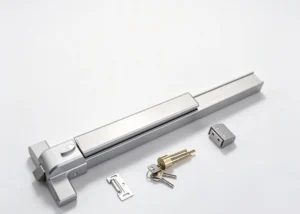
- Exit Devices & Panic Hardware: Must be the correct type and grade for the door occupancy and code requirements. A residential-grade lever is not a substitute.
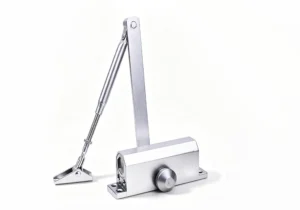
- Door Closers on Fire Doors: Must be the exact listed model with the correct power size. An “equivalent” generic closer is a legal and moral failing waiting to happen.
AHJ WARNING: The Authority Having Jurisdiction (the Fire Marshal, Building Inspector, etc.) has zero interest in your budget constraints. Their mandate is the code and life safety. If they find unlisted, non-compliant, or improperly installed hardware on a fire or life-safety door, the fine is your best-case scenario. You will be ordered to rip it all out and install the correct hardware immediately, at a premium, under duress. And if an incident occurs before you fix it? The liability will make the cost of premium hardware look like pocket change. Be grumpy. Be clever. Be compliant.
Now, if you’ll excuse me, I have a relationship with a greasy hinge that needs attending to.