Let’s get one thing straight. I’ve managed procurement for buildings you’ve probably walked into, and for ones you’d run screaming out of. The difference often comes down to the unglamorous, unforgiving bits—like the hardware on a door. Most of it is procedural. Boxes to tick. Then you get the coastal project. The ‘waterfront resort,’ the ‘ocean-view campus,’ the ‘harborside facility.’ My eye starts twitching. Not because of the view, but because I know, with the grim certainty of a seasoned cynic, that someone is about to cheap out. They’ll see ‘stainless steel’ on the schedule and think the job is done. They are idiots. If your coastal panic hardware isn’t 316-grade stainless steel, you are not just cutting corners. You are architecting failure.
Salt Air: The Invisible Vandal
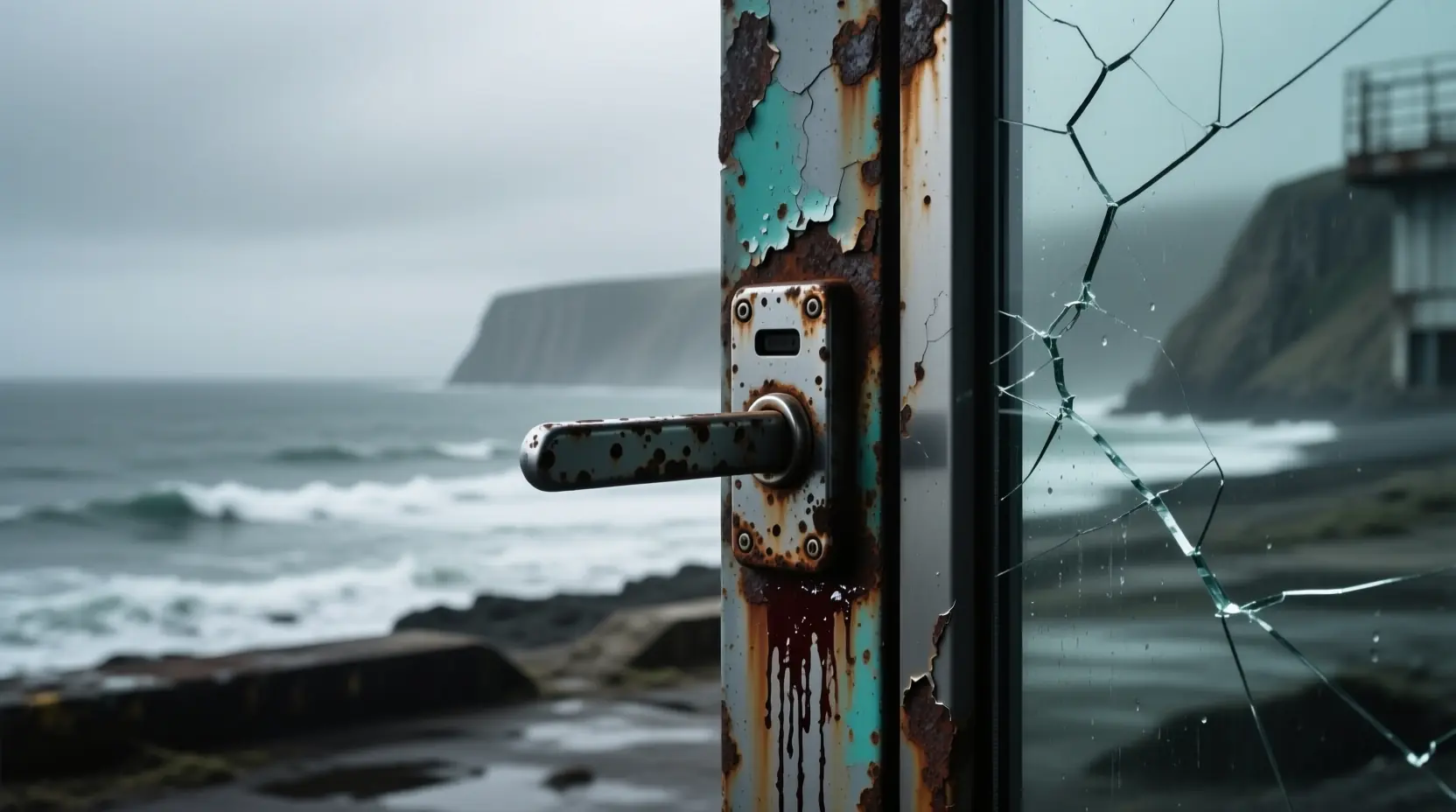
First, a dose of reality for the optimists and the value-engineers clinging to their spreadsheets. Coastal salt air is not ‘fresh air with a hint of sea breeze.’ It is a pervasive, corrosive aerosol. It’s tiny, airborne daggers of chloride that settle on every surface, seep into every crevice, and hold a perpetual, damp party on your metalwork. This environment doesn’t just tarnish; it consumes. It turns painted steel into a modern art exhibit on corrosion. It makes aluminum pit and chalk like a ghost. And here’s the kicker that most miss: it will absolutely attack standard 304 stainless steel.
304 stainless. The default. The ‘good enough.’ It works perfectly well… anywhere that isn’t actively trying to destroy it. Near the coast, it becomes a liability. Chloride-induced pitting and crevice corrosion are its weaknesses. You’ll see small rust spots first, like acne on a polished finish. Then, the pits deepen. The mechanisms inside the exit device—the springs, the latches—begin to grit and bind. This isn’t an aesthetic issue. It’s a functional, life-safety countdown. And you set the timer.
316 Stainless: The Only Adult in the Room
This is where we separate the procurement professionals from the parts clerks. 316 stainless steel is what you specify when you understand that upfront cost and total cost are two very different beasts. The magic ingredient is molybdenum. That extra 2-3% alloy content transforms the material’s resistance to chlorides. It’s the difference between a paper umbrella and a storm shelter.
In practice, 316 in a marine environment means:
- The device won’t just survive; it will perform for decades.
- The internal mechanisms remain free of corrosive gunk, ensuring smooth operation when slammed in a panic.
- You avoid the phone call in two years where a furious facility manager sends you a photo of rust streaks dripping down a $10,000 door.
The False Economy of Being Cheap
I can hear the whining now. “The budget!” “Can’t we just coat it?” “We’re 800 meters inland!” Let’s perform a basic public service and crush these fairy tales.
The Budget Fairy Tale: Yes, 316 costs more initially—20-40% more. Now, let’s play out the sequel. You install 304. In 3-5 years, it’s visibly corroding. You’re now funding a cycle of ‘maintenance’ (scrubbing with specialty pastes). In 7-10 years, you’re replacing the entire unit. Factor in the labor: isolating the door, cutting out corroded fasteners (a joy, I assure you), prepping the surface, installing new hardware, refinishing. Congratulations. You’ve just spent triple the initial 316 premium to install an inferior product. You’ve achieved negative value. A masterclass.
The Coating Fairy Tale: A coating is not a force field. It’s a temporary barrier that gets scratched, worn, and degraded by UV light. Corrosion begins invisibly underneath, like rot in a wall. When you finally see it, the damage is extensive. You don’t specify paint to do the job of metallurgy.
The Distance Fairy Tale: Salt air is carried by wind. It infiltrates HVAC systems. It settles. ASTM defines coastal ‘marine’ environments generously for a reason. If you can smell the ocean, your hardware can feel its effects. Don’t be clever. Be correct.
The Devil (And The Salt) Is In The Details
When I bellow “316,” I am not just talking about the big, shiny bar you push. I mean the entire ecosystem of failure points. Your specification must be ruthlessly explicit:
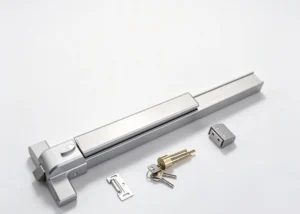
- The Entire Device Housing & Actuator: Crossbar, touchpad, end caps—all 316.
- Every Single Fastener: This is the hill I will die on. Specifying a 316 device and allowing stainless-steel-mix or zinc-plated bolts is procurement malpractice. The bolts will corrode, galvanically react, swell, and become impossible to remove. They will also paint lovely rust trails down the face of the door, announcing your incompetence to all.
- Internal Mechanisms: Latches, springs, rods. Reputable manufacturers will use marine-grade materials throughout for a true 316 device. Demand the cut sheets.
- Finish: Specify a smooth finish (e.g., No. 4 brush). Avoid heavily textured or directional finishes that can trap and hold salt and moisture.
The Grumpy Procurement Manager’s Specification Clause
Cut and paste this. Add it to your boilerplate. Save yourself the future rage.
“All exit devices and associated trim installed in locations subject to coastal or de-icing salt exposure, as determined by the Authority Having Jurisdiction, shall be constructed entirely of Type 316 stainless steel. This requirement includes all exposed and unexposed components, internal mechanisms, and all mounting screws, bolts, and fasteners. Substitutions of Type 304 or other grades are expressly prohibited. Finish shall be [Specify, e.g., No. 4 Brushed]. Manufacturer’s certification of material grade shall be provided upon request.”
This does two things: it eliminates ambiguity, and it makes the contractor’s substitution request a formal act of rebellion, which you can then deny with extreme prejudice.
Parting Snark
Specifying for the coast isn’t about being fancy; it’s about respecting basic chemistry and physics. It’s about looking at the total cost of ownership, not just the P.O. cost. It’s about understanding that panic hardware isn’t décor; it’s a life-safety device that must work perfectly the one time in fifty years it is needed most. Using anything less than 316 in a salt-air environment isn’t value engineering. It’s voluntary myopia. It’s hoping the failure happens on someone else’s watch.
Don’t be the reason a beautiful building has rusty, seizing exit devices. Don’t be the idiot. Specify 316.
AHJ WARNING: Everything written above is born of bitter experience and watching expensive things turn to garbage. But I am not your building official. The final, binding authority on your project is your local Authority Having Jurisdiction (AHJ)—the building inspector, the fire marshal. They interpret the code. My ‘mandatory’ is their ‘advisory.’ You must submit your specifications, including this glorious 316 clause, to them for review and approval. Get their sign-off. Get it in writing. Your liability, and the safety of everyone who ever pushes on that bar, depends on it. Now go file the paperwork.