Look. You called me. Fine. You want an article about “Chemical Warehouse Safety” and “Corrosion-Resistant Trim for Hazardous Areas.” You’re probably expecting some glossy, SEO-bait fluff piece full of stock photos of people in clean lab coats smiling at valves. Forget it. I’ve been in this game since your fancy “IIoT” was a beeper on a maintenance man’s belt. I’ve seen things. I’ve seen a brand-new, “stainless” instrument enclosure on a nitric acid tank turn into a brown, weeping sieve in eight months. I’ve seen a budget-conscious plant manager buy “marine-grade” for a chlorine storage area because the salesman said it was “basically the same.” It wasn’t. The ensuing leak and shutdown cost more than the entire site’s annual maintenance budget.
So you want the grumpy expert take? Buckle up. It’s messy because the problem is messy.
What Even Is “Trim” and Why Should You Care Until It Explodes?
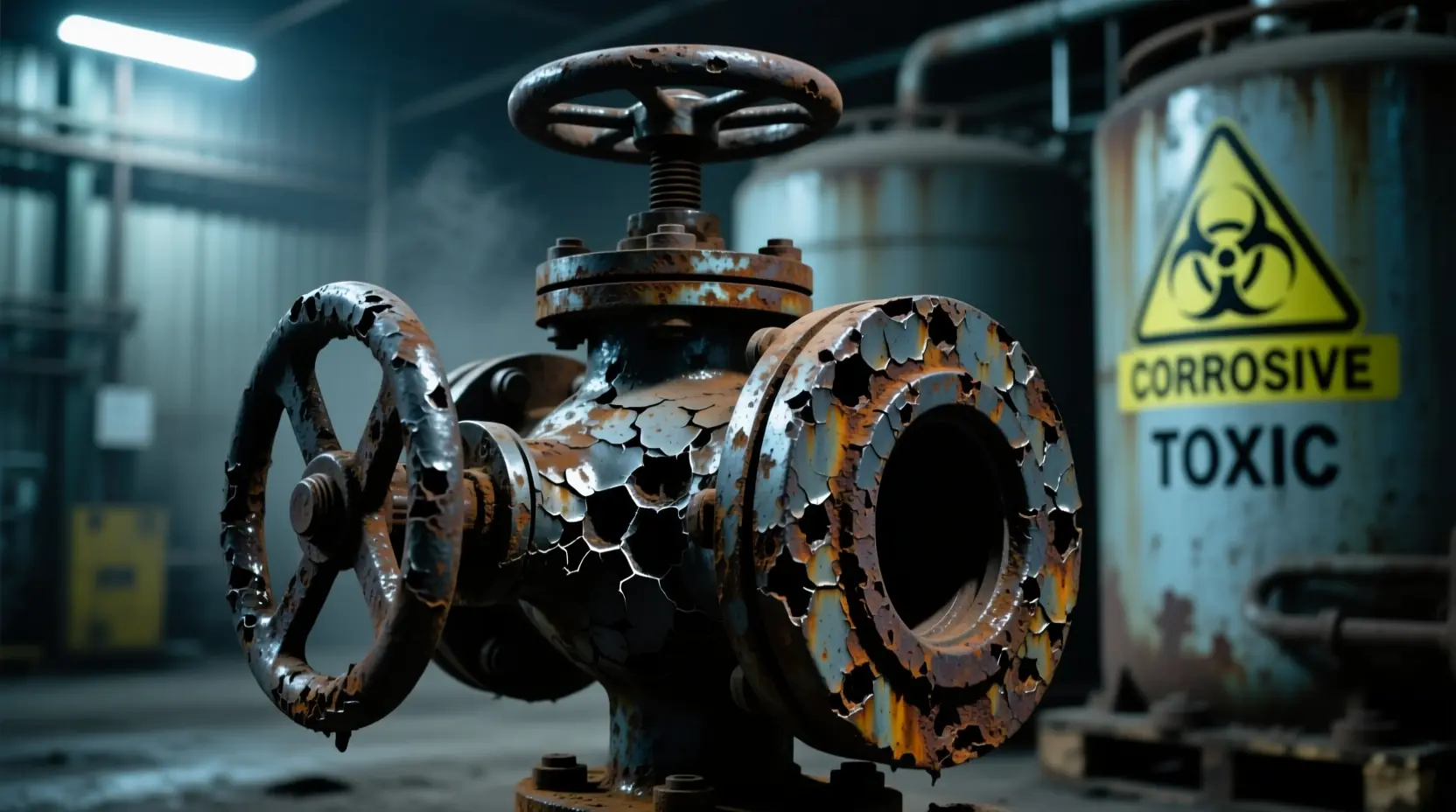
First off, for the bean counters and new graduates who think safety is a checkbox on a software form: “Trim” isn’t the decorative edging on your kitchen cabinets. In our world – the world where a mistake means a cloud of something that dissolves lungs or a fire that burns water – trim is the critical hardware on your valves, pumps, and instruments. It’s the stem, the plug, the seat, the gaskets, the bolts, the little screws on the junction box. It’s all the metal and material bits that actually contain, control, or interact with the nasty stuff.
Your big, expensive pressure vessel might be lined with exotic polymer. Your pipe might be Hastelloy. Great. If the valve trim inside it is plain old 316 stainless because someone didn’t read the spec sheet, that valve is the failure point. It’s the Achilles’ heel. Only instead of a poisoned arrow, it’s getting eaten alive by vapor-phase hydrochloric acid or mercaptan-laden sludge.
Corrosion in a chemical warehouse isn’t a cosmetic issue. It’s a failure-in-waiting. A corroded valve stem seizes. A corroded seat leaks. A corroded bolt snaps under pressure. A corroded enclosure lets fumes in, which then eat the wiring, leading to a sensor failure that tells the PLC everything is fine while a tank overflows in the next aisle. This isn’t theory. This is Tuesday.
The “Resistant” Part is a Lie (Unless You Do the Work)
“Corrosion-Resistant.” I see that term on procurement forms and I want to throw my coffee mug. Resistant to what? Distilled water? Mild afternoon humidity? You have to name the enemy.
Let’s break down the zoo of horrors in a typical chemical warehouse, because the trim that laughs at sulfuric acid might curl up and die in the presence of caustic soda or chlorinated solvents.
- The Acid Gang: Sulfuric, hydrochloric, nitric, phosphoric. They’re hungry for metals. General rule: as concentration and temperature go up, your material options go down sharply. 316SS might handle dilute, ambient sulfuric. For the concentrated, hot stuff? You’re talking high-silicon stainless, alloy 20, Hastelloy B or C, or zirconium. Forget galvanized. It’ll be a memory.
- The Caustic Crew: Sodium hydroxide, potassium hydroxide. Trickier than people think. They cause stress corrosion cracking (SCC) in many common stainless steels, especially at higher temperatures and concentrations. Nickel alloys like Alloy 400 (Monel) often play better here. Or certain plastics for non-critical trim.
- The Chlorine & Oxidizers: Chlorine, bromine, peroxides. These guys are brutal. They break down passive layers on metals (that protective film that makes stainless “stainless”). You need alloys that form a super-stable passive layer. Titanium is great for wet chlorine. For dry chlorine? Different story. Hastelloy C series alloys are often the “get out of jail maybe” card.
- The Solvent Mob: Aromatic hydrocarbons, chlorinated solvents. Their threat is often indirect – they attack elastomers and gasket materials (Viton? Buna-N? EPDM? Choose wrong and you’ll have a puddle). They can also be hell on certain plastics, causing swelling or degradation.
And it’s never just one! You have mixtures. You have condensates. You have spills. You have washdown water creating a new, exciting corrosive soup on the floor where your valve handle is mounted. You have atmospheric corrosion from fumes that fill the entire warehouse, attacking every exposed surface of your instrument enclosures, light fixtures, and door hinges.
The Hazardous Area Double-Whammy: It Has to Survive AND Not Spark
Ah, you said “Hazardous Areas.” So now we’re in Class I, Division 1 or 2 (or Zone 0/1/2 if you’re fancy). Flammable vapors, dusts, etc. This isn’t just about corrosion anymore. Now your corrosion-resistant trim also has to maintain its explosion-proof or intrinsically safe integrity.
That shiny Hastelloy bolt on your explosion-proof junction box? If it corrodes and loses its torque, or its threads get eaten away, you’ve compromised the flame path. That meticulously machined gap that’s supposed to cool hot gases below the ignition point? Gone. Now your “safety” equipment is a potential ignition source.
Motors on pumps need specific corrosion-resistant coatings that don’t interfere with their T-rating (max surface temperature). Seals on conduit entries must be compatible with both the chemical environment and maintain the ingress protection. Using the wrong grease on a valve actuator in a dusty area (Class II) can turn it into a dust-collecting nightmare, leading to overheating.
The selection process becomes a nightmare Venn diagram: “Materials Compatible with Chemical X” overlaps with “Suitable for Hazardous Location Class Y, Group Z” and “Available in the required ANSI/ISA/NEMA form factor.” The intersection is often a tiny, expensive sliver.
The Messy Reality of Selection & Installation (Where It All Goes Wrong)
Here’s where I get truly grumpy. The catalogs and datasheets give you pretty tables. “Alloy X is recommended for Service Y.” Neat. Reality check:
- Recommendation is not Guarantee. Did you account for trace contaminants? 5ppm of fluoride ion in your acid stream can turn a great alloy into Swiss cheese. What about velocity? Erosion-corrosion is a nasty combo platter.
- The Weakest Link. You can specify a tantalum-lined valve with Alloy C276 trim. Did you specify the same for the bolts? The gaskets? The nameplate screws? I’ve seen a $20,000 valve fail because the carbon steel bolts holding it to the pipe flange rusted through. The whole assembly is only as good as its cheapest, dumbest component.
- Installation Idiocy. A monkey with a pipe wrench can destroy years of careful material selection. Galling of similar alloys during installation (looking at you, stainless-on-stainless), contamination from iron tools (carbon steel dust embedded in a surface, creating a site for pitting), over-torquing, using incompatible thread sealants… the list of field sins is long.
- Maintenance Amnesia. That exotic trim doesn’t last forever. It degrades. Is your inspection program looking for the first signs of pitting, crevice corrosion, or cracking? Or are you just waiting for it to leak? Replacement parts must be EXACTLY the same spec. “Looks the same” gets people killed.
A Non-Exhaustive, Grumpy List of “Gotchas”
- Galvanic Corrosion: Sticking a monel bolt into a stainless steel flange in a conductive electrolyte (like most chemical spills) is building a tiny battery. One metal will be sacrificed (hint: it’s usually the more expensive one). Insulation kits matter.
- Crevice Corrosion: That lovely, corrosion-resistant alloy hates tight, stagnant gaps. Under gaskets, in threaded joints, in lap joints. Corrosion attacks there ten times faster. Design and assembly must minimize crevices.
- Plastics & Composites: They’re not magic. UV from warehouse lighting degrades many. Some become brittle at low temps. Some absorb chemicals and swell. Know their limits.
- Coatings: A great coating is wonderful until a forklift nicks it. Now you have a perfect, localized corrosion cell. Coatings are a barrier, not a cure-all for wrong material selection.
Final Rant: The Human Factor
All this technical gibberish is useless if Larry in purchasing buys the “equivalent” part from a new vendor to save 12%. Or if the operations team, tired of a valve sticking, decides to “lubricate” it with a grease they found in the shop that dissolves the seal. Or if management sees the budget for proper trim and has a collective stroke, demanding “value engineering.”
Value engineering in hazardous chemical areas is how you engineer a value of zero for your facility after an incident.
You can’t cut corners with the stuff that stands between normal operation and a catastrophic release. The trim is the literal interface between your process and the world. Treat it with the terrified respect it deserves.
AHJ WARNING
Listen up, because this is the only part I’ll say clearly: Everything I’ve written here is general, grumpy opinion. It is NOT engineering advice, a specification, or a compliance guide. Your actual material selection, installation methods, and safety procedures MUST be approved by your Authority Having Jurisdiction (AHJ) – that could be your local fire marshal, your company’s own certified safety engineers, your insurance carrier’s risk assessment team, or federal regulators (OSHA, etc.). They have the final say. Their word overrules a catalog, a salesman, and certainly overrules some ranting article you found online. Do not install so much as a corroded nail in a hazardous area without their review and approval. Your ignorance is not a defense when the inspector shows up or, worse, when the emergency responders do.