Right. You’re not here for fluff. You’re here because a door jammed, a latch froze, or you just had a vision of a headline involving your facility and the phrase ‘entombed in ice.’ Good. Let’s cut through the marketing frost and talk about the grimy, gear-greased reality of keeping people from getting locked in a meat locker. This is about procurement, not pedantry. Your exit hardware is probably wrong, and it’s only a matter of time before it tries to kill someone or trap a $15-an-hour employee with a pallet of frozen fish sticks.
First, the foundational misconception you need to bury: An exit device in this environment is not a lock. It is a life safety device that also secures a door. Its one job—allowing immediate, panic-free egress—becomes a heroic feat of engineering when subjected to a -20°C (-4°F) physics nightmare of thermal shock, condensation, and sheer human clumsiness.
Why Your “Commercial Grade” Hardware is a Liability
You bought a sturdy-looking exit device. It works fine in the warehouse. Install it on a freezer, and here’s the predictable, four-act tragedy:
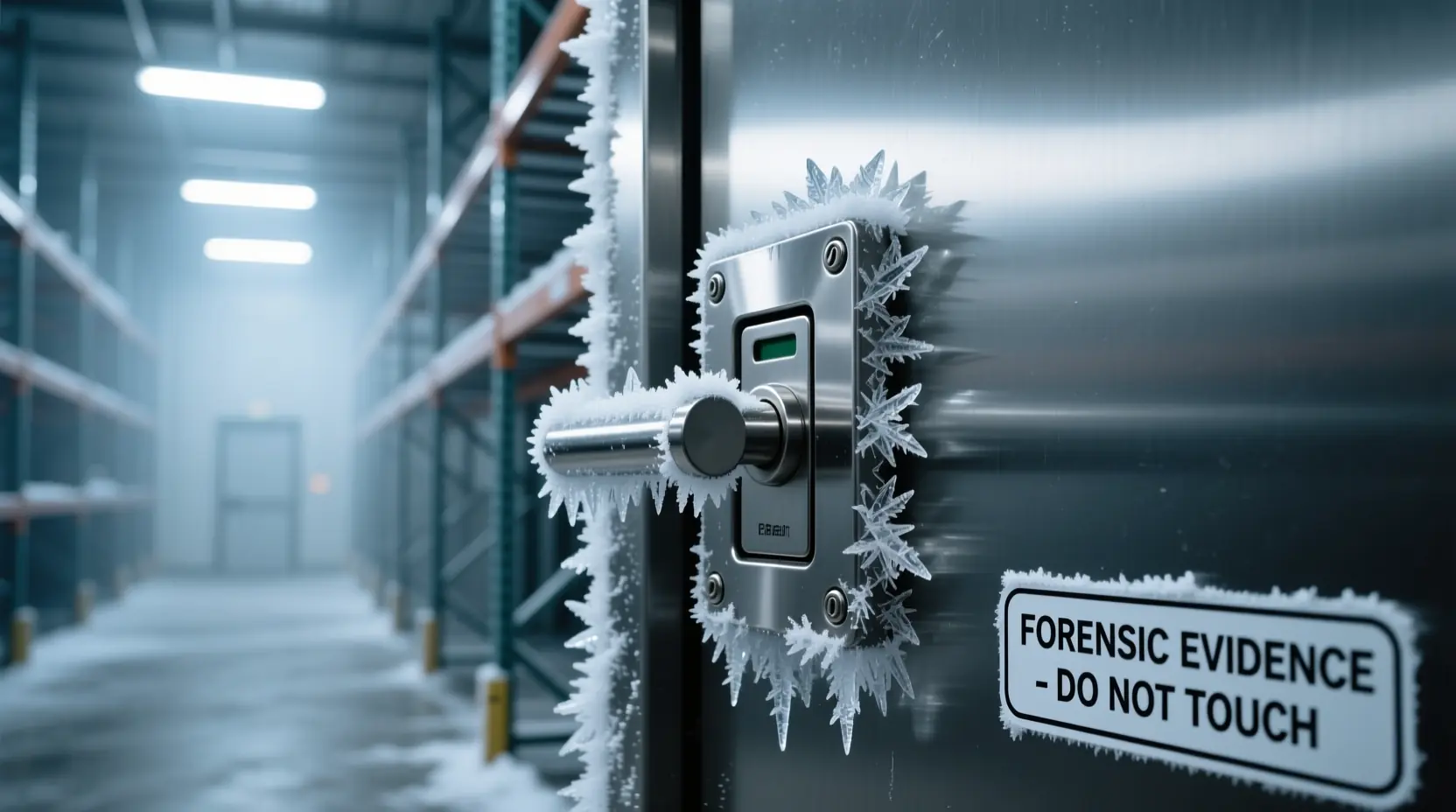
- Condensation & Instant Ice: Warm, moist outside air hits the cold mass of the door and hardware. Moisture condenses everywhere—inside the lock cylinder, on the spring, in the panic bar pivots. At -20°C, this isn’t dampness. It’s flash-frozen glue. Moving parts become a single, seized lump.
- Thermal Contraction Warfare: Metal shrinks. Different metals shrink at different rates. The stainless steel case contracts one way, the internal brass latch another. Tolerances you never worried about disappear. A latch that cleared its strike in July might bind solid in January.
- The Human Factor (A.K.A. Contempt for Equipment): People slam doors. They kick them open. They ram them with pallet jacks. Standard hardware isn’t built for that abuse on a good day. Add in cold-embrittled metal, and you get snapped push pads or bent rods. A broken panic bar isn’t an operational fault; it’s a structural failure of your safety plan.
- Frost Heave & Shifting Sands: The door itself is your enemy. Insulation saturates with frost, swells, and shifts the entire assembly. Your once-perfect alignment is gone. The door binds. More force is applied. The cycle of failure accelerates.
The “Solutions” That Are Actually Problems (And Waste My Time)
Before we get to what works, let’s autopsy the terrible ideas that cross my desk. These make me genuinely grumpier.
- The Heat Tape Hack: Wrapping a residential heat tape around the bar is amateurish, dangerous, and voids listings. It creates a hot spot that can worsen localized icing and presents a real electrical fire risk. It’s a symptom of a procurement failure.
- The “Lube It More” Philosophy: Spraying WD-40 or standard silicone into the mechanism is like adding syrup to the problem. It attracts more moisture, gums up, and freezes into a permanent, gritty paste. You’ve now institutionalized the failure.
- The Mallet Protocol: If there’s a giant rubber mallet hanging by the door, you’ve already failed. This is not a ‘solution’; it’s a confession that your hardware doesn’t work, and you’re relying on violence for egress. This is where people get hurt and doors get destroyed.
- Interior Handles: The Trap Within the Trap: “Let’s add an inside knob for safety!” Brilliant. Now you’ve installed a smaller, more intricate mechanical device with tighter tolerances inside the freezer. It will freeze faster and more completely than the main exit. You’ve built a secondary point of failure.
The Procurement Spec: What Actually Works
Stop looking for a product. Start specifying a performance-based solution. Here’s your non-negotiable checklist. No exceptions.
- Cold Room / Freezer-Grade Listing (Non-Negotiable): The hardware must be tested and listed by UL, Intertek, or an equivalent NRTL for low-temperature operation (typically -30°C/-22°F or lower). This is your legal and moral baseline. The listing proves the materials and design survive the thermal stress. Demand the certification document.
- Fully Sealed Mechanism: The entire internal works—latch, springs, pivots—must be in a hermetically sealed housing, often purged with dry nitrogen and fitted with perimeter gaskets. If you can see moving parts from the outside, it’s not sealed. Moisture will find a way in.
- Specialty, Dry-Film Lubricants: They don’t use ‘grease.’ They use engineered dry-film lubricants (e.g., molybdenum disulfide) or greases with a pour point far below your operating temperature. These do not attract moisture and remain functional in extreme cold.
- Thermal Break Design: High-end devices incorporate non-conductive materials (like polyamide) between the internal cold-side mechanism and the external push pad or crossbar. This minimizes the “cold bridge” that draws condensation to the critical parts.
- Overbuilt Durability: It should feel heavy, simple, and brutish. Thicker gauge steel, larger pivot pins, heavier springs. In this application, ‘over-engineered’ is the correct spec.
- Factory-Integrated, Listed Heating (If Needed): Not a hack. A factory-installed, UL-listed heating element with a thermostat (kicking on at, say, +1°C) is for prevention, not emergency de-icing. It requires a dedicated, properly installed power source. Specify it if your environment sees frequent door cycling.
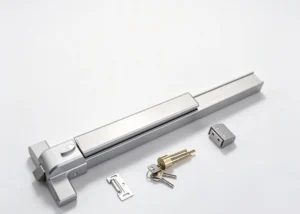
- Mechanical Simplicity: Favor rim-mounted devices over concealed vertical rod systems. Fewer parts, fewer rods to bind, simpler mechanics. The direct line between the push and the latch retraction is your friend.
Installation & Maintenance: Where Good Hardware Gets Murdered
You can spec a gold-plated device and ruin it in an hour with bad installation. The hardware is only one component of the system.
- The Door & Frame Are Part of the Spec: The exit device relies on a proper seal. A worn gasket or misaligned door is a moisture pump aimed directly at your latch. Your maintenance schedule must include the entire door assembly, not just the hardware.
- Precision Strike Plate Alignment: This is a job for your best technician, not the apprentice. In extreme cold, there is zero margin for error. The latch must throw and retract fully without any bind. Use feeler gauges. Be obsessive.
- Scheduled Thaw & Inspection Regimen: Quarterly, at minimum. Take the door out of service. Let it warm gradually (no heat guns!). Inspect every pivot, seal, and spring. Wipe out any moisture. Re-lubricate only with the manufacturer’s specified product. This is proactive risk management.
- Train Your People (Properly): The panic bar is for panic. The primary door opener is the external handle. Drill this in. More importantly: a stiff or crunchy-feeling bar is a critical incident report, not a complaint. Culture saves lives where hardware can sometimes falter.
The Final Calculus: Pay for Engineering or Pay for Consequences
Let’s talk numbers, because that’s what gets the CFO’s attention. The cheap ‘commercial grade’ device: ~$300. The proper freezer-grade, listed device with a heater: ~$1,500. Proper installation on a sound door: another ~$1,000.
Now, price the alternative. Price the OSHA investigation after a lock-in. Price the workers’ comp claim for hypothermia or a panic-induced injury. Price the wrongful death lawsuit. Price the mandatory, facility-wide retrofit ordered by a furious fire marshal wielding a red tag. The $1,500 device isn’t an expense; it’s the cheapest insurance policy you’ll ever procure.
This isn’t about avoiding nuisance. It’s about the fundamental duty of care you accept when you operate a hazardous environment. The means of escape cannot become part of the hazard.
***
AHJ WARNING: Listen up. I’ve been in more frosty code battles than you’ve had hot coffees. Nothing in this grumpy, intentionally chaotic manifesto overrides the Authority Having Jurisdiction. That’s your local building inspector, fire marshal, or plant safety officer. Their word, their local amendments, and the specific stamps on your occupancy permits are GOSPEL. This is general advice from a grizzled vet who’s seen things go wrong. Your AHJ’s site-specific ruling is the actual law. You think your clever workaround is superior? Try arguing thermodynamics with a fire marshal holding a red tag and a blank citation book. Don’t. Install listed hardware, follow the code they enforce, and get their sign-off in writing. Your liability, and your sleep, depend on it.