
Let’s cut the corporate procurement fluff. You’re reading this because a budget line item is screaming, or a Facilities guy is whining about a broken door. You typed ‘exit hardware no professional needed’ into Google, hoping for a magic bullet—a product you can order, some poor soul can install, and you can check the box. You want tidy. You want easy.
Welcome to my world of intentional chaos. I’m not your friendly guide. I’m the grumpy veteran who has seen the mangled metal, the failed inspections, and the liability lawsuits that follow well-intentioned, poorly executed DIY ‘savings.’ This isn’t a polished listicle. It’s a messy, snark-laden truth bomb about what you’re actually considering. My structure will be as logical as your last cross-departmental meeting. You want polished? Hire the professional you’re trying to circumvent.
First, a quick terminology lesson, because Procurement always gets this wrong. ‘Exit Hardware’ isn’t a fancy pull handle. In the code-enforced, legally-binding world we operate in, it typically refers to Fire Exit Hardware (panic devices, crash bars). The stuff that saves lives when the alarm sounds. Then there’s ‘door hardware’ for everyday use. We’ll blur the lines here in your cost-saving fantasy, but my professional conscience is writing this in all caps.
The ‘Low-Risk, Maybe-You-Won’t-Get-Fired’ Tier
1. The Storeroom Latch. The poster child for DIY delusion. A simple keyed deadbolt with a thumb-turn inside. For that janitorial closet or internal stock room. The catalog says ‘Easy Installation!’ Sure. Until the guy from Maintenance discovers the door is hollow metal, his hole saw is junk, and the ‘universal’ backset isn’t. The result? A wobbly mess that ‘functions’ but looks like it was installed during an earthquake. Can a handy person do it? Yes. Will it pass a real inspection? Maybe. Does it feel cheap? Absolutely. You get what you pay for, and you paid for ‘barely adequate.’
2. The Passage/Privacy Lever Set. Swapping a bedroom or single-occupancy bathroom knob? This is the procurement equivalent of ordering office supplies. Low stakes. Pop old off, slap new on. The chaos creeps in with the details. The prep in the door edge from 1985 isn’t standard. The latch plate won’t align. The ‘universal’ spindle isn’t. Your installer will be filing metal and cursing your name. But for a purely interior, non-fire-rated, non-egress door? It’s a justifiable risk. The snag is everyone starts thinking *all* hardware is this ‘easy.’ It’s not.
3. The Surface-Mounted Bolt. The budgetary Hail Mary. A heavy-duty bolt you screw directly onto the door face. For a shed, a basement, a secondary gate. It screams, ‘Security was an afterthought, but we did something.’ Zero elegance, maximum brute force. No mortising, no complex latchwork. It’s a viable, if aesthetically tragic, option for low-traffic, non-critical applications. Just don’t let Marketing take a picture of it.
The ‘This Is Where Projects Go to Die’ Tier
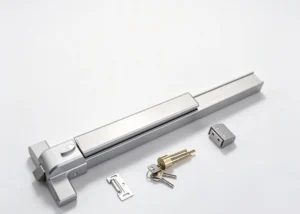
4. The ‘Push-Pad’ Mechanical Exit Device. Now my eye starts twitching. These are the simplified, often surface-mounted cousins of real panic hardware. Meant for interior cross-corridor doors, maybe. The catalog makes it look simple: template, drill, bolt. The reality is a nightmare of adjustment. Getting the latch to throw perfectly, eliminating door rattle, ensuring smooth operation—this is a black art. Your facilities team will get it mounted. It will *technically* work. But it will sound like a bag of spanners every time it’s used, and fail the first time someone leans on it with intent. You saved 40% on hardware and lost 100% on function.
5. The Electronic Keypad Lever (Residential-Grade). The siren song of ‘smart’ procurement. ‘Keyless entry! No wires! DIY!’ You buy the shiny residential unit for that back office. It’s installed. For a week, it’s a miracle. Then you realize: Does it provide free mechanical egress? (Can you always get *out* without a code?). If not, you’ve just illegally obstructed a means of egress. A fire marshal will see it and red-tag the entire hallway. Furthermore, integrating any commercial-grade access control or tying it to a fire alarm system is a pipe dream. This isn’t DIY territory; it’s ‘hire a systems integrator’ territory. Your attempt to save $500 just created a $5,000 liability and a code violation.
The ‘Cease and Desist Immediately’ Tier
6. Rim Devices with Vertical Rods (Rim V/R). Often on double doors. The push bar actuates rods that go up and down to retract latches at the top and bottom of *both* leaves. The coordination required is symphonic. Head and foot latch engagement, rod length, door alignment—each adjustment affects the others. A DIY install looks like a toddler assembled IKEA furniture. It will bind, stick, and fail under pressure. This is a 100%, non-negotiable professional install. Attempting it yourself is a guarantee of callback hell.
7. Anything on a Fire-Rated Door Assembly. This is where grumpy turns to deadly serious. See the tiny metal label on the door edge? That’s its fire rating (20 min, 45 min, 90 min). That door, its frame, and its listed hardware are a tested assembly. The millisecond you drill an unapproved hole, mortise for a non-listed latch, or slap on hardware not certified for that assembly, you have voided its rating. You haven’t saved money; you’ve turned a life-safety device into a decorative panel and assumed catastrophic liability. If there’s a fire and that door fails, your company’s lawyers will be reading this article aloud in court.
8. Anything Marked ‘Architectural Grade’ or ‘Commercial Duty.’ These are not synonyms for ‘better.’ They are synonyms for ‘requires a professional installer with professional tools.’ The tolerances are measured in thousandths of an inch. The prep is specific. The lock chassis is proprietary. Ordering this online and handing it to Maintenance is like buying a Ferrari engine and asking a bike mechanic to install it. It will end in tears, wasted capital, and a very expensive doorstop.
The Grumpy Procurement Manager’s Reality Check
The allure is familiar. Capital expenditure approvals are brutal. Operating budgets are lean. I live in this tension every day.
But listen closely: Procuring and installing exit hardware is not a simple ‘buy it, install it’ commodity play. It’s a risk management, compliance, and systems integration exercise.
- Compliance (Codes): IBC, NFPA 80, NFPA 101, ADA—these aren’t suggestions. They dictate force to open, operation under alarm, clear width, signage. Your well-intentioned DIY project likely violates several, creating regulatory risk.
- Risk Management (Liability): If that self-installed panic bar jams during an evacuation, the lawsuit won’t target the installer. It will target the company that owned the building and approved the cost-saving measure. Your spreadsheet won’t save you.
- Systems Integration: The door is a system: hinges, frame, lock, closer, fire rating, access control. Change one component, you affect the whole. Professionals see the ecosystem. DIY sees a SKU and a price point.
The Non-Negotiable Mandate (The AHJ Ultimatum)
I’ll drop the snark for one clear, professional imperative.
The final, absolute authority on ANY exit hardware installation is your local Authority Having Jurisdiction (AHJ). Full stop.
The AHJ is typically the Fire Marshal or Building Code Official. Their job isn’t to hassle you; it’s to prevent death and mayhem.
Before you issue a single Purchase Order for any exit device—especially for a commercial, public, rental, or fire-rated application—you MUST engage your AHJ.
- Your product data sheets are irrelevant without their approval.
- The ‘DIY Certified’ stamp on the box is meaningless to them.
- This article is just advice. Their word is law.
They interpret the code for your specific municipality, building, and door. They permit. They inspect. They approve. Skipping this step isn’t savvy procurement; it’s professional malpractice. If discovered, they will shut down operations, levy fines, and force a tear-out and reinstall by licensed professionals, costing 10x your initial ‘savings.’
Do ‘no-professional-needed’ options exist in a catalog? Yes. For a non-rated interior closet in a private office? Possibly. For anything else—anything involving egress, fire, public access, or codes—your procurement process must include two calls: one to a qualified door hardware consultant/installer, and one to your AHJ. Anything less is betting corporate liability against minor capex savings. It’s a fool’s bet.
Get it permitted. Get it inspected. Manage the risk. Now get off my budget report.
AHJ WARNING: The final authority for all exit hardware compliance is your local Authority Having Jurisdiction (AHJ—typically Fire Marshal or Building Official). Their approval supersedes all manufacturer claims, online advice, or internal assumptions. Always consult your AHJ before specification, purchase, or installation. Failure to do so can result in non-compliance, fines, operational shutdowns, and severe liability.