Mortise Lock Exit Devices: The Beautiful, Brutal Truth
Let’s be clear. You’re not reading this for a gentle sales pitch. You’re here because a line on an architectural drawing just turned into a problem sitting in a box in your warehouse. The 65. Mortise Lock Exit Device. It’s forged steel, machined brass, and weighs more than your last five procurement mistakes combined. It feels substantial. It sounds substantial when you drop it on your desk—a sound that says “budget overrun” and “installer revolt” in one metallic clang.
You might think, “It’s just a fancy panic device. How hard can it be?” Permit me a cynical chuckle. This isn’t hardware installation; it’s a hostage negotiation with physics, tolerances, and your own sanity. But stick with me. By the end, you’ll know exactly why you should either run for the hills or double down and specify them on every main entrance.
Decoding the Madness: 65 vs. Everything Else
First, a quick primer in our industry’s deliberately obtuse poetry. “65” is BHMA code for a Mortise Lock-type Exit Device. Break it down:
- Mortise Lock: The mechanism lives in a coffin-like pocket carved into the door edge.
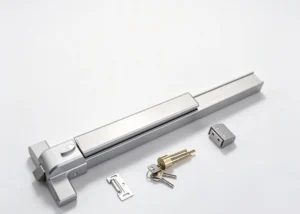
- Exit Device: It has a crossbar or pushpad that retracts the latch for escape.
Now, compare this to the common alternatives your contractors keep begging you for:
- Rim Device (98): A glorified bear trap screwed to the door face. Forgiving. Disposable.
- Surface Vertical Rod (99): A Rube Goldberg contraption with rods. Adjustable. Ugly.
The 65 offers no forgiveness. Its soul is buried. The trim is just a face. The real work happens in a hidden cavity that must be chiseled with the precision of a neurosurgeon. You’re not doing one job; you’re managing three interdependent, high-stakes preps:
- The Mortise: A deep, perfect rectangle in the door edge.
- The Exit Device Cutout: The face mount for the crossbar and latch.
- The Bore: The hole through the door for cylinders and levers.
These must align in three dimensions. A 1/32″ error in the mortise depth can render a $1,500 device inoperable. Welcome to the major leagues.
The Installer’s Bill of Rights (A.K.A. Your List of Sins)
When you specify a 65, you are personally responsible for the following grievances. Your hardware installer will curse your name. Here’s why:
1. The Weight. Good God, The Weight.
This isn’t hardware; it’s an anchor. Installing it requires the steady hands of a watchmaker and the forearms of a dockworker. Try holding 25 pounds of steel flush with a door edge, one-handed, while driving the first screw. It builds character (and hernias).
2. Tolerances Tighter Than Your Project Timeline
We’re talking about clearances measured in sheets of paper. Latch-to-strike engagement? Often less than 1/16″. The door’s hinge alignment, which you’ve ignored for years, is now a critical-path item. A slight sag dooms the entire mechanism. You will learn to love hinge shims.
3. The Template is a Sick Joke
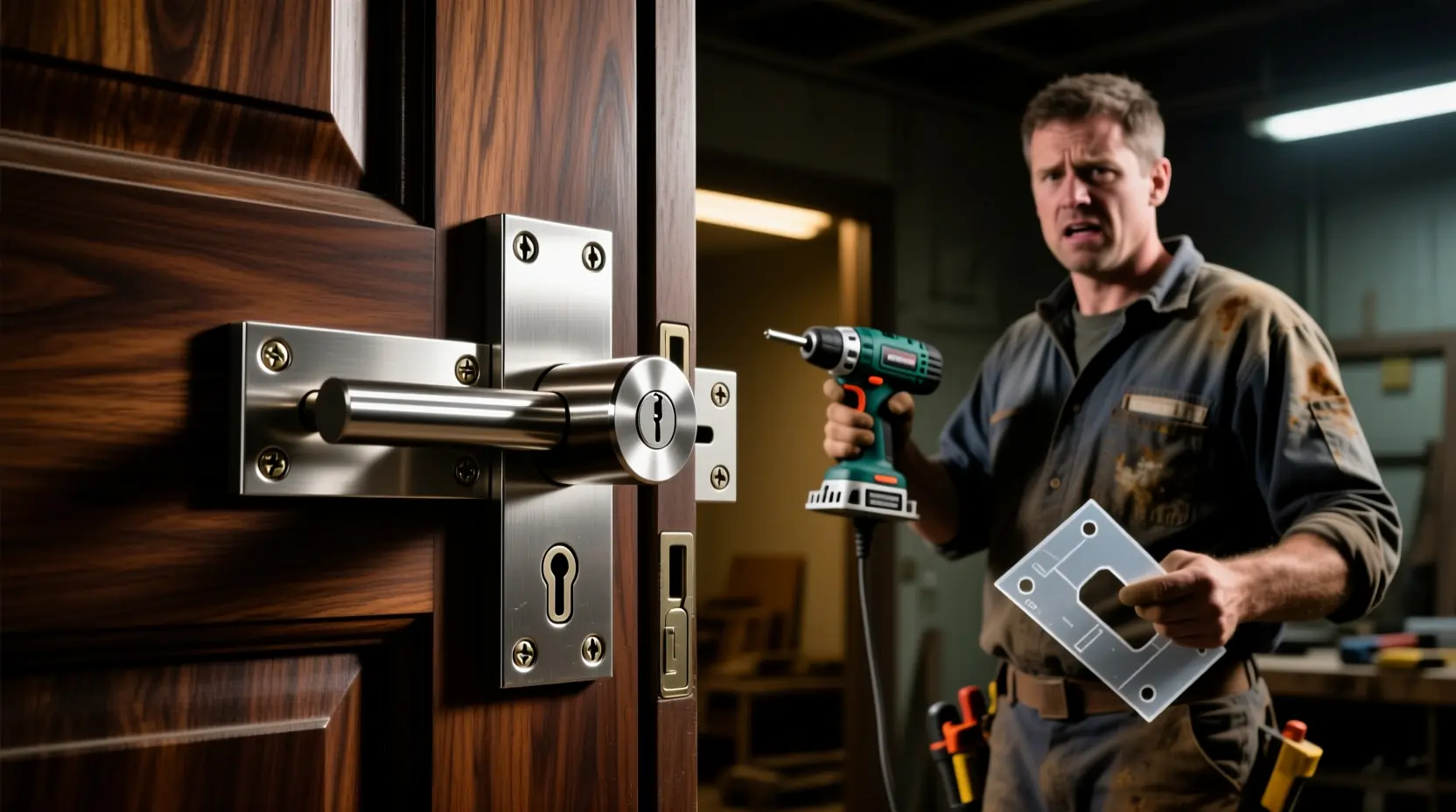
Manufacturers provide beautiful, full-size templates. They are lies on paper. They assume your door is a perfect, Platonic ideal of squareness and thickness. It is not. Transferring dozens of critical markings from flimsy paper to a wooden door is an act of hope. A slight breeze, a misread marking, and you’ve just ruined a $1,200 door. Hope you like epoxy-wood composite.
4. No Hiding Your Sins
With surface-mounted junk, the device covers your mistakes. With a 65, the prep is the finish. A blown-out corner on your mortise pocket is a permanent monument to your router’s rage and your failing patience. Every miscue is on display.
5. Adjustments From the Ninth Circle of Hell
You finally get it mounted. It doesn’t latch smoothly. The crossbar sticks. The lever is loose. The adjustment screws? Oh, they’re behind the trim plate. Which requires removing the levers. On a hung door. So you’re now a contortionist performing fine mechanical work blind, through a 4-inch gap. It’s absurd.
The Indisputable, Beautiful Upside
Given the litany above, why does anyone with a shred of sense specify these beasts? Because when executed correctly, they are transcendental. They are the difference between commodity and legacy.
Durability That Ignores Time
The mechanism is protected inside the door’s armor. The activation is a direct, mechanical linkage—no plastic gears, no bent rods. In a high-traffic hospital corridor or a school entrance, a 65 will absorb millions of cycles over decades and ask for nothing but a drop of oil. The rim device alternative will be a cracked, broken memory in five years.
Security That’s Not a Slogan
This is real security. A massive mortise lock throws a heavy bolt deep into a fortified strike plate. Kicking this door isn’t about breaking a lock; it’s about demolishing the door frame itself. It’s a tangible, physical deterrent.
The Sonic & Tactile Symphony
This is the unsung hero. Operate it. Feel the solid, weighted motion. Hear the latch shoot home with a deep, resonant, satisfying CLUNK. That sound says “secure.” That feeling says “quality.” A tinny rim device goes clack. A 65 goes clunk. You are not just buying hardware; you are buying a user experience of uncompromising solidity.
The Unspoken Aesthetic Heft
It looks important. Clean, integrated, low-profile. No bulky boxes screwed on. It signals that someone—you—cared enough to specify the best. It’s a silent, daily broadcast of quality to every person who uses that door.
The Procurement Manager’s Final, Unvarnished Verdict
So, should you buy it? Here’s my grumpy, binary truth:
If your goal is low first cost, fast install, and you plan to flip the asset in 3 years: Run. Buy the cheap rim device. Save the money. Live with the mediocrity.
If you are responsible for a facility meant to last, where doors are abused daily, security is non-negotiable, and total cost of ownership is your real metric: You swallow the pill. You budget for the premium hardware. You triple the labor estimate. You vet and hire installers who see this not as a chore, but a craft.
You do it because in an era of disposable everything, specifying something permanent is a radical, responsible act. The 65 is a grumpy, over-engineered monument to the idea that things should be built to outlive the trends, the budgets, and even the people who installed them.
Just go in with your eyes open. And for heaven’s sake, check the door prep. Twice.