You Need a UL-Listed Panic Bar on That Warehouse Door. Probably. Let’s Argue About It.
Look, you pulled me off a critical line item negotiation for this. My coffee’s getting cold, so I’ll be blunt, sarcastic, and leave out the fluffy corporate nonsense. You’re asking if your massive warehouse door needs a UL-listed panic bar. The short answer is a grumpy sigh followed by: It’s complicated. Get it wrong, and the Authority Having Jurisdiction (AHJ) will use your purchase order as kindling for your roasting.
First, Kill the Misconception: This Isn’t About Your Pretty Front Door
We’re talking about the beasts. The rolling steel monster. The groaning sectional door. The heavy metal swing door leading to the yard or bay. Where forklifts prowl and pallets rule. This is where procurement gets real, and safety gets expensive.
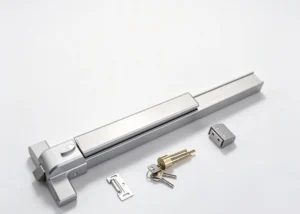
People hear “panic bar” and think “fire exit.” That’s a rookie mistake. It’s an *exit device*. Its job, per codes like the International Building Code (IBC) and NFPA 101, is egress. A fancy term for “getting out alive,” applicable to fires, chemical spills, or the sheer chaos of a Tuesday. The real question isn’t about fire; it’s about whether that door is a means of egress. And that’s where your headache begins.
The “Means of Egress” Rabbit Hole
If that door is just for loading trucks and isn’t on the emergency plan as an exit, you *might* dodge the requirement. In my decades of this, I’ve seen three such doors. Total. Workers see sunlight through a big door and head for it. If a human could use it to escape, the AHJ will likely call it a means of egress. Welcome to compliance purgatory.
Occupancy Load & Hazard: The Math You Can’t Ignore
So it’s an egress door. Now, the fun starts. The IBC typically mandates *panic hardware* (the correct term) for doors serving an occupancy of 50+ or in high-hazard areas. Do the math: your employees, plus temps, plus truck drivers, plus the sales team on a “gemba walk.” Hits 50 fast. Warehouses are often high-hazard by default. Assume you need it.
UL Listing: The “Approved” Stamp You Actually Need
Here’s the core of your RFP. The code says hardware must be “approved.” It doesn’t explicitly scream “UL LISTED!” But 99.9% of AHJs use listings from recognized labs (UL, Intertek’s ETL) as their approval benchmark. UL 305 is the standard for Panic Hardware. It tests for reliability, force, durability—will it work when soaked in fear-sweat?
Showing up with an unlisted, online bargain-bin “panic device” is professional suicide. The inspector will cite “approved,” ask for the listing, and when you can’t produce it, fail you. Your cost-saving just became a rework disaster. The grumpy truth? UL-listed (or equivalent) isn’t just best practice; it’s the only language your AHJ speaks fluently.
Warehouse-Specific Procurement Nightmares
This isn’t a standard door. Your hardware selection just got specialized, expensive, and annoying.
1. The Rolling Steel Door Disaster
Mount a standard crossbar on a corrugated curtain? Don’t be ridiculous. You need a **rim device with a panic button** or **vertical rod device** on a reinforcing bracket. It looks absurd, costs a fortune, and requires an installer who knows which end of a screwdriver is which. The entire assembly must be listed.
2. The Sectional (Overhead) Door Hassle
You can’t bolt a bar across moving segments. You’re looking at recessed push pads or touchpad systems integrated into the door’s mechanics. Again, listed. Always listed.
3. Electrified Hardware & Security
Need to keep it secure but unlock on alarm? Enter *fire exit hardware* (a step above panic hardware) and electrified trim. This is a multi-disciplinary money pit involving electricians, integrators, and consultants. Your budget just wept.
4. The Padlock Trap (A Fast Track to Liability)
“We just use a padlock for security and take it off during work hours.” I’ll say this slowly: This is illegal and lethally stupid. Locking a means of egress with a padlock is a code violation visible from orbit. It invites fines and wrongful death lawsuits that haunt your corporate lineage. Use an approved, listed locking device like a removable mullion or an electrified lock that fails open.
5. The Forklift Factor: Protecting Your Investment
Even perfect hardware is useless if a forklift smashes it. You need bollards. Which themselves must be “approved” and not obstruct the egress path. The cascading cost of compliance is a beautiful, infuriating thing.
The Messy Procurement Checklist (No Fluff)
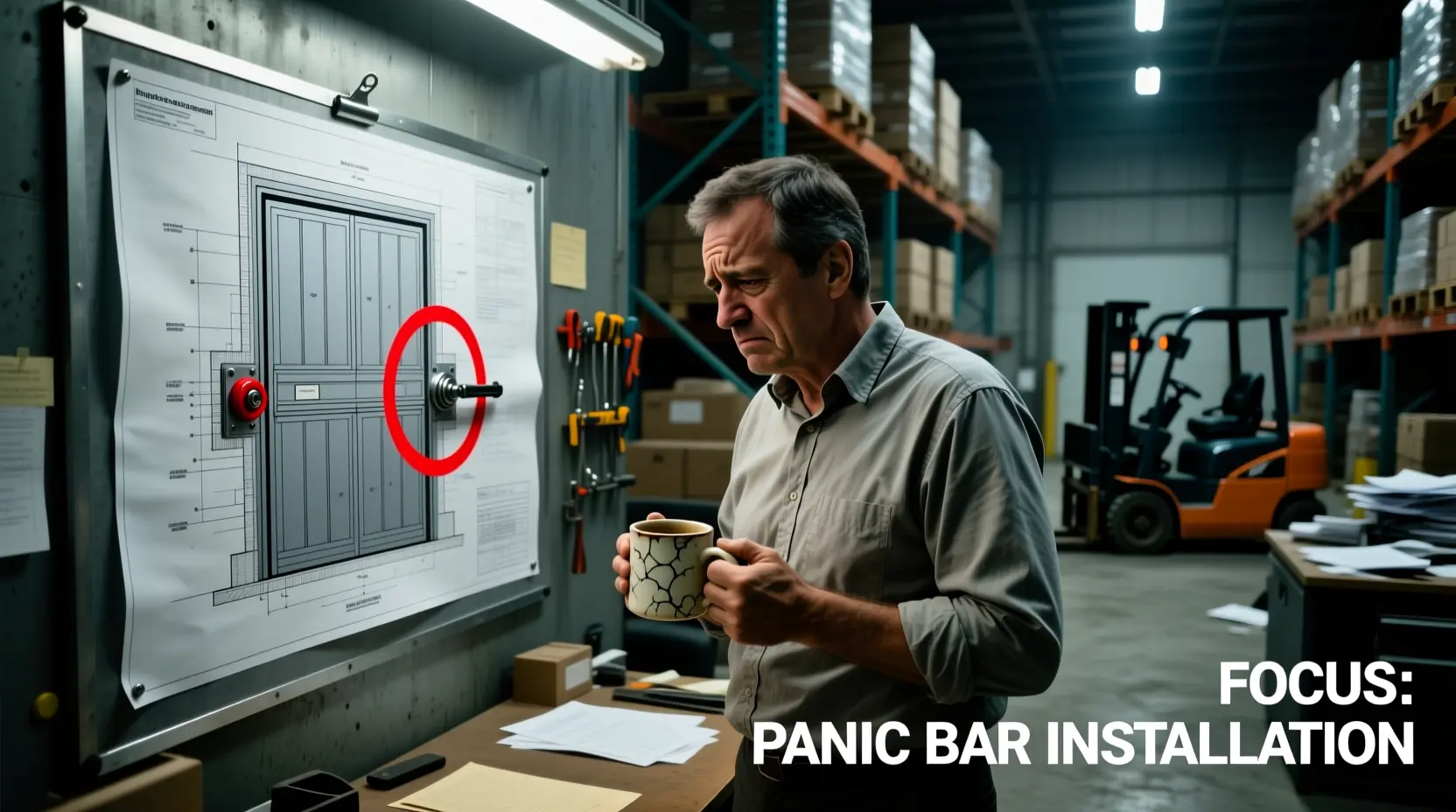
- Step 1: Determine Egress Status. Check architectural drawings and emergency plans. Assume it is an exit. The AHJ will.
- Step 2: Panic Hardware Likely Required. Occupancy >50 or high-hazard area? Yes.
- Step 3: Buy “Approved” = Buy Listed. Specify UL 305 Listed (or equivalent ETL) panic hardware in your PO. No off-brand junk.
- Step 4: Match Hardware to Door Type. Engage a competent Door and Hardware Consultant (DHC). Yes, it’s a line item. No, you can’t skip it.
- Step 5: Installation Matters. A bad install voids the listing. Use qualified contractors.
- Step 6: Add Protection. Bollards, barriers. Factor them in.
- Step 7: Maintain & Document. Test it. Log it. CYA.
The Non-Negotiable, Final AHJ Warning
Listen closely. Everything above is generic guidance. The final, binding, non-appealable authority is your Authority Having Jurisdiction (AHJ)—your local Fire Marshal or Building Official. Their interpretation is law. What flies in one county fails in the next.
DO NOT finalize specs, issue a PO, or start installation without a formal review with your AHJ. Bring your drawings and the product data sheets with the UL listings clearly visible. Get their approval in writing if possible. Trying to outsmart them is the most expensive mistake you’ll ever make. They will make you rip it out, and they’ll enjoy watching you do it.
You have been warned. Now, if you’ll excuse me, I have a pallet racking RFQ that actually makes sense.
AHJ WARNING: The content provided here is for informational purposes and reflects general industry understanding. It is not a substitute for professional advice or the official interpretation of your local Authority Having Jurisdiction (AHJ). All final decisions regarding code compliance, including the requirement for and specification of panic hardware, must be reviewed and approved by your AHJ. Failure to do so may result in failed inspections, fines, and serious safety liabilities.