
Von Duprin 98/99 vs. SinoVexa Pro: Let’s Talk About This Garbage Fire of a Comparison
Alright. You’ve dragged me out of my perfectly grumpy silence. Someone, somewhere, decided it was a brilliant idea to put “Von Duprin” and “SinoVexa” in the same sentence for a hardware comparison. Probably a procurement drone who thinks a door is just a hole with a thing that swings, and whose only metric is a spreadsheet column. Fine. You want to know if the catastrophic price gap between the legendary 98/99 series and this… this SinoVexa Pro Series thing is justified? Buckle up. It’s going to be messy, because the industry is messy, and I’m not your polished, SEO-optimized marketing blog writer. I’m the guy who has to live with—and often fix—the stuff you people specify based on the wrong criteria.
First, let’s scorch this earth from the start: we are not comparing apples to apples. We are comparing a hand-forged, heirloom-quality chef’s knife that’s been passed down through three generations of master smiths to a perfectly serviceable, decently sharp box cutter you bought in a 10-pack from a big-box store. Both can technically cut things. That’s where the similarity ends, and where your project’s risk profile begins.
The Von Duprin 98/99: The Relentlessly Expensive Relic That Still Runs the Show
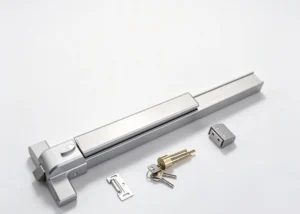
Let’s talk about the 98/99. You don’t buy a Von Duprin rim exit device. You specify it. It’s not a product; it’s a benchmark, a standard, a clause in the building code that became sentient and learned to love cast metal. It’s the thing fire marshals, architects with PTSD from past failures, and every grumpy spec writer like me have implicitly trusted since your grandfather was worrying about bomb shelters.
Why? Because it’s a tank. But not a modern, overly complex tank. A World War II-era tank. Simple, brutal, and engineered to function long after the civilization that built it has crumbled. The one-piece cast housing isn’t manufactured; it’s birthed in a foundry under the watchful eye of people who understand metallurgy as a dark art. The finish isn’t paint; it’s a molecular-level bonding process designed to survive decades of bleach, ammonia, bodily fluids, and sheer human contempt. The internal spring mechanism? It’s so over-engineered that its primary failure mode isn’t “breaking,” it’s “collecting such a formidable archaeology of dirt, grease, and urban grime over 30 years that it finally starts to feel sluggish.” A quick bath in solvent, and it’s good for another presidential administration.
The 98/99 exists in a universe of total, backward-and-forward parts interchangeability. I can, and have, taken a latch from a 1978-model 99 and installed it perfectly into a unit manufactured last week. Try that with any other brand. Go ahead. I’ll wait while you sort through “compatible” sub-models and revision numbers.
You pay for the Von Duprin name, yes. But that name isn’t marketing fluff or brand cachet. It’s the combined weight of:
- UL Listed for Panic and Fire Exit Hardware. Not just “fire exit.” Panic. There’s a monumental difference in testing and performance intent, and your liability insurer’s actuarial tables know it.
- A product that is, functionally, forever. The cost isn’t for the device; it’s for the certainty that you will almost never have to think about it again, budget for its replacement, or explain its failure.
- A global network of distributors and crusty, experienced locksmiths who actually know how to service it without turning it into a spaghetti of stripped screws and misplaced parts.
Is it expensive? Obscenely. Is it perfect? No. It’s heavy. It can be fussy to align if your frame is warped junk. But it is the known quantity. In a fire, during a panic, when the lawyers are circling like vultures, you point to the Von Duprin spec sheet and you sleep at night. That sleep costs money.
The SinoVexa Pro Series: The Competent Upstart That Makes You Nervous
Now, enter the SinoVexa Pro Series. Let’s be fair. It’s not “bad.” In the last decade, these import-based, aggressively value-engineered lines have evolved from utter landfill material to… surprisingly not terrible. The Pro Series looks the part. It has a decent heft in the hand. The stainless steel might even be actual, magnetic steel! The finish is passable from six feet away. It has all the right holes drilled in all the right places to mimic the established players.
The price gap? Astronomical. You can often procure three, sometimes four, SinoVexa Pro devices for the price of a single Von Duprin 98.
So where does that money go? Or, more critically for procurement, where does it not go?
- The Metal. The Von Duprin feels dense, inert, like a ingot. The SinoVexa feels… lively. It rings with a higher pitch when you tap it. The gauge is thinner. The castings have more flash lines, more subtle surface imperfections. It’s not junk—it’s often perfectly Grade-A Industrial—but it’s not Grade-A Architectural.
- The Guts. Open them up. The Von Duprin interior looks like a Swiss watch designed for gorillas. The SinoVexa looks like a machine that works. The springs are a lighter gauge. The latches are often a simpler, cheaper stamped or molded design. The tolerances are wider. This isn’t inherently bad—it can actually make installation faster on crooked or imperfect frames—but it whispers quietly about long-term wear under constant, brutal abuse.
- The Ghost in the Machine: Parts & Support in 2039. This is the killer. The great unspoken bet. Will SinoVexa exist as a brand in 15 years? Maybe. Will they have, or be willing to produce, the exact latch profile for your specific 2024 model in 2039? A much bigger maybe. Von Duprin? Yes. Without question. That certainty is baked into the price. The uncertainty is the discount.
The “Justification” Minefield: Or, Who’s Actually Getting Screwed?
So, is the gap justified? This is where we move from product specs to professional judgment, a skill in frighteningly short supply. It depends entirely on who you are, what the door does, and how long you plan to care.
Scenario A: The High-Traffic Hospital Stairwell Door. This door gets shoulder-smashed open 500 times a day by gurneys, stressed-out staff, and confused visitors. It’s hosed down with corrosive disinfectants twice daily. Here, the Von Duprin isn’t “justified”; it’s mandatory. The Total Cost of Ownership (TCO)—factoring in zero planned replacement, near-zero maintenance, and vastly reduced risk—makes the SinoVexa a fool’s economy. Putting a SinoVexa Pro here isn’t value engineering; it’s professional malpractice waiting for an incident report. The price gap isn’t just justified; it’s a pittance compared to the cost of failure.
Scenario B: The Low-Traffic Electrical Closet in a Class-A Office Building. A door that gets opened twice a month by a bored technician with a key ring. Does it need a $1,200 panic device? Of course not. It’s a criminal waste of capital. A code-compliant SinoVexa Pro for $400 is probably still over-specifying. The price gap here is not justified. Specifying Von Duprin for this application is you being a brand snob, blindly copying a master spec, or failing basic procurement logic.
Scenario C: The Middle Ground (The Danger Zone). This is 80% of your doors. The main entrance to a mid-rise apartment building. A secondary school corridor door (but not the main exit). The back-of-house service door. Here’s where the bloody, budget-driven fights happen. The bean-counter’s spreadsheet screams for SinoVexa. The architect’s boilerplate spec from 1992 mandates Von Duprin. The contractor quietly wants to value-engineer in the SinoVexa and pocket the difference. The building owner just wants it cheap. And everyone is conveniently ignoring the only opinion that will matter on opening day: the AHJ.
A Rant on “Value Engineering” (A Term I’ve Grown to Despise)
“Value engineering” is the sacred process that birthed the SinoVexa Pro Series. It’s also the same process that fills landfills with failed, non-serviceable products. When you value engineer hardware, you’re making a pure financial bet: you bet that the device will physically outlast your ownership period, the building’s next renovation cycle, or your tenure at the company. You’re betting that a 60% cost saving today won’t manifest as a 200% repair and replacement bill in seven years. It’s a speculative bet, not an engineering one.
The Von Duprin doesn’t make bets. It’s the house. And the house always wins in the long run.
But here’s the grumpy truth some purists hate: not every door needs to play in that casino. Some doors just need to be code-complant and get out of the way. The real skill is knowing the difference.
The Messy Conclusion You Probably Hate
The price gap between the Von Duprin 98/99 and the SinoVexa Pro Series is both utterly justified and completely absurd.
It’s justified by the raw material mass, the engineering pedigree, the demonstrable longevity, and the monumental risk mitigation the Von Duprin provides. You are buying peace of mind, forged in metal and validated by decades of silent, uneventful service.
It’s absurd when you witness the vast, thoughtless over-application of such a robust device on doors that see less action than a retirement home shuffleboard court, all while “good enough” products have made staggering quality leaps.
Stop asking about the price gap. Start asking the real question: Do you know what your door actually, empirically needs? Do you know its projected cycle count? Its chemical environment? Your maintenance capabilities? Your organization’s liability exposure? Or are you, like most people, just mindlessly copying last year’s spec, picking the shiniest option from a catalog, or succumbing to the siren song of the lowest bid?
We all know the answer. Don’t bother denying it.