How to Spot Real Von Duprin from Counterfeit Garbage: A Procurement Manager’s Unfiltered Rant
Let’s get one thing straight. I’ve been procuring door hardware longer than some of you have been tying your own shoes. I’ve seen “value-engineered” solutions come and go, usually right after they fail an inspection. But the current plague of counterfeit Von Duprin exit devices isn’t just annoying—it’s a professional insult and a legal landmine. Everyone wants the 99-Series legend. The problem is, what they’re often sold is a pantomime performed by cut-rate actors.
The market is a carnival of almost-right parts peddled by online auction vultures and distributors whose due diligence extends to checking if their PayPal account is active. You, the responsible party holding the bag, get to explain to the fire marshal why your “Von Duprin” latch failed. This isn’t about authenticity; it’s about averting catastrophic liability and not having your professional reputation used as kindling.
So, pour a stiff drink. This is the grumpy, chaotic, occasionally snarky field guide to not getting screwed. We’re operating on the assumption that you care about more than just the initial PO price.
Part 1: The Haptic Audit – Your Hands Know
Before you even look, feel. Your fingers are better forensic tools than your eyes.
- Weight is Weight: Genuine Von Duprin components have heft. They use dense, proper materials. A fake latch feels like it’s made from recycled soda cans. This isn’t an aesthetic choice; mass equals durability over a million cycles. If you can toss it like a baseball, it’s junk.
- Finish Fidelity: Run your thumb over it. Real anodizing or plating is baked into the metal—a deep, consistent, cool feel. Counterfeit finishes are often thin paint or cheap plating. They feel slick, slightly greasy, or have a gritty, powdery texture. It feels like a costume, not a tool.
- The Edge of Reason: This is the dead giveaway. Authentic parts are machined and then deburred. Edges are clean but not sharp. Fakes are often cast (giving a faint, sandy surface texture) or stamped (leaving razor-sharp, unfinished edges that will gladly sample your blood). Inspect screw holes. Are they clean, tapped holes, or do they look like they were assaulted by a dull drill bit?
Part 2: A Visual Interrogation – Spot the Difference
Fine, use your eyes. The fakers are getting better at logos, but they’re philosophically committed to cutting corners.
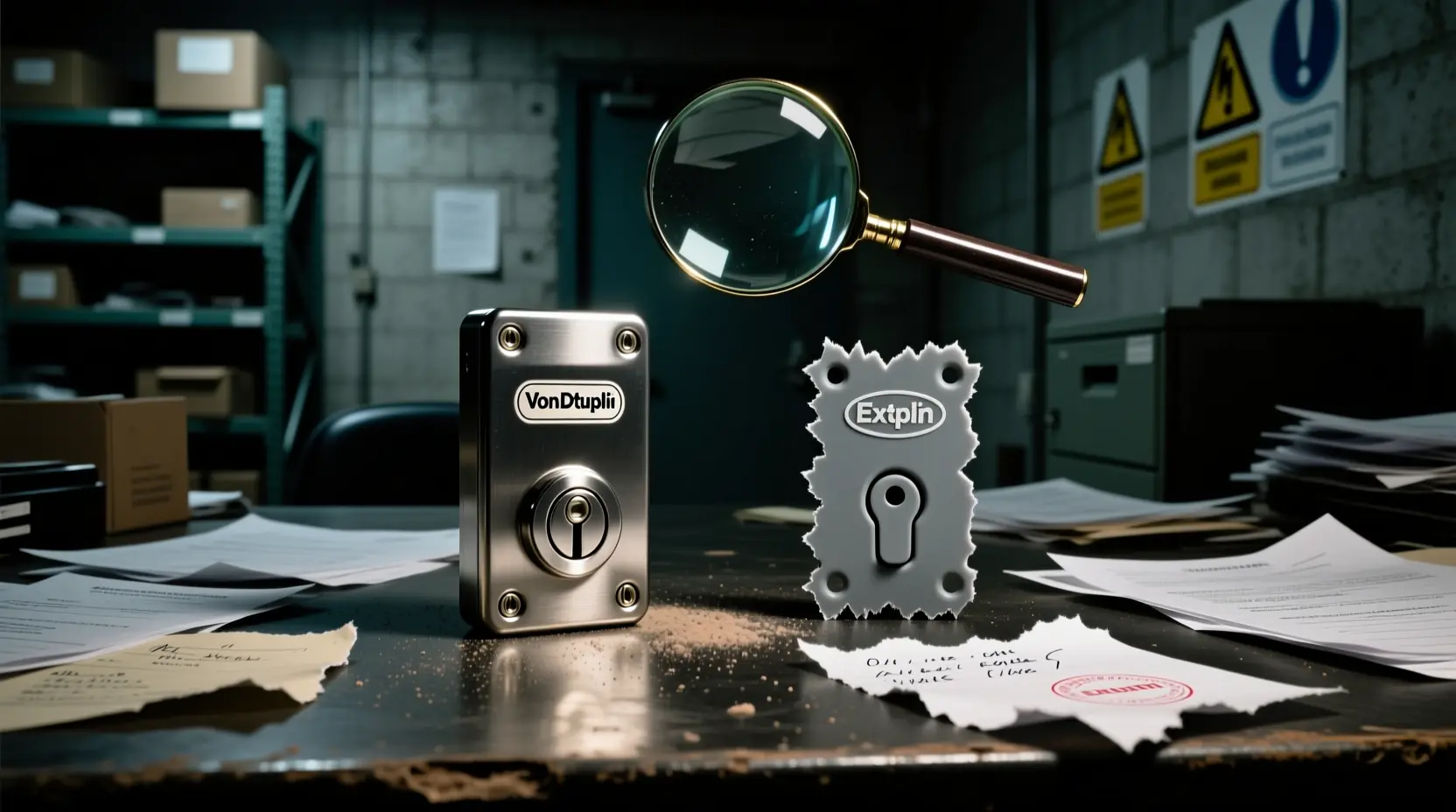
- Logos & Markings: The Devil’s in the Detail: Yes, the fake will have a “Von Duprin” or “VD” mark. But is it crisp? Authentic markings are deeply stamped or cleanly laser-etched with precision. Counterfeits are shallow, blurred, or look like they were applied with a child’s stamp set. Model numbers? On a real part, they’re legible. On a fake, they’re often faint, completely wrong, or suspiciously absent.
- Metal’s True Color: Know your alloys. Von Duprin’s bronze has a specific, rich reddish-gold hue—not a brassy yellow, not a coppery pink. Their stainless has a specific satin grain. If the “bronze” looks like a cheap trinket or the “stainless” resembles a discount refrigerator door, you are holding a fraud.
- Innards Investigation: Open it up. Look at the springs. Genuine springs are a specific grade, often with a distinct blue or black oxide finish. They’re robust. Fake springs are usually cheap, shiny, music-wire garbage that will take a permanent set and fail prematurely. Pins and rivets should be flush and solid. Crooked, poorly finished pins are a hallmark of rushed, non-conformance production.
Part 3: The Packaging Paranoia – The Box of Lies
You wouldn’t buy a precision watch in a sandwich bag. Don’t buy life-safety hardware that way.
- Genuine Packaging: Real Von Duprin parts arrive in specific, branded packaging—typically a blue/white box or a branded plastic bag. The label is professionally printed with exact part numbers, descriptions, and often barcodes/QR codes traceable to Allegion’s systems.
- Fake Packaging: Expect generic poly bags, no bags, or bags with a photocopied label slapped on haphazardly. The printing is pixelated. The part number might be a typo-filled abomination (“VON DUPRIN” vs. the correct “VON DUPRIN”). If the packaging looks like it was produced in a guerilla print shop, that’s because it was.
Part 4: Source Sanity – The Root of All Evil
Where you buy is 90% of the battle. Your sourcing strategy is your first line of defense.
- Authorized Distributors: The Only Safe Harbor: This means a brick-and-mortar, contractually authorized Allegion/Von Duprin distributor. Their entire business relies on selling genuine product. Are they sometimes more expensive? Often. You’re paying for traceability, warranty, and the peace of mind that comes with zero liability from counterfeit components.
- The Online Abyss: Third-party marketplaces, auction sites, “warehouse clearance” portals. This is the fetid swamp where counterfeit trade thrives. That “genuine” part at a 60% discount is genuine counterfeit. Sellers use stock photos and vanish upon complaint. They have no overhead, no insurance, and no professional reputation to lose. You do.
- The Part Number Mirage: Counterfeiters are lazy. They often produce one fake component and list it under dozens of similar, but incorrect, part numbers. If a seller has a miraculously deep, perpetual stock of every obscure Von Duprin part ever conceived, all at too-good-to-be-true prices, your procurement spidey-sense should be screaming. Real distributors have supply chains; fakers have a container of the same wrong thing.
Part 5: The Inevitable Performance – When the Fake Meets Fate
Let’s say you ignore all this and install the counterfeit. Here’s your future:
- It Will Die Young: Cheap metals fatigue. Substandard plating corrodes or wears off in months. Springs go soft. The action becomes gritty, then binding, then fails.
- It Invalidates Everything: Von Duprin devices are tested and listed (UL, BHMA, etc.) for cycles, force, and fire ratings. A counterfeit component has undergone zero testing. Installing it voids the listing of the entire assembly. Your door is now unlisted.
- You Become The Liability Magnet: When (not if) that fake latch fails during an emergency egress, guess who they come for? You. The specifier. The buyer. The owner. Your insurance carrier will perform a forensic teardown, spot the counterfeit, and deny coverage so fast your head will spin. Enjoy the personal liability lawsuit.
AHJ WARNING – THE ONLY PART IN BOLD FOR A REASON
The Authority Having Jurisdiction (AHJ)—your Fire Marshal, Building Official, or Insurance Auditor—operates on a different plane. They do not care about your cost savings, your procurement headaches, or that the part “looked okay.” Their mandate is life safety. Full stop. Discovering counterfeit or unlisted components in a fire exit device will result in a red tag, a compliance order, fines, and potentially an immediate vacate order. In the aftermath of an incident, they will be expert witnesses for the prosecution. Using non-genuine parts on a listed life-safety assembly isn’t just poor practice; it’s a direct violation of codes like IBC and NFPA 101 and a breach of your legal Duty of Care. Don’t be the case study in their next training seminar.
That’s it. No uplifting summary. The math is simple: Pay for the real thing from a real source and sleep soundly, or gamble with counterfeits and live in a state of low-grade dread, waiting for the other boot to drop. In this business, hope is not a strategy. Verification is.
Now get off my lawn and go audit your inventory.